


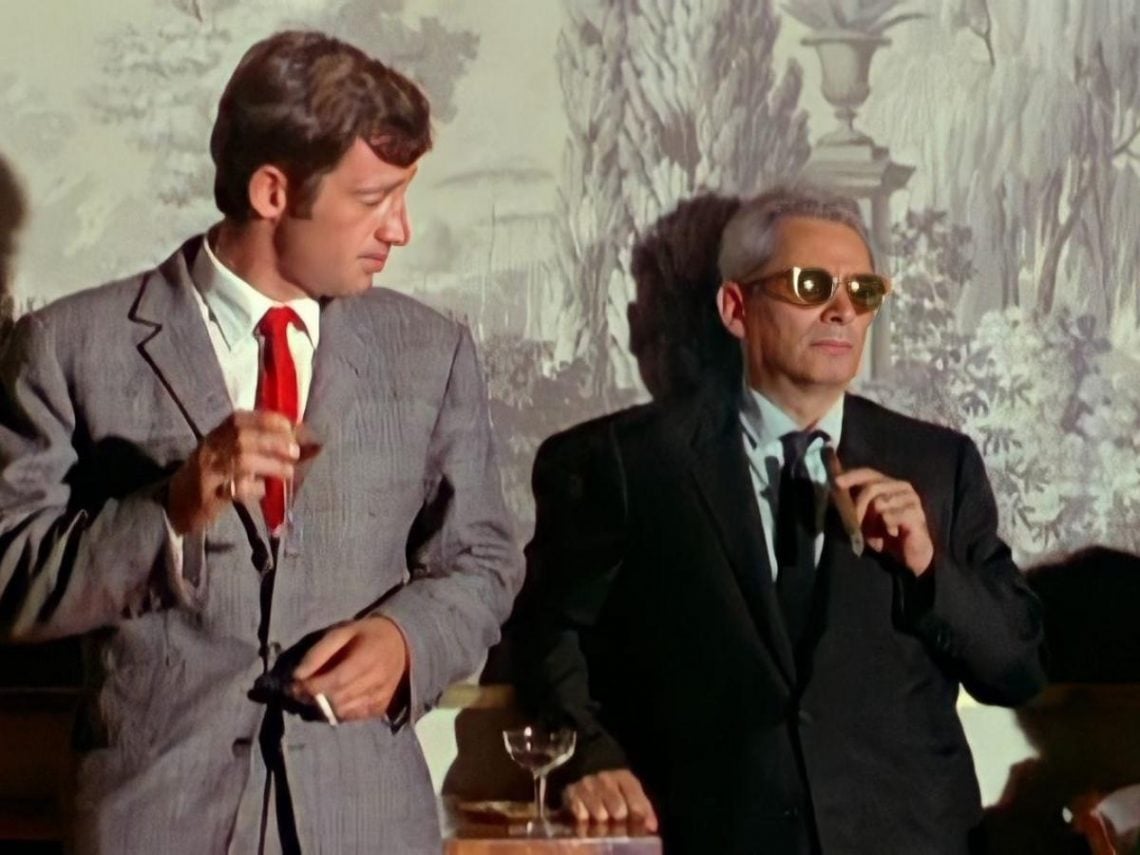
Samuel Fuller’s cameo in Jean-Luc Godard movie ‘Pierrot Le Fou’

Jean-Luc Godard was a leading figure of the French New Wave, a movement that revitalised cinema. Many key characteristics defined the films from this period, such as low-budget shooting on location, unconventional editing, handheld cameras, improvised dialogue and themes of alienation.
Alongside Godard, fellow French New Wave directors Francois Truffaut and Agnes Varda were keen to reference and celebrate other classic and contemporary filmmakers. In Truffaut’s debut feature, The 400 Blows, subtle connections are made to cinema. For example, Antoine steals a poster of Harriet Andersson in Ingmar Bergman’s Summer with Monika, visits the cinema multiple times, and fellow New Wave director Jacques Demy cameos as a police officer.
Similarly, in Varda’s Cleo From 5 to 7, the title character visits her projectionist friend, who shows her a silent short film. Varda lets us watch the short too, which features Godard and iconic New Wave actress Anna Karina paying homage to silent era stars such as Charlie Chaplin and Buster Keaton.
Godard, a self-confessed cinephile, poured cinematic considerations into every corner of his work. From the Humphrey Bogart references in Breathless to the setting of Contempt – Fritz Lang’s film set starring the man himself – Godard was keen to express his love for cinema at any chance he could get.
One of the director’s most memorable homages to cinema appeared in his groundbreaking 1965 film Pierrot Le Fou. The film stars Jean-Paul Belmondo as an unhappily married man named Ferdinand, AKA Pierrot, and Karina as Marianne, a young woman chased by OAS assassins. Desiring to escape his boring, bourgeoisie life, Ferdinand runs away with Marianne.
Pierrot Le Fou is noted for its innovative techniques, such as breaking the fourth wall, overt political statements and a vivid primary colour palette reminiscent of pop art. One of the catalysts for Ferdinand’s decision to run away is a party. Surrounded by people who engage in mindless conversation and spout consumerist statements, Ferdinand, an avid reader and self-professed philosopher, can’t take much more of the lifestyle he is so reluctantly a part of.
At this party, he meets a man who cannot speak French. After using a woman to help translate the conversation, he learns that he is talking to American director Samuel Fuller. Born in 1912, Fuller was known for directing low-budget genre films that often fell outside Hollywood’s studio system. He influenced French New Wave filmmakers such as Godard, who admired his style and ability to create films under restrictive conditions.
Fuller’s directorial debut was I Shot Jesse James, which was released in 1949. During the 1950s, the filmmaker primarily operated in the western and war thriller genre; however, he shifted his focus to psychological thrillers and dramas in the following decade. Therefore, Godard honoured Fuller’s influence by including him in the party scene, bathed in harsh green lighting. Whereas everyone else talks as though they’re reading the script for an advertisement, Fuller represents a voice of reason, albeit one that has to be translated bit by bit to Ferdinand.
In his short scene, Ferdinand tells Fuller: “I’ve always wanted to know exactly what cinema is”. This prompts the director to share his opinion in one of the film’s most memorable moments. He declares: “Film is like a battleground … Love, hate, action, violence, death. In one word, emotion!”
Fuller went on to cameo in several other films, such as Luc Moullet’s Brigitte et Brigitte, The Last Movie, directed by Dennis Hopper, and Wim Wenders’ The State of Things, to name just a few. None of these roles come close to his cameo in Pierrot Le Fou, one of Godard’s best films, where he not only sums up the plot of the film but defines the greatness of the medium.
Watch the clip below.
