


Exploring the iconic French filming locations of François Truffaut film ‘The 400 Blows’

In 1959, François Truffaut released his debut feature film, The 400 Blows, a delicate coming-of-age tale set in the heart of Paris. Leading the film is Jean-Pierre Leaud as Antoine Doinel, a mischievous yet misunderstood young boy who continuously finds himself getting into trouble.
The film is a landmark of the French New Wave, possessing most of the trademarks that became associated with the period. Shot on location with handheld cameras, the film features freeze-frames and POV shots, whilst the storyline is largely autobiographical and heavily focuses on Antoine’s development as a character.
These techniques combine to make a hugely personal and moving film, depicting the struggles of a young child with both tenderness and humour. Leaud does an excellent job at portraying Antoine, so much so that Truffaut decided to explore the life of the character in four more films over the next 20 years that spanned marriage, fatherhood, infidelity and divorce.
Location is central to Antoine’s story in The 400 Blows. We see the boy traverse the centre of Paris as he attends school, bunks off, steals a typewriter, attends the cinema with his parents, and rides in the back of a police van as the sparkling lights of the city move further from reach.
The filming locations of The 400 Blows:
The opening sequence
Eight tracking shots make up the opening sequence of the film, which gives us a POV shot of the Eiffel Tower from the perspective of someone – presumably Antoine – riding in a car, emphasising the grand scale of the city in comparison to the young protagonist that we will shortly meet. Each shot shows the Eiffel Tower slightly out of grasp through the trees and behind buildings. Eventually, it is within reach, towering above the camera as the opening credits roll.
Antoine’s school
Although Antoine is constantly finding himself in trouble at school, it is an important location in the film – in fact, it’s where we are introduced to the protagonist. Although the interior shots were filmed elsewhere, the outside of the school is also shown, which is number 85 on Paris’ longest street, rue de Vaugirard. The building is the L’Ecole Technique de Cinématographie et de Photographie, the second-ever film school.
Antoine’s flat
Another key location for Antoine is his home. Here he lives with his mother and stepfather, although he frequently runs away to hang out with his pal Rene. He also sets up a Balzac shrine in the flat, which shortly catches fire. Antoine’s address is Place Gustave-Toudouze, which can be found in the Saint-Georges area. Today, the space outside of his flat is populated by cafes and outdoor seating.
The streets of Paris
Many key scenes in The 400 Blows take place on the streets of Paris, including the Champs-Élysées avenue. Antoine and Rene head into 52 Galerie Elysées-La Boétie to steal a typewriter, exiting from 9 rue La Boétie. The pair can be seen escaping into the Franklin D. Roosevelt metro station with their stolen goods. We also see the friends walk down the steps of the iconic Parisian landmark, the Sacré-Cœur.
Earlier in the film, after Antoine spends the night on the streets alone, he freshens up in a fountain, which is located in the Square d’Estienne d’Orves gardens in L’Église de la Sainte-Trinité.
The cinema
The cinema is very important to Antoine, just like Truffaut. Lots of film references are sprinkled throughout, such as posters of Ingmar Bergman’s Summer with Monika and Charlie Chaplin’s The Gold Rush. Two cinemas are shown when the boys skip school: the Astor and the Cineac Italiens, who are advertising a showing of The Shanghai Story.
Later on, Antoine bonds with his parents during a trip to the cinema. They visit the Gaumont Palace on 1 rue Caulaincourt, 18e.
Rene’s House
In keeping with the cinematic homages, Truffaut picks a very special house to act as Rene’s place of residence. It is number sseven on the avenue Frochot, 9e, where Jean Renoir lived. What makes this such a brilliant nod to the pioneer of poetic realism is the casting of Rene’s father – Georges Flamant, who played Dédé in Renoir’s La Chienne in 1931.
The beach
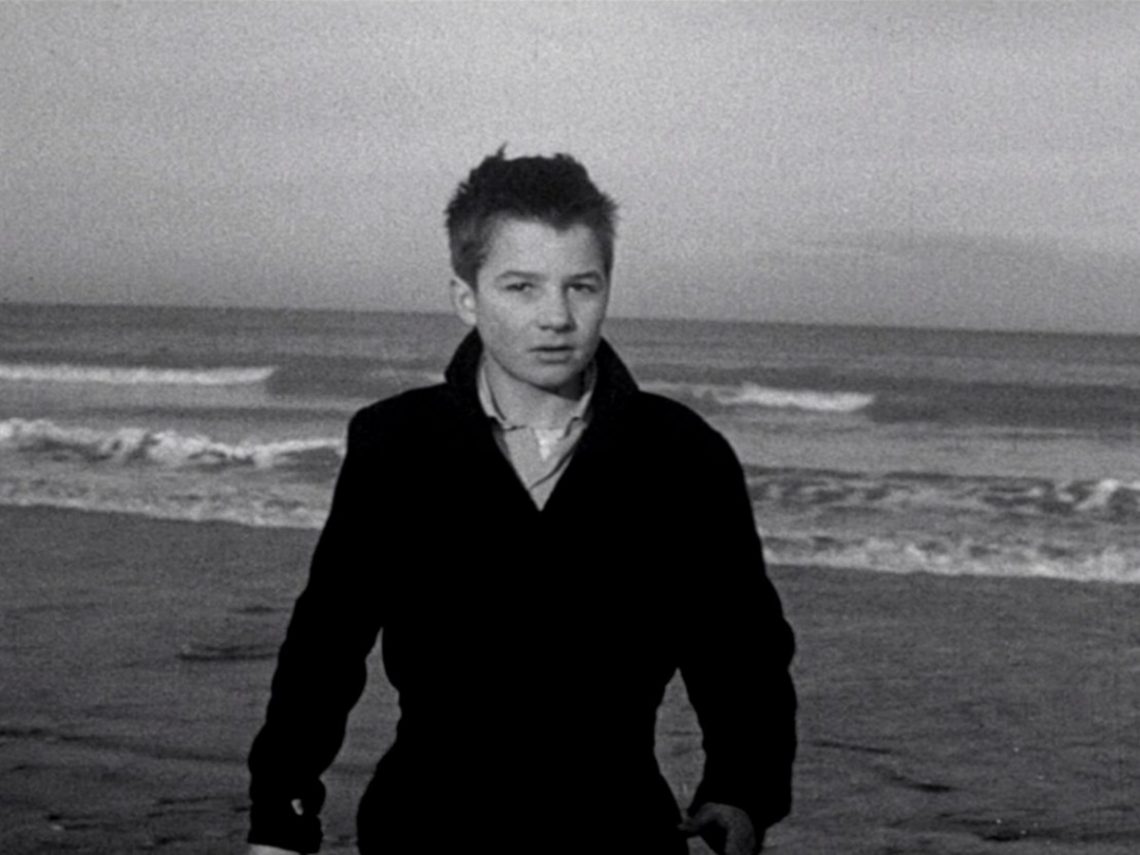
The film comes to an end when Antoine is sent to a juvenile detention centre in Honfleur, Normandy, following his ‘arrest’. Truffaut perfectly captures the isolation Antoine experiences by following him as he escapes the institution, running across the beach towards the sea. It is a heartbreaking sequence that utilises a tracking shot to accompany the boy.
The beach is on the coast of the Villers-sur-Mer, with the Les Vaches Noires cliff faces visible in the background. Sadly, the stairs Antoine runs down are no longer there, so eager fans cannot authentically recreate the scene. The beach frames the film’s final image – a freeze-frame of Antoine looking uncertainly into the camera, capturing the beginning of a new wave of cinema in a single shot.
