


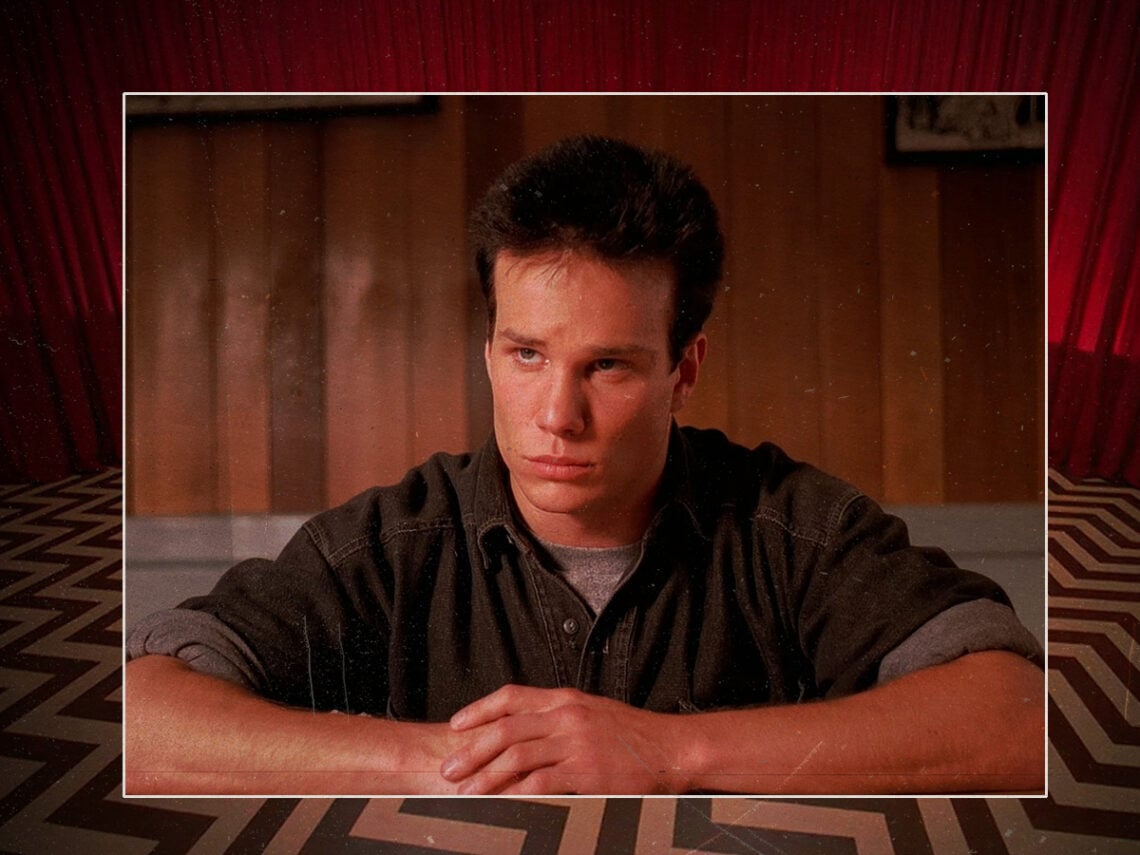
James Hurley’s ‘Just You’ and the dividing line of the ‘Twin Peaks’ fandom

Calling James Hurley the Jar-Jar Binks of Twin Peaks is probably going a step too far, but it certainly gets the general idea across in swift fashion. As the square-headed and soft-hearted rebel without a cause at Twin Peaks High School, James’ assignment is archetypal, and the most important thing for the viewer to know about him, both in the original 1990 series and 2017’s The Return, is that he is cool. “James has always been cool”.
The internet, going back to its own inception, hasn’t usually agreed with this assessment. Even amongst the most true-blue velvety devotees of the Lynchverse, the character of James has remained amusingly polarising for a guy who mainly just rides his bike around and pouts. He is one of Twin Peaks’ most mocked and memed characters, often ridiculed for his hairline or unfairly blamed for that awful series two soap opera storyline in which he’s seduced by the lady who wants him to kill her husband.
Mark Frost didn’t know what to do with poor James any more than Laura Palmer did. Which leaves us with the familiar question: “What was David Lynch’s intent here?” Is James a simple prop designed to reflect Laura Palmer’s tragic fall, her inability to be saved by the usual two-dimensional rogues and studs of Americana? Is his “coolness” completely legitimate within the context of Twin Peaks’ bizarro ‘50s version of the ‘90s? Or is he meant to be something of a joke, and if so, is it secretly funny to the other kids in Twin Peaks, or just to those of us on the other side of the screen?
The real point of demarcation on this subject, as few would quibble with, is James Hurley’s signature doo-wop anthem, ‘Just You’, written by Angelo Badalamenti and first performed in episode nine (aka, episode two of season two) of the original series. Unlike a lot of season two episodes, this one was directed by Lynch, meaning the much derided scene in question cannot merely be written off like a Billy Zane sequence.
Gathering awkwardly on the floor of Donna Hayward’s living room, the trio of James, his new love interest Donna, and his even newer love interest Maddy – cousin of and dead ringer for James’s dead previous love interest Laura Palmer – mournfully sing together, with James taking the lead and the girls handling the backing vox. Somehow, they’ve got a couple of very expensive Shure Unidyne 55 microphones and an accompanying bassist and drummer who can be heard but not seen in the room. James, singing in a ‘50s crooner falsetto, is off-key. The tension is palpable, partly because of the established love triangle and lurking presence of Laura’s death and Killer Bob himself (perhaps he was on bass duties?), but also because of the scene’s flirtation with outright comedy.
Was James meant to be taken ironically? Was he the anti-James Dean, a comic relief intended to contrast with an impending horror scene? By not taking him seriously, could we learn to appreciate him?
Lynch raised the stakes on that 25-year-old debate significantly in 2017, when he gave James Hurley one of the guest musician slots at the Roadhouse, appearing in episode 13 of The Return. Actor James Marshall is back in the role of Hurley, twice the age he was in Donna’s living room. His new rendition of ‘Just You’, however, is completely unchanged. It’s literally 50-year-old Marshall lip-syncing to his original baby-voiced recording of the song from 1990, with two stand-in backing singers replacing Lara Flynn Boyle and Sheryl Lee.
Some have interpreted this as another example of Lynch supposedly “trolling” his audience, or essentially doing the opposite of fan service by not only ignoring their criticisms of a previous scene, but re-gifting it to them. Others see the return of ‘Just You’ as the best kind of regifting, showing people how time and distance can affect our experience of what is otherwise an unchanging, unmoving piece of art.
As ever, the Twin Peaks fans are divided on the subject. James, as a result, is not so much Jar-Jar as he is Schroedinger’s cat: simultaneously always cool and embarrassingly uncool.
