


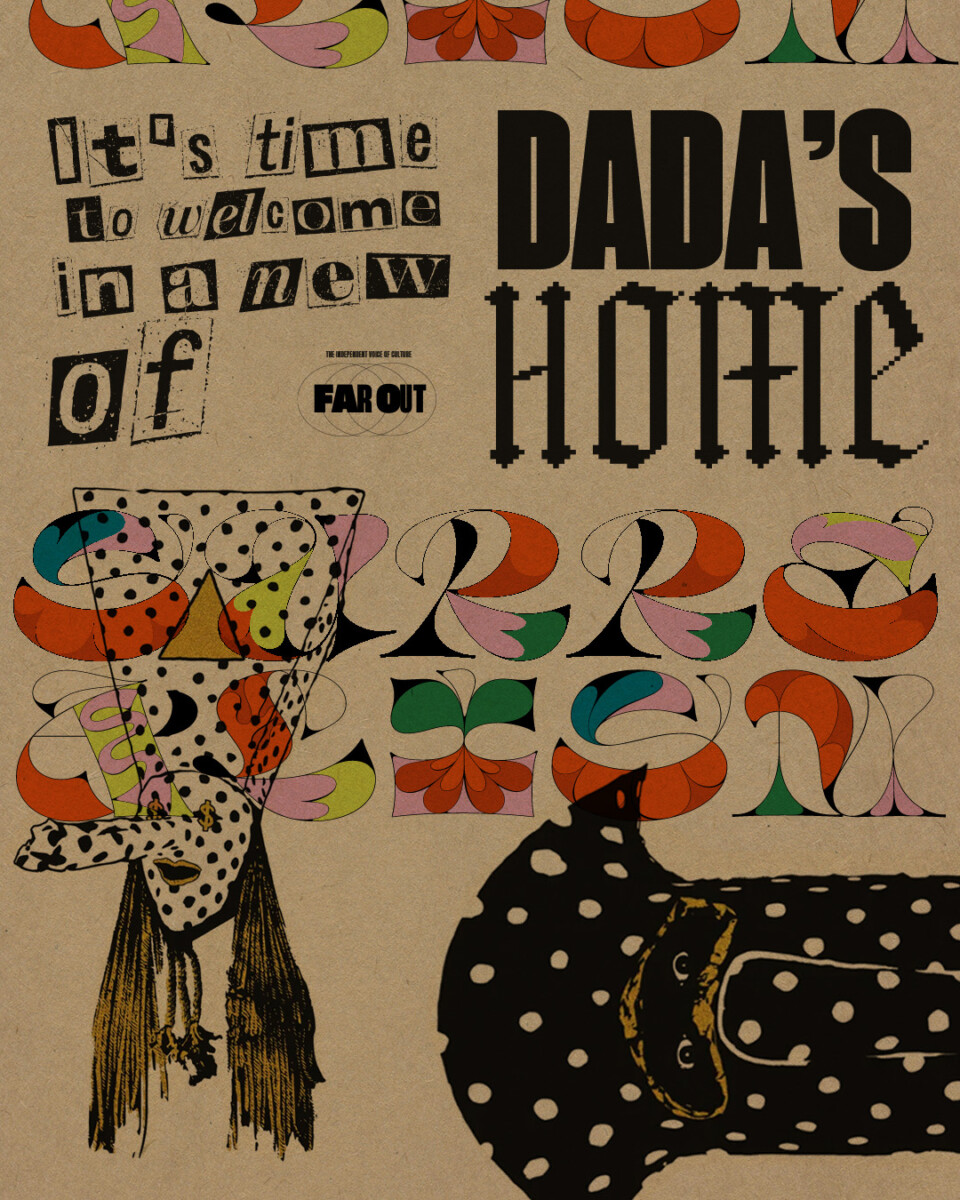
Dada’s home: It’s time to welcome in a new age of surrealism

A shameless self plug, but one of my highlights of the week is when the Far Out album reviews go live.
I work with this lot, and I respect their musical opinions a great deal, so you best believe when I see a 4.5 or five-star review, I’m immediately giving that album a spin. That happened recently, when a review for the new Angine de Poitrine record, Vol II, got a glowing write-up, praising it as alien music.
The review read: “The myriad layered time signatures and atonal Pythagoreanism on display in their funky jams warp the brain of any listener, literally. The pop-accustomed Western mind simply isn’t used to the musicality that they employ. So, for those who find themselves drifting towards a headache after an extended bout of Angine de Poitrine, that’s actually an appropriate response.”
For those of you who aren’t aware of who Angine de Poitrine are, they’re the strange-looking experimental musicians whose record you can find in your eccentric friend’s vinyl cupboard. They wear polka dot black and white outfits, relatively poorly crafted masks, and write music that uses strange time signatures, off-kilter chord structures, and essentially champions a sound which can only be described as music, but not as we know it.
The band’s rise in popularity is a precursor to a new age of surrealism, which lingers around the corner. When Covid-19 restrictions eased, many predicted that the elongated periods of lockdown would result in members of the public desperate to party, and subsequently, the roaring twenties re-imagined. However, other political struggles, societal changes, and the repercussions of Covid have acted counterintuitively to these predictions.
Leave behind the cocktail parties, big bands and social lifestyles. Instead, these ‘20s are still going to roar, but as a reflection of a very different movement that happened 100 years ago: Surrealism.
The ramifications of Covid-19
It’s a Thursday afternoon in March 2020, and the streets of the UK are lined with people banging pots and pans together, forcing smiles, applauding, and cheering. These actions were dressed up as a salute to the NHS workers who were putting their own health at risk to help the sick, but they doubled up as a moment of community during a time when isolation was mandated.
This haphazard kitchen utensil orchestra, at the time, thought that the pandemic would be over in a matter of months, they had no idea that over a year and a half of debates, botched restrictions, controversy and adjustment was coming. The lockdown impacted everyone in different ways, but perhaps those who were hurt the most (mentally, at least) were young people, who had their adolescence ripped from them.
When I look back to my teenage years, my days were spent going to pubs that I knew would serve me, and when that failed, one of my friends’ mum would buy our group a crate of beer and we’d scatter to a park to drink, listen to music, and write “Dale loves Beth” in the only clear spot left on a heavily doodled over skateboard ramp. These nights eventually spilt into music venues and clubs, as the hours from 10pm-3am were specifically reserved for dreaming of becoming a rockstar, drinking shots, trying to learn how to roll cigarettes and falling in love with strangers. These years were a mess, but they were also pivotal, as personalities were forged and friendships were made.
I’m not alone in this kind of upbringing either. Go one generation before me, and you had the Britpop lot heading to bars and debating whether Oasis or Blur was better. Rave culture was also massive, as people would get off their tits on whatever drugs they could get their hands on and then dance in rooms of sweaty strangers until the sun came up – in the 1980s, you had the rise of synth-pop and new wave, the ‘70s brought with them the advancement of rock music along with funk and soul, and then the ‘60s gave you a clear indication as to what the connecting feature of all these different communities was: music.
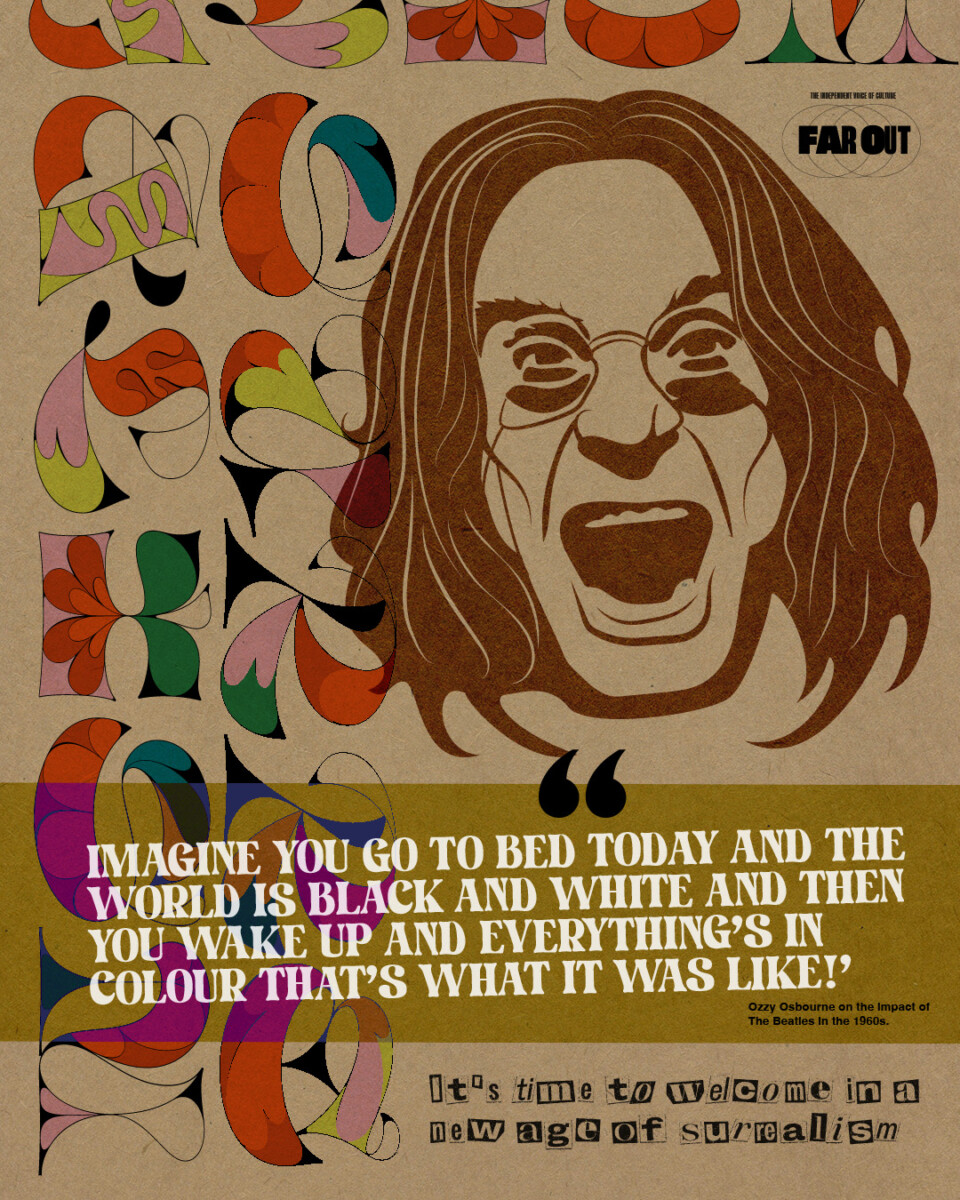
Ozzy Osbourne was never shy about talking about his love for The Beatles, making it clear that the band’s importance extended beyond the songs they made, and as Britain continued to lick its wounds from World War II and the country rebuilt, many working-class people found themselves in dead-end jobs with no hope of prosperity.
It was a miserable time, and then four lads from Liverpool came along, guitars in hand and songs in hearts, and they taught everyone in earshot how to have fun again. Music has continued to teach people how to have fun.
“My son says to me, Dad, I like the Beatles, but why do you go so crazy?” said Osbourne. “The only way I can describe it is like this: ‘Imagine you go to bed today and the world is black and white, and then you wake up, and everything’s in colour. That’s what it was like!’ That’s the profound effect it had on me.”
The young generation now have had the connective power of music taken from them, as the best way you can experience it is by going to bars, clubs, pubs and venues, but for the definitive years of their adolescence, these places were boarded up. Many never actually reopened, as the hardship of the pandemic meant that a lot of venues closed for good. Then, those that did open their doors again found their dancefloors empty, as the ramifications of the pandemic mean that a lot of younger people refrain from going out.
The Guardian spoke to a student (Riley) who had gone to university during lockdown and felt socially stunted as a result, elaborating, “I feel like I don’t know enough about how to socialise in order to make friends properly, I find myself wondering if something’s wrong with me or I give off a bad energy… I worry that, because I’ve [finished] uni and school, I’ve missed out on the best chances I’ll ever have to make friends.”
She continued, “It’s this Gordian knot of my own personal issues, things like the pandemic, and the shape of society. I think people find the idea of in-person communities less important than in the past.”
It doesn’t sound dissimilar to how people felt before The Beatles. So, in that regard, this generation just needs their own version of the Fab Four to reignite that social spark; however, because of significant societal shifts since the ‘60s, there’s a good chance this musical force isn’t coming, at least not in the way you know it.
An overreliance on technology
To say that society has become overreliant on technology would be the understatement of the century. It’s no longer a luxury; it hasn’t been a luxury in over a decade, it’s now a quintessential part of our very being, forming the foundation for how we work, make art, consume entertainment, socialise, find out about the news, and now, it even plays a big part in the general formulation of thoughts.
Sticking predominantly with music, as that’s what this piece revolves around, technology plays a huge part in a number of different aspects of the business. The first is the creation of music, as it’s more expensive to get into a studio, the solution is for artists to lock themselves away in their room behind a laptop. They can use that one screen as their recording studio, marketing team, and means of release for every single piece of music they make.
I’m not disparaging this creative approach. As consumers, we should be able to relate to (at least some) of the art that’s out there, and the most effective way you can make art relatable to those engaging with it is by broadening the number of voices that contribute towards it. This new accessible means of making, marketing and releasing music casts a wider net, giving us more voices in music, ensuring that each corner of society is represented in some way. However, while this is a positive, the negatives that come with an increased reliance on technology are tenfold.
Firstly, it doesn’t matter what you have to say, if you don’t know how to say it, it’s fucked. The best way that artists usually grow to understand their approach to making art is by getting in on the ground floor, which means playing at venues, becoming part of a scene, and collaborating with people in a studio environment. We might have more voices in music because of increased accessibility to said music, but those voices don’t know how to effectively project themselves.
I spent the day at a songwriting camp called Pro7ect at Rockfield Studios recently, and it was clear from talking to those involved how beneficial they found working in such a collaborative environment. “Songwriting retreats are quite a new thing,” said Greg Haver, one of the producers there. “Certainly to the scale that they are at the moment. They’ve become an integral part of the music industry, that whole idea of collaborative songwriting.”
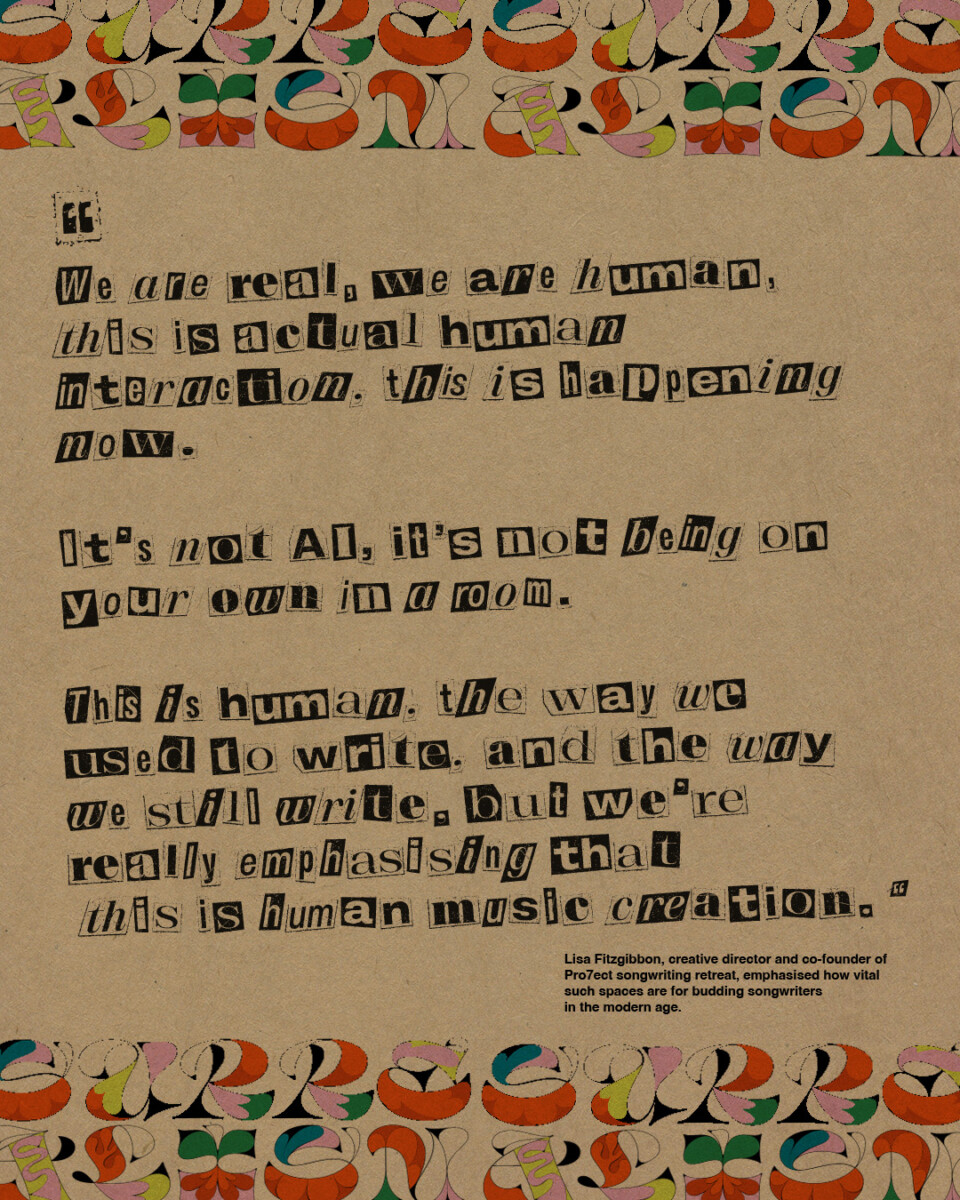
Lisa Fitzgibbon, the creative director and co-founder of the retreat, emphasised how vital such spaces are for budding songwriters in the modern age. “We are real, we are human, this is actual human interaction, this is happening now. It’s not AI, it’s not being on your own in a room,” she said. “This is human, the way we used to write, and the way we still write, but we’re really emphasising that this is human music creation. You know? Not the bots. Not the algorithms and shit.”
Technology also impacts music because of how much modern musicians are inspired by what they’re exposed to because of it. Algorithms cater to an individual’s taste, which means a lot of bands that different people are fed fit comfortably within one small section of sound that they can’t venture out of. Not to mention, the bits of music they do end up stumbling across naturally, they usually do so because a small snippet of the song has gone viral, and that’s the only subsection of a track that listeners ever hear.
This results in artists putting the consumer before themselves, as they are writing with virality in mind. It also leads to repetition, both in genre and execution. More budding creatives have access to the tools they need to make music, but because of the echo chamber they exist in, they wind up making poor carbon copies of songs that already exist and were never that good to begin with.
Amyl and the Sniffers took aim at our reliance on social media on their most recent record, Cartoon Darkness, not just its control over people, but the addictions that exist within the way we consume our media.
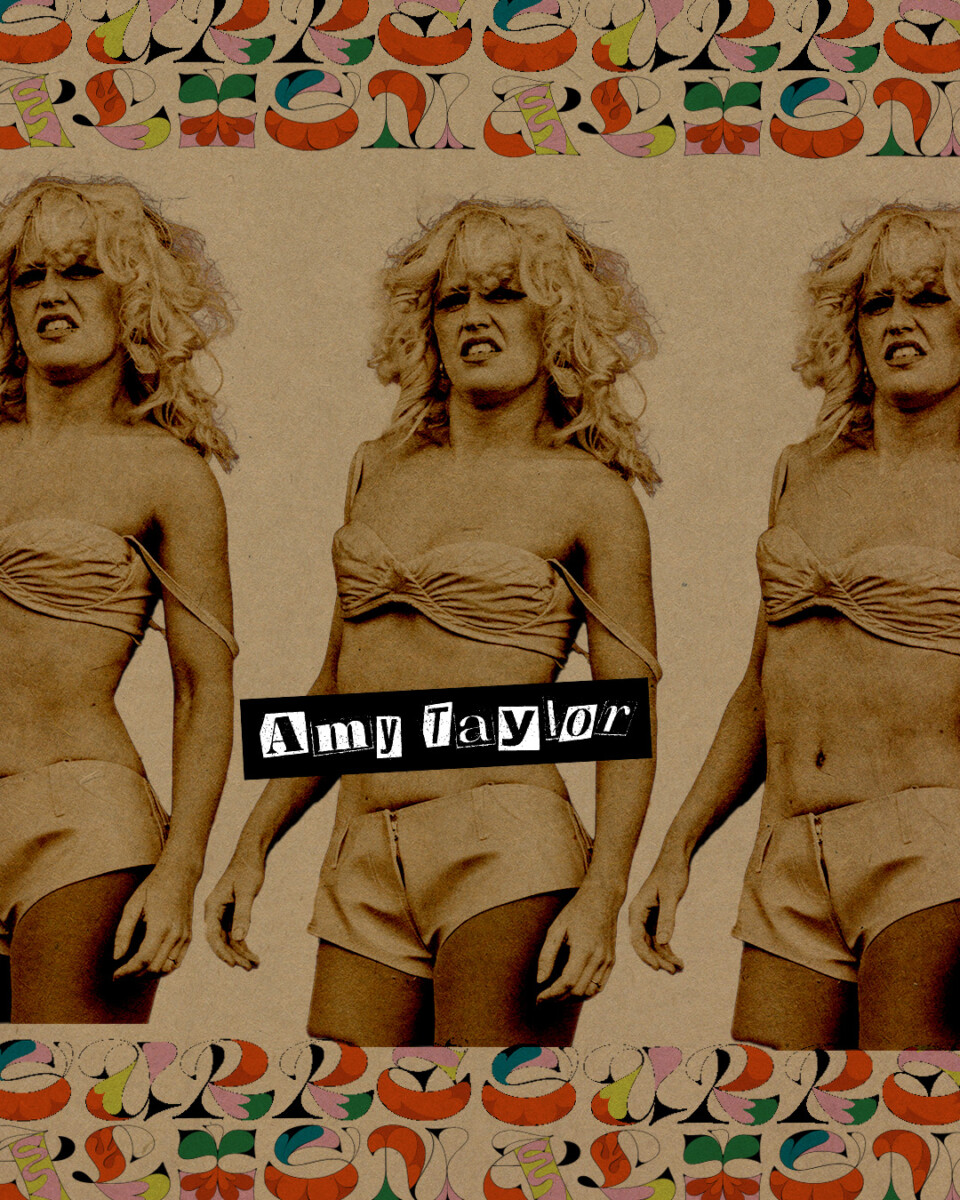
“I think we’re just passive to the puppeteering of it all. I think even if we had amazing willpower against it, it’s designed to be interlocked with us as a being. So many creatives and so many businesses, even to just exist as a small business, you need to be a part of it in a lot of ways,” said lead singer Amy Taylor in an interview with Far Out. “It’s designed to be all-consuming and an extension of ourselves. It’s really out of our control how much we can break away from it. I think it’s possible, but again, to step away from phones now is to step away from society.”
She continued, “I don’t have any answers… I use my phone so much, and I’m on social media too much, but I think it’s just kind of acknowledging it so it’s in people’s minds rather than just going along with it… If everyone stops and thinks about it and goes, ‘This is fucking weird’… I think there could be a different method, you know?”
Then, of course, you have technology’s biggest buzzwords for the past few years, Artificial Intelligence. When humans were making music recently, there was a heavy technological influence because of how much it shapes creation, consumption and influence. Now, if that wasn’t bad enough, you have some artists who are simply asking that same technology to make the music for them outright. The Beatles utilised it with their song ‘Now and Then’, ironically, the band who gave the world hope back in the ‘60s filled it with dread decades later.
While their use of the technology might have been minimal, it pushed the rest of the world down a slippery slope to dependence. Now we see plenty of musical greats admitting to using it to overcome writer’s block, and budding artists do the same thing in response. This simply inspires more formula, as soon no one in the mainstream will be able to think outside of code and trends.
The counterculture’s response to such a formula lies in surrealism. With bands like Angine de Poitrine, music is created that can only ever be placed in the middle of different Venn diagrams. It cannot be categorised singularly, as it doesn’t make sense, and it doesn’t play by rules, it merely scratches an itch which has been in an unreachable area for decades now. Time signatures? Fuck em. Viral moments? No thanks. Repetition? Not on your life. The strange sound, paired with the bizarre style of the band, makes them a surrealists’ paradise and an algorithm’s nightmare, and it forms the basis for what will be a sonic revolution.
The persistent plight of politics
Music follows culture like a shadow. No matter what period of time you look at, there was music released which acted as a reflection of that specific period of time. Even music that doesn’t seem representative of a certain moment unquestionably is, which is evidenced by the rise in popularity of psychedelia towards the back end of the ‘60s.
Psychedelic music didn’t have potential when it was first finding form, as it was overtly experimental and wasn’t the kind of thing that could be played on the radio. As such, record labels didn’t buy into it, that was, until a lot of popular bands began churning out music that had political sentiment. People in power were being assassinated, the Vietnam War was raging on, and the divided opinions in these different political events created a generational divide. Bands who previously unified audiences now drove a wedge, as groups were putting out protest music that listeners had to pick a side with.
The music business is exactly that, a business, and so in a bid to try and generate capital, they decided to put out music that couldn’t have political meaning drawn from it, which subsequently led to a new push in psychedelic artists. The sound was experimental, layered, and unique, and it was accessible to all, regardless of your political leaning.
The world is currently more divided than ever in terms of political views (damn technology!), and so not only might surrealist music appeal to listeners because of its unique sound, but it might also receive backing from more labels, given that, due to a lack of political leaning, it has more potential on a broader scale. I’ll admit, this half of the argument is a stretch, as even if artists aren’t political in the modern age, there is pressure on them to make their political leanings known by those who listen, and so it’s unlikely many big names could be generally unifying. Not to mention, most creative people don’t want to be apolitical, so even if their music is instrumental, chaotic, and impossible to derive meaning from, they may still wish to put out statements about current events.
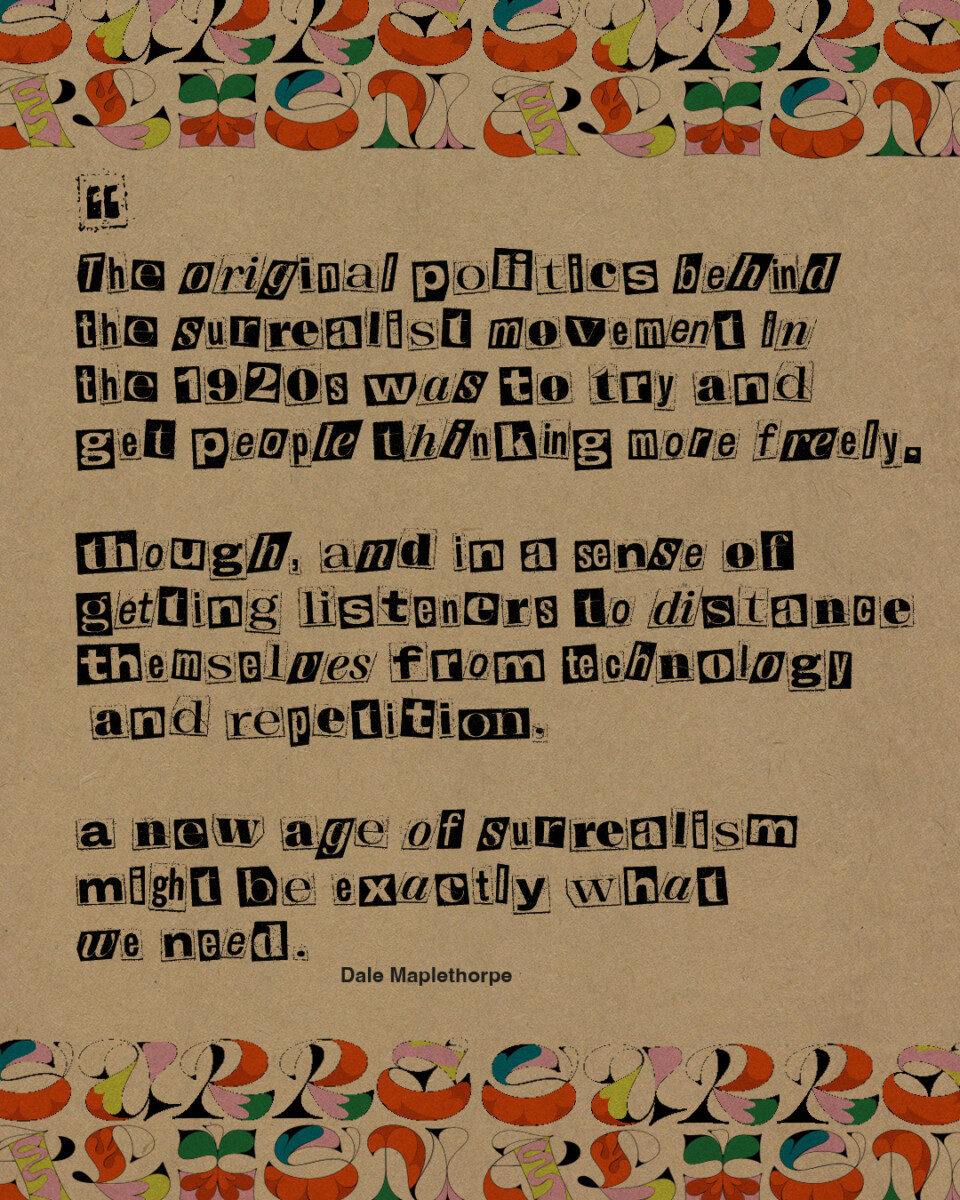
The original politics behind the surrealist movement in the 1920s was to try and get people thinking more freely, though, and in a sense of getting listeners to distance themselves from technology and repetition, a new age of surrealism might be exactly what we need.
There are still great creative minds out there in the artistic world, but the restraints created by trends and division shackle them from truly reaching their potential, and a surrealist movement is the best way for these minds to step outside the confines of the pretty relentless system. The rise in popularity of Angine de Poitrine is just the beginning, as it’s time for us to welcome in this beautiful new age of surrealism. Yes, my friends, the roaring twenties are back on, but the roar comes from a peacock with flames for feathers.
