


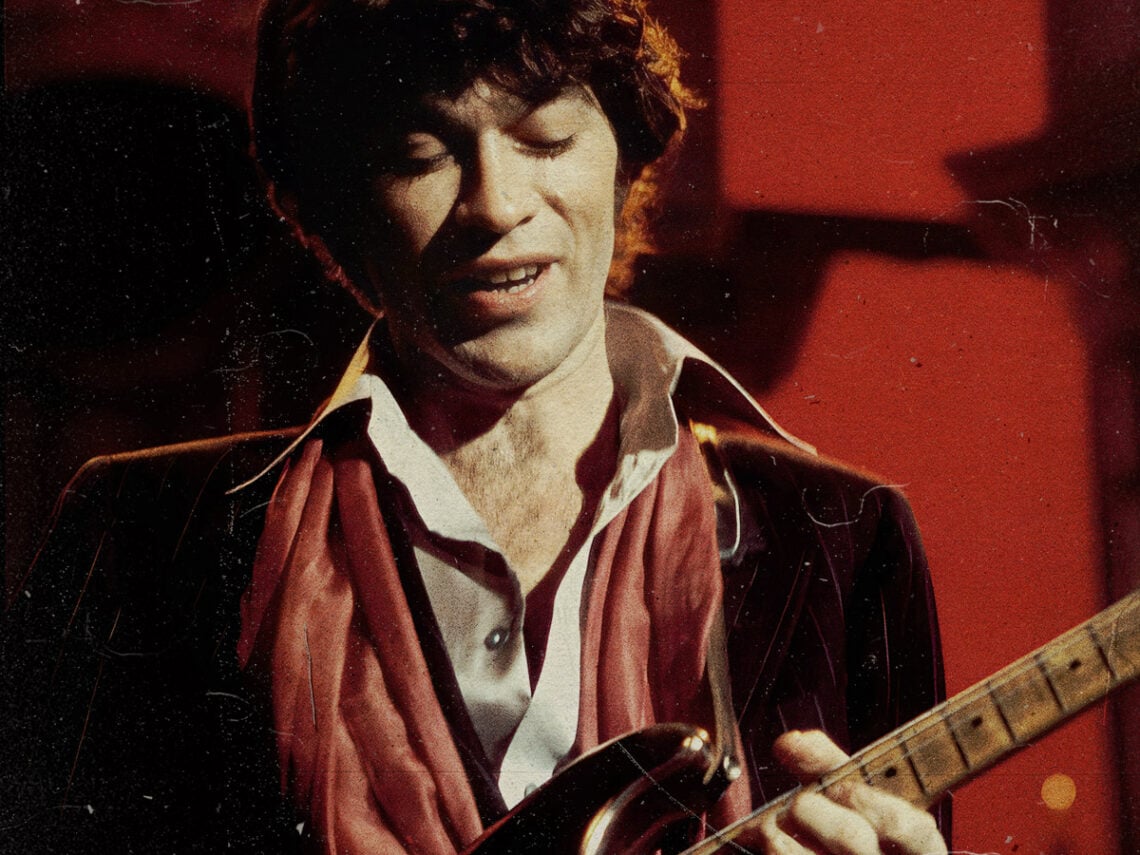
Is The Band song ‘The Weight’ a biblical allegory?

Even if you’re not intimately acquainted with the prolific The Band hit ‘The Weight’, you’ve likely encountered it in a film or television show. For those who are familiar, you’ll know that the track holds a revered status as one of the rock band’s signature songs and a vital component of the Americana music movement. Originally released in 1968 on their debut album, Music from Big Pink, ‘The Weight’ has transcended the confines of its era, making its way into various realms of popular culture.
Comprised of Rick Danko, Richard Manuel, Garth Hudson, Levon Helm, and Robbie Robertson, The Band traversed America, immersing themselves in its diverse subcultures, encountering its quirkiest characters, and etching their own legacy along the way. In fact, summarising The Band’s journey is probably best captured in ‘The Weight’: it’s not only one of their best songs but also a narrative that sheds light on the world they emerged from.
The song narrates the tale of a man visiting Nazareth, who comes with a load of responsibilities, each of which represents ‘The Weight’ that he carries. Robertson attributes this song’s inspiration to the works of Luis Buñuel, the Spanish director known for pioneering surrealism in film. He was captivated by Buñuel’s characters, often depicting well-intentioned individuals involved in questionable actions.
The song’s characters, Crazy Chester, Luke, and Anna Lee, are inspired by real friends of the band. Helm elaborates on this in his autobiography, This Wheel’s On Fire: Levon Helm And The Story Of The Band: “We had two or three tunes, or pieces of tunes, and ‘The Weight’ was one I would work on. Robbie had that bit about going down to Nazareth – Pennsylvania, where the Martin guitar factory is at. The song was full of our favourite characters,” Helm said. “‘Luke’ was Jimmy Ray Paulman. ‘Young Anna Lee’ was Anna Lee Williams from Turkey Scratch”.
“‘Crazy Chester’ was a guy we all knew from Fayetteville who came into town on Saturdays wearing a full set of cap guns on his hips and kinda walked around town to help keep the peace, if you follow me,” Helm added. “He was like Hopalong Cassidy, and he was a friend of the Hawks. Ronnie would always check with Crazy Chester to make sure there wasn’t any trouble around town. And Chester would reassure him that everything was peaceable and not to worry, because he was on the case”.
He continued: “Two big cap guns, he wore, plus a toupee! There were also ‘Carmen and the Devil’, ‘Miss Moses’ and ‘Fanny,’ a name that just seemed to fit the picture. (I believe she looked a lot like Caladonia.) We recorded the song maybe four times. We weren’t really sure it was going to be on the album, but people really liked it. Rick, Richard, and I would switch the verses around among us, and we all sang the chorus: Put the load right on me!“
Although the meaning stemmed from personal endeavours, musicians and fans have still continued to debate about its origins, specifically whether it includes biblical allegory within its composition. Robertson has insisted time and again that there is no biblical subtext, but many people think that he may be deflecting. This is backed up by a closer look at some of the lyrics, including the narrator not being able to find a bed in Nazareth, along with the reference to Carmen and the devil and Crazy Chester following him into the fog, which could be a possible allusion to Paul on the road to Damascus.
Then, there’s the most obvious one: “I do believe it’s time to get back to Miss Fanny, you know she’s the only one who sent me here with her regards for everyone”. Some enthusiasts have proposed that Miss Fanny might actually symbolise God, as she sent the protagonist to Nazareth, and now it’s time for him to return to her. In this interpretation, the “time” referred to could be the crucifixion, and the phrase “regards for everyone” might allude to Jesus sacrificing himself for the sins of humanity.
Naturally, this connection could be entirely coincidental, especially considering that numerous songs in the Americana genre often use biblical imagery to evoke a sense of grandeur or tragedy. In other instances, it aligns with the traditional American values that are a natural fit for this style of music. Nevertheless, ‘The Weight’ has cemented its status as a timeless rock classic, and the enigmatic elements surrounding it only contribute to its enduring intrigue.
