


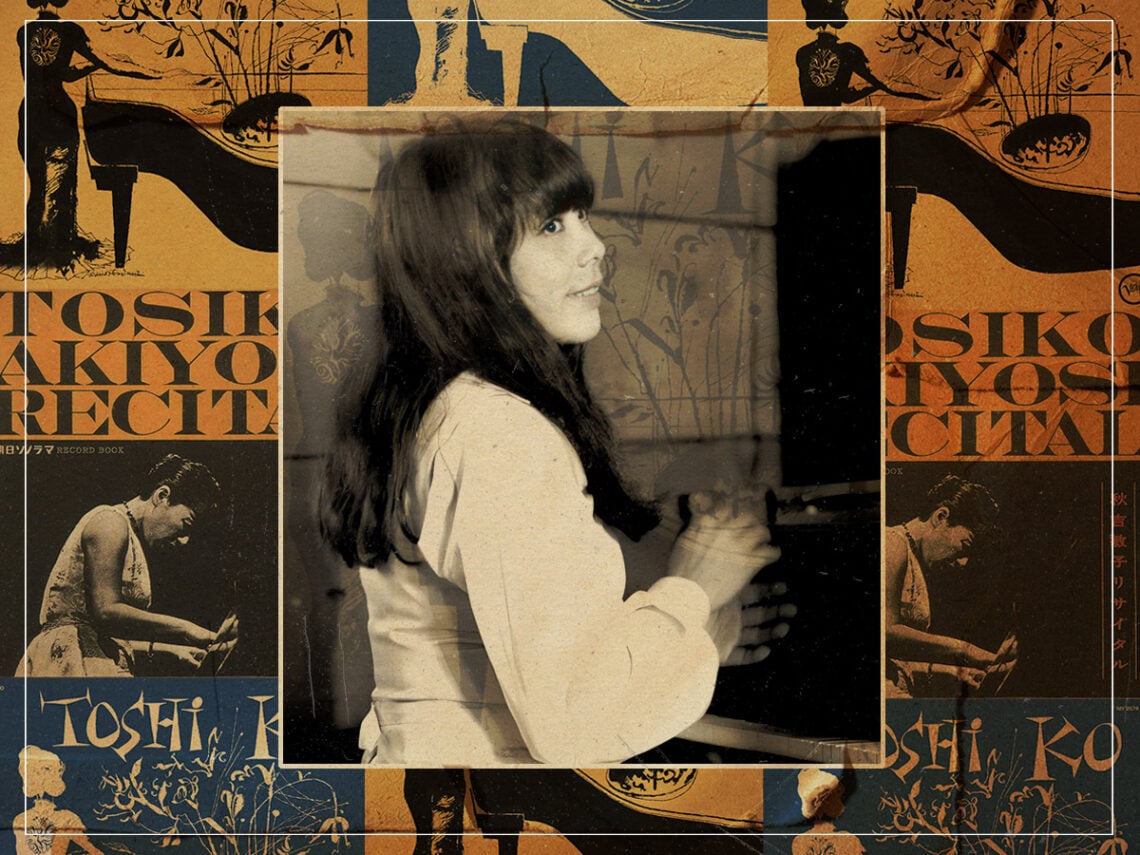
Toshiko Akiyoshi: the inventor of modern Japanese jazz

Before Toshiko Akiyoshi decided on the importance of risk-taking, Japanese jazz artists were largely going off what their American counterparts were doing. “That’s what you do,” said Tony Higgins, co-curator of the J Jazz series. “You start off imitating, and then you assimilate, and then you innovate.” Nonetheless, Akiyoshi is credited by many as the birther of modern jazz thanks to her innovative contributions, which saw the genre take on its own sound and identity for the first time.
Of course, other artists, such as eclectic saxophonist Sadao Watanabe, also paved the way for Japanese artists to explore more unrestricted jazz realms and break free from the moulds that had already been set for them. However, Akiyoshi provided the blueprint, whose fearless pursuit of artistic expression propelled her into the heart of the jazz scene and changed the nature of the genre forever.
Despite her monumental contributions to the Japanese jazz scene, Akiyoshi had moved to the United States to pursue her musical aspirations, a bold decision for a young Japanese woman at the time. She was officially discovered in 1953 while playing in a club in Tokyo. Still, Akiyoshi smashed the glass ceiling numerous times during her career, becoming the first Japanese student to enrol at the Berklee College of Music and the first woman to win a Down Beat award for ‘Best Arranger and Composer’.
In the early days, however, Akiyoshi would say that her appeal was largely due to her oddities, with American audiences becoming mesmerised by who she was and what she did. “In those days, a Japanese woman playing like Bud Powell was something very new,” she explained to the LA Times. “So all the press, the attention, wasn’t because I was authentic, it was because I was strange.”
While Akiyoshi sailed alongside esteemed figures such as Dizzy Gillespie, Miles Davis, and Art Blakey, earning recognition as one of the best women in jazz and eventually leading the Toshiko Akiyoshi Jazz Orchestra, her journey was not without challenges. In fact, in the 1960s, she almost quit the industry for good after various setbacks made her reconsider her talent.
She cited the revolution in jazz that permeated the era as a major reason, explaining that she “hadn’t created my revolution”, resulting in her considering whether she should quit. “I questioned my significance,” she said, continuing, “If I dropped dead, then the jazz scene would not suffer.”
After some encouragement from her husband, Lew Tabackin, along with the passing of Duke Ellington, Akiyoshi realised her true mission. In what she deemed her “most important discovery,” she suddenly realised the significance of Ellington’s consciousness of his own race, which caused an epiphany. “I thought that maybe that was my role, to portray my heritage within jazz, to utilise both,” she explained.
Akiyoshi’s legacy enriches the art form to unimaginable depths, with compositions that bear a unique blend of traditional Japanese and American jazz influences. Her dexterous technique, harmonic sophistication, and emotive storytelling crafted something that “wasn’t there before me” – a feat that wouldn’t pass the lips of many with such worthy confidence. In hindsight, she’s glad she didn’t quit when she wanted to the most.
If she had, it’s likely that various musical genres would sound different today. To Akiyoshi, her achievements are a badge of honour that she wouldn’t exchange for anything. In her own words: “To make this work where everybody can identify with the music, and identify it as jazz music – that’s a worthwhile challenge.”
