


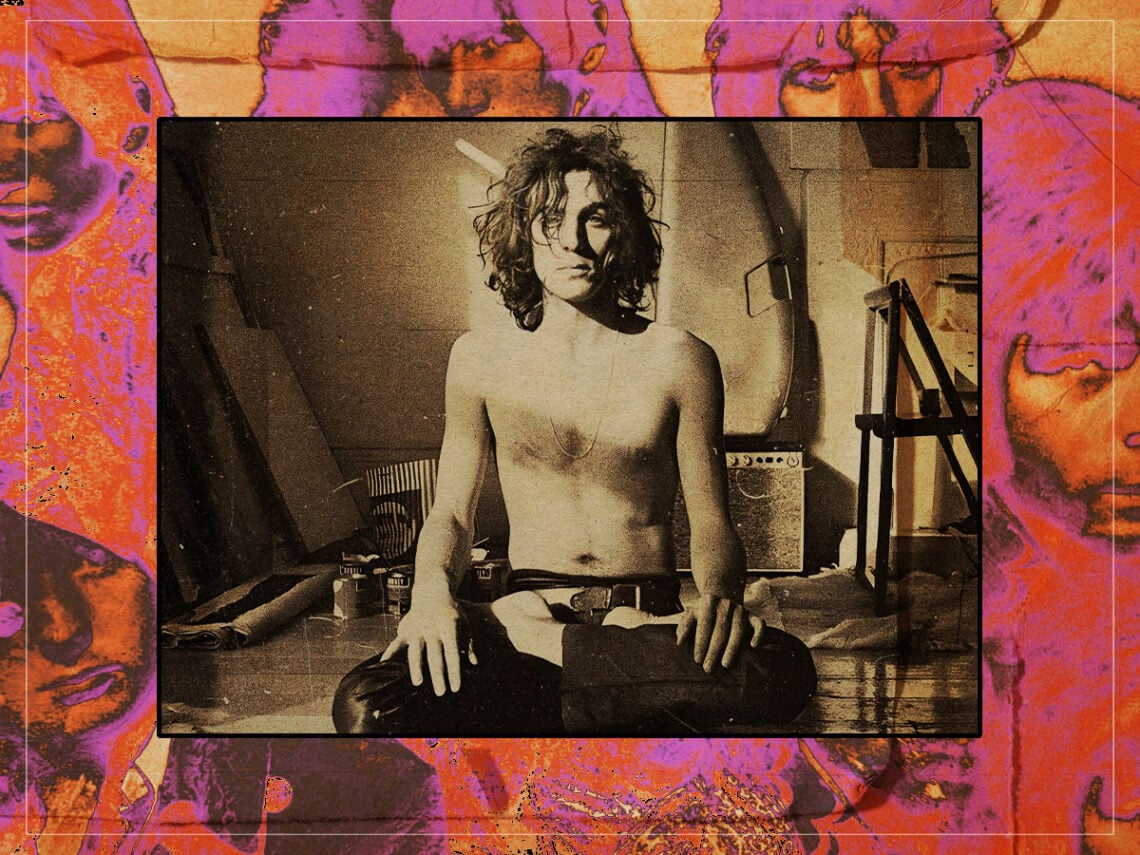
‘Lucifer Sam’: The true inspiration behind Syd Barrett’s psychedelic masterpiece

You would need one hundred years, a doctorate in psychology, and an endless supply of high-grade LSD to even begin to comprehend the mind of Syd Barrett; the Pink Floyd founder was an endlessly enigmatic figure, and his musical output was just as ethereal and expansive. Although his time leading the band was brief, it was Barrett who led Pink Floyd through the first psychedelic age, but his multiple masterpieces routinely left mainstream audiences in the lurch when it came to their true meaning and inspiration.
It was back in 1965 that Pink Floyd officially formed. During an age of rebellious blues-rock, running battles between mods and rockers, and a focus on youthful anarchy, but Pink Floyd didn’t subscribe to any of those trendy ideals. Instead, Barrett guided the group into the mind-bending world of psychedelic rock, spurred on by the advent of LSD – a substance that would go on to change music forever.
Of course, groups like Jefferson Airplane, Grateful Dead, and The Doors were flying the flag for psychedelia over in the United States at around the same time, but Pink Floyd always stood in a league of their own, unparalleled in the quality and otherworldly nature of their output.
Tragically, Barrett’s time as the leader of this stunning psychedelic outfit was far too short. Resulting from his increasingly unpredictable actions, coupled with an ever-increasing dependency on psychedelic drugs, the songwriter was booted out of the band in 1967, with Roger Waters taking the reins and David Gilmour recruited to pick up the slack. Still, during his fairly short time with the band, Barrett managed to produce one of the greatest psychedelic masterpieces ever recorded: The Piper At The Gates of Dawn.
Encapsulating the innovation and exploration at the heart of Pink Floyd during that period, the album contains a wealth of groundbreaking compositions, from ‘Astronomy Dominé’ to the closing track, ‘Bike’. Unlike many of their contemporaries, though, audiences really had to work to try and understand the meaning behind certain tracks on the album. Among them, ‘Lucifer Sam’ is among the most intriguing and debated.
An utterly perfect anthem for Pink Floyd’s psychedelic age, ‘Lucifer Sam’ blends an incredibly cool James Bond-esque bassline with bizarre lyricism and Barrett’s moody delivery. Existing somewhere between space-age experimentation and raw garage rock, the sog is unlike anything else the band had recorded before, or attempted after, which is perhaps why it routinely – and unjustly – goes overlooked within the band’s discography. Another potential reason might be the virtually indecipherable lyrics.
Many people have theorised, and not without evidence, that the song was written about Barrett’s then-girlfriend, Jenny Spires. Seemingly, the songwriter suspected Spires of foul play and took the opportunity of the song to voice his frustrations, most notably in the lyric, “Jennifer Gentle, you’re a witch.” While this theory would certainly fit with Barrett’s relationship timeline and the paranoia brought on by his various acid trips, the real inspiration behind the song might be a lot simpler.
The most likely explanation for ‘Lucifer Sam’ is simply that Syd Barrett wrote a song about his cat, Sam. After all, the song centres around the lyric “That cat’s something I can’t explain,” and cats do tend to be the most aloof and mysterious of the household pets. Sure, you could spend your life analysing every intricacy of the song in order to deduce that it actually has some profound hidden meaning revolving around Barrett’s psyche at the time, but sometimes Occam’s razor is the sharpest tool in the box.
What’s more, it speaks to the unparalleled power of Barrett’s songwriting talents that he could rattle off a quick song about his cat and have it become one of the defining anthems of the psychedelic age. Everything he touched seemed to transcend new heights within music, so it is no surprise that his influence still reigns supreme for countless contemporary songwriters and musical experimenters.
