


Inside ‘Slow Dance ’25’: Chaos, curation, and the SoundCloud spirit

Ten years of curation on the fringes of alternative music make for the vast and varied album, Slow Dance ’25, which returned in March after a year’s hiatus to provide a celebratory genre fusion of side-projects and experimental sonic noirs.
This year, as the sociopolitical climate darkens and the internet sinks its claws into the masses, the playlist generation has finally found a mirror image that reflects all the complex variables of culture in a crisis, a nail-to-the-wall reflection which hurts a little less to look at.
Marco Pini, Sorry’s synth extrordinarie, as well as recent James Murphy collaborator on side-project RIP Magic, and one-half of Slow Dance ’25‘s Jet Blonde, explains the making of the compilation to Far Out.
Touching on talent, trial and error, and spotting a star in the making, Pini takes time out of his preparation for the upcoming Tame Impala tour to share the best skept compilation secrets.
Greetings from the SoundCloud generation
Despite being a decades-long established process, Slow Dance ’25 enjoys a slightly chaotic, free-for-all engagement ethos, inviting musicians from around the London scene to join the sonic parade.
Pini underscores the importance of “giving people a platform, even if they’ve never released before”. The sonic cadence of the unpredictable mix, one of soft edges and blurred mixes, is intentional. He adds, “We are from the SoundCloud generation: That loose, demo quality is missing in current streaming. That’s our goal.”
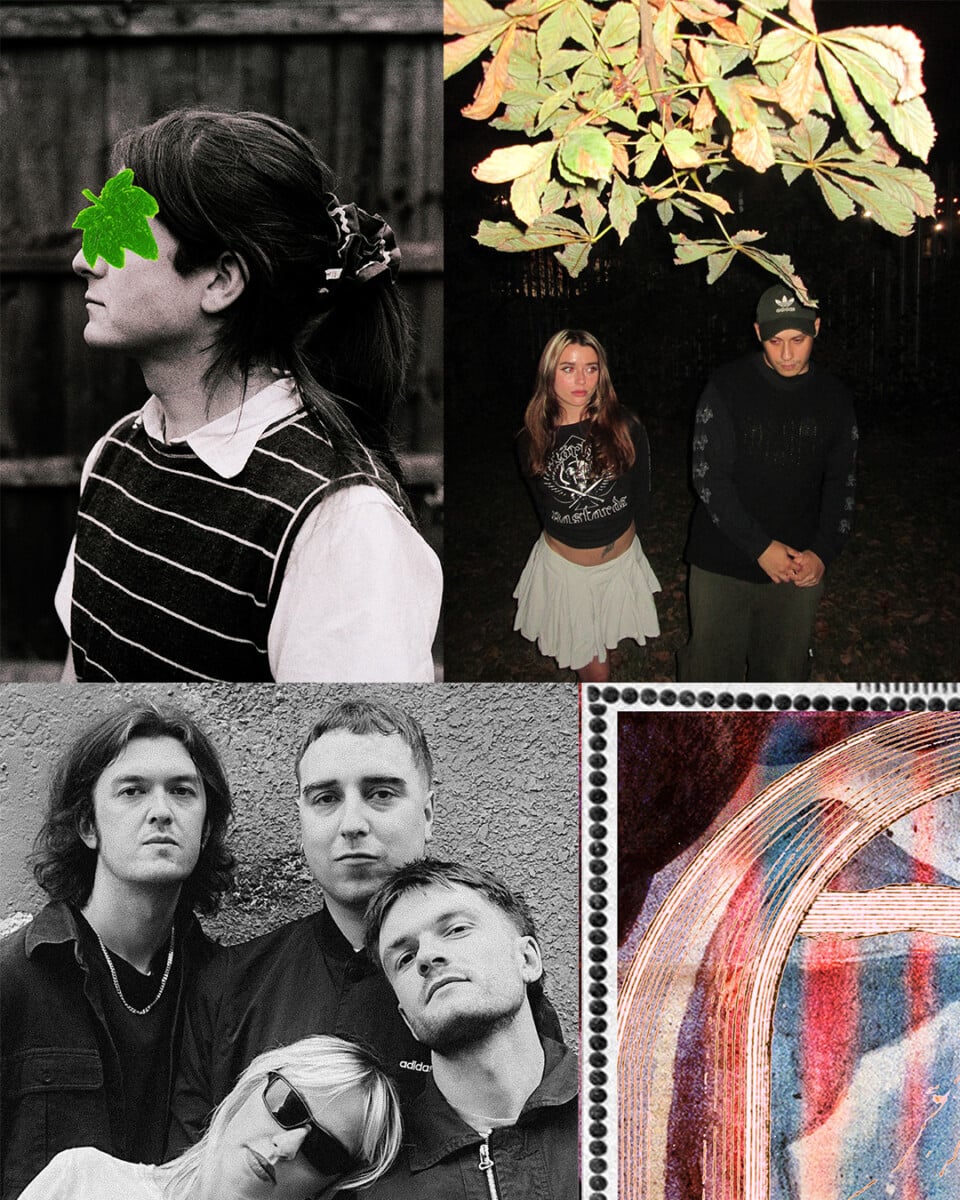
This year, this approach has led to experiments written and performed by from the likes members from Ebbb (lover1k), The Golden Dregs (ted mair) and Minor Conflict (space cult carousel), plus exclusives from rising London-scene regulars like Evelyn Gray, memory of speke, TV, platonica erotica and DEK, a project featuring members of Working Men’s Club and Factory Floor.
These names are worthy of more than just a single glance over. Older iterations of the compilation gave early support to bands and solo projects from black midi, Otta, The New Eves, Wing!, Goat Girl, Martha Skye Murphy, Drug Store Romeos, Sorry, Folly Group and The Guest, a 2018 solo endeavour from Isaac Wood of Black Country, New Road.
Pini says spotting this sort of star quality is simple, really. Limitations are, ironically, off limits: the label curator looks for “a willingness to experiment and not be ashamed of being weird or out there”.
While elsewhere we contend with the death of the album due to label’s over-insistence on getting onto lauded streaming playlists as evidence of success, Pini concedes that this is made with the new form of consuming music in mind. “This year, it was slightly more internet-y,” he admits.
Pini goes on, “It had similarities with our Covid edition. I think the internal nature of this year has made people more introspective with the material, considering the world is so fucked at the moment”.
How to be anti-trend
The compilation provides fertile ground for smaller artists to experiment with their sounds, usually enabling artists to come to understand the personality of their artistry through way of a no-strings release. Elsewhere, the pace of the industry actively inhibits this kind of free sonic exploration: if you’re going to release something, it must be in keeping with your brand, as if musicians are products to be consumed, too.
On top of this, labels often force artists to meet, match and adhere to the latest sonic trend, which homogenises any release. “We try to keep the curation entirely open and ignore any sort of trends,” Pini confirms, adding, “We see it like a playlist, so we want it to cover the full spectrum of emotion. So the decision-making is never based on clout or hierarchy, but always on what little undiscovered corner we can find.”
Pini’s own addition to the project, ‘Uh’ by Jet Blonde (featuring Pini and his partner and actor, Eloise Thomas), is followed up by a shimmery pop piece by Tony Martin, which swirls around the centrl conceit of a 50p coin indicative of the Cost of Living Crisis; this is followed by TV’s ‘The Blanks’, a moody, malaised entry likely to be heard in the support slot of Jadu Heart’s latest tour. And so the sonic programme continues onward.
In this way, no entry is deemed more important than the other: As Pini explains, “The medium of a compilation also has a nice collective and levelling structure to it; there’s no competition in it, just a collection of songs we like. The music industry is just like any other industry; it has tools that it uses, and we try to use those tools in a collective way.”
Collaborate, curate, cut through the bullshit
Though the compilation reaches from folk to punk to hip-hop and back again, one thread presents itself in repeating involvement of laptop music: though Pini insists there is never any limits at all, we try to get as many different genres as possible, “By the very nature of demo culture, a lot ends up being laptop music.”
Though laptop music often tumbles out of sticky bedroom piles of unwashed clothes and unfiltered sketches of half-ideas, Slow Dance ’25 suggests that it doesn’t have to be a solo endeavour. “Collaborate as much as possible,” Pini shares, “The multi-vibe I’ve been championing for years, jack of all trades, master of none, is a myth. Have as many outlets as you can.”
Though we might point to the musical masters to elucidate this approach (Dave Grohl’s foray with Nirvana, Foo Fighters and Them Crooked Vultures, of Damon Albarn’s Blur and Gorillaz), Pini is the newest contemporary genius, sending two bands (and counting) into the Far Out four-and-a-half-star stratosphere.
Though we often tend to consider the music, and by extension the musician, as the thing that is consumed, Pini offers a contrarian way of viewing the give and take between listener and creator; speaking on his several artist projects, he asks, “You wouldn’t eat the same meal every day, would you?”
A final question for the driving force behind one of the year’s earliest, though no less inventive and compelling, releases: “If this year’s compilation has one overriding message, what is it?” Despite the complex re-interrogation of music dissemination and consumption at the heart of Slow Dance, the answer is simple, really: “Let’s get through this bullshit together”.

Never Miss A Beat
The Far Out New Music Newsletter
All the latest New Music from the independent voice of culture.
Straight to your inbox.