


Why has pop culture avoided addressing lockdown?

Over the past few years, our lives have been permanently altered by the emergence of Covid-19, a contagious disease that has resulted in the deaths of over 6.6 million people worldwide. After many countries went into lockdown in 2020, life has slowly begun to regain a sense of normality. Although the threat of Covid-19 has not disappeared, the introduction of cautionary measures such as face masks, social distancing and vaccines has led to increased immunity and lower mortality rates.
Despite Covid-19 being a massive, inescapable part of our lives, its depictions in media remain very small. Although many projects have emerged from the lockdowns, where musicians and other creatives had plenty of time to reflect on feelings of isolation and fear – such as Iceage’s 2020 single ‘Lockdown Blues’ – very few pieces of media have addressed the disease and its effects head-on. So, why hasn’t one of the most significant world events of our lives prominently made its way into pop culture?
Since late 2019, news about the rising threat of the virus has dominated our television screens and social media. Although the UK hasn’t seen a national lockdown since 2021, audiences looking for escapism from the difficulties caused by Covid-19, including the deaths of loved ones, hardly want to revisit that period. It’s unlikely that moviegoers want to be reminded of a tumultuous and strange time that is so fresh in our memory – one that hasn’t even officially ended. Bobette Buster, a professor at Tufts University, states, “There’s an emotional exhaustion about the subject because we’re still in it. We don’t have perspective, and storytelling usually happens in context. That’s why there’s still so many World War II movies.”
Furthermore, Moscow-based producer Ilya Stewart has stated that scripts involving lockdown and the pandemic are typically cast aside. “Cinema is still about escapism, and there’s no need to see what we’re going through on a big screen,” he claimed. However, certain television shows have incorporated Covid-19 and lockdowns into their scripts in the past two years, mainly due to their faster development time. In many series, references to the global pandemic often take a satirical approach, or the severity of the virus is glossed over.
In series three of the BBC sitcom Motherland, which aired in 2021, an episode called ‘Nit Blitz’ riffs off the Covid-19 pandemic and the lockdown period by exploring a ‘nit pandemic’, replacing the government’s ‘Stay at home, protect the NHS, save lives’ slogan with ‘Comb, shampoo, comb’. Moreover, in a 2021 episode of HBO’s Curb Your Enthusiasm, Larry David uncovers a stash of pandemic essentials, such as masks, toilet paper and hand sanitiser at Albert Brooks’ house, accusing him of being a “Covid hoarder.” By referencing the lockdown, when countless people panic-bought household items, David acknowledges Covid-19 without dwelling on its tragic impacts.
Furthermore, in HBO Max‘s Sex and the City spin-off And Just Like That, protagonist Carrie quips, “Remember when we legally had to stand six feet apart from one another?” whilst standing in a crowded restaurant. Miranda even blames her drinking problem on the lockdown, “I am drinking too much. Yes. We all were in the pandemic, and I guess I just kept going.” The emphasis on the past tense is an interesting choice from the show’s screenwriters. The pandemic is not yet over, and audiences are aware of that. By addressing lockdown as a distant memory, and Covid-19 as a past threat, are these comedies suggesting we needn’t worry anymore or shielding viewers from the harsh realities of the past few years?
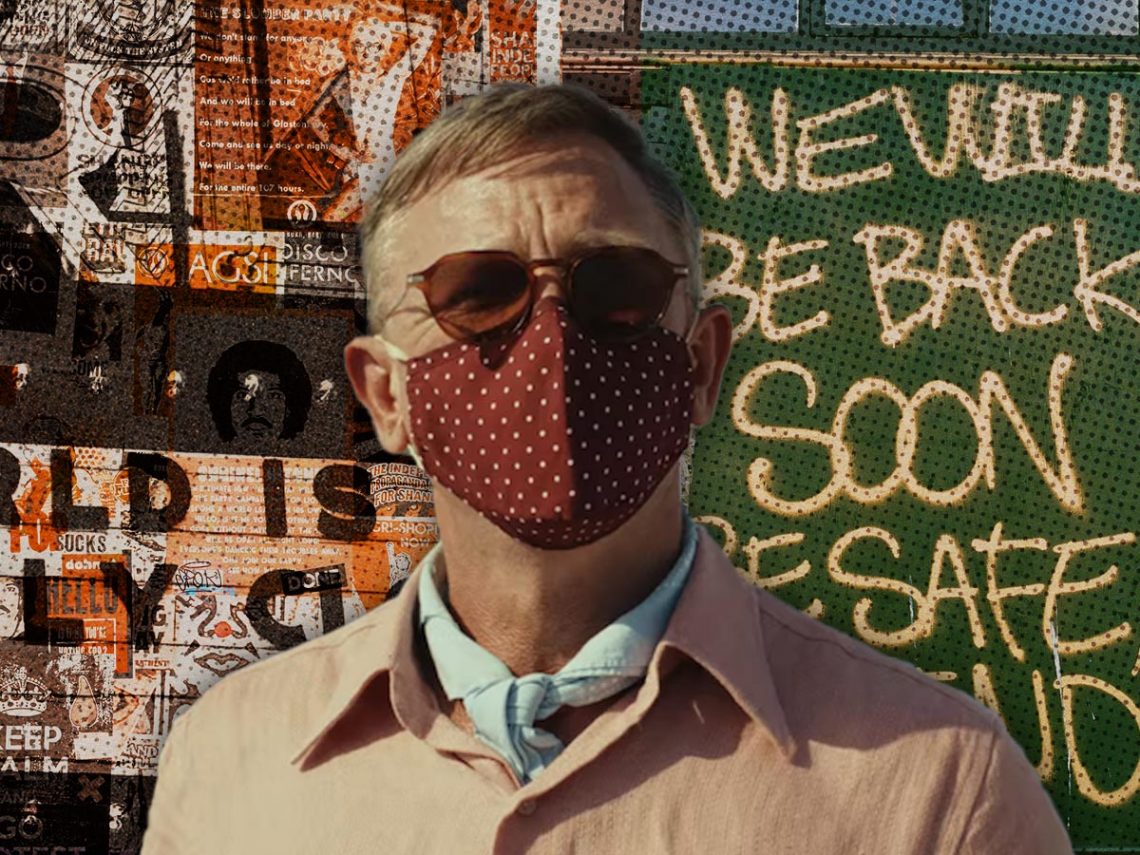
It’s perfectly understandable for showrunners to want to distance themselves from a delicate subject. Comedies are designed for escapism, and although social commentary often forms a big part of them, depicting a world where we no longer have to worry about going into lockdown or losing loved ones offers audiences a glimpse of hope. Similarly, the topic has largely been avoided in movies, with very few utilising lockdown as a backdrop. However, the recent release of Glass Onion: A Knives Out Mystery, which has received critical acclaim and bagged multiple Golden Globe nominations, poses the question of whether more movies will begin to utilise the pandemic to convey a specific cultural and social context. The further we move from the early 2020s, hoping we don’t find ourselves locked down again, the less scary the idea of revisiting the era becomes.
It seems as though most filmmakers and other creatives are currently channelling the emotions felt during the height of the pandemic, locked down and uncertain of the shape of the future, through indirect means. For example, in Ti West’s recent slasher Pearl, his choice to set the title character’s origin story during the height of the Spanish influenza pandemic in 1918 seems far from accidental. Only time will tell whether filmmakers will begin significantly incorporating Covid-19 and use lockdown as a setting for their stories. For now, the ongoing pandemic is something most audiences would much rather escape from.
