


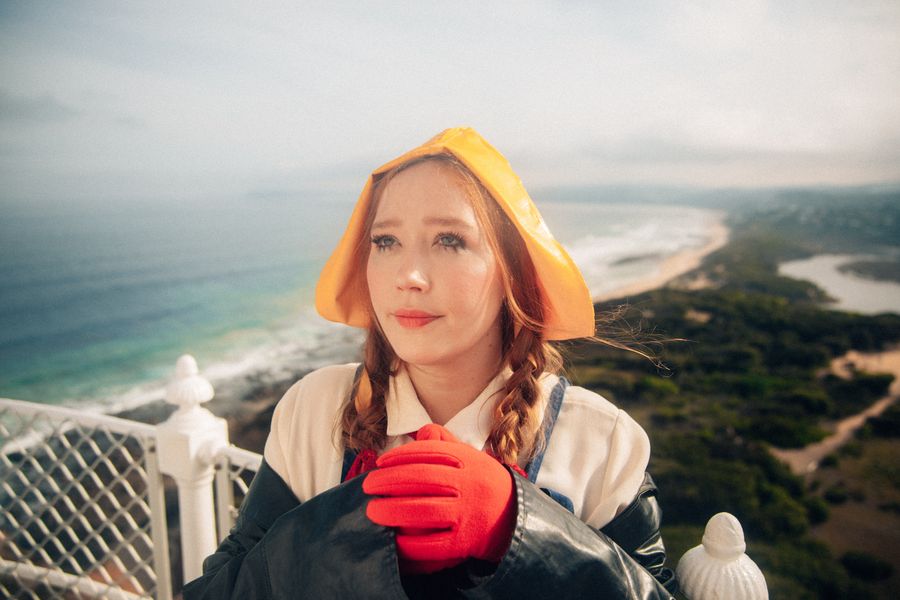
‘Idioteque’: The first song that blew Julia Jacklin’s mind

Punctuating her lyrical laments with soft strums and instrumental swells, Julia Jacklin has carved out a place for herself amidst the modern “sad girl indie” obsession. Though she certainly exists within that sphere, she also transcends above it. There’s a big sisterly warmth and an undeniable honesty to the Aussie’s songwriting that marks her out from a myriad of guitar-wielding women.
Perhaps the unique beauty of Jacklin’s sound stems from her vast range of influences, which span everything from the pop stylings of Christina Aguilera to the gothic jangles of The Cure. Growing up around the pop movement of the 2000s and her father’s taste in music, her preferences reflected those surroundings until she stumbled upon a transformative Radiohead song as a pre-teen.
In between picks from Fiona Apple and Anna Calvi, Jacklin chose Kid A as one of three albums that changed her life during an interview with Howl and Echoes. She came across the record through a so-called “cooler” and older neighbour in her youth, at a time when she was scrambling to find her own musical interests.
“I was at my neighbours house when I was about 12 or 13,” she recalled, “He was a few years older than me and had a very ‘cool’ taste in music. At that age I was just kind of pretending to like things and pretending to hate things based on other people’s opinions. I didn’t really know what I liked.”
That indecision wouldn’t last long, as Jacklin’s life was changed forever with one listen to Kid A. The album would go on to sooth “a lot of teenage angst” and also introduced her to a mind-blowing track in ‘Idioteque’. Placed towards the end of the album, the track is a collage of electronic sounds and samples surrounding stories of bunkers and ice ages.
The experimental track stunned a young Jacklin, as she recalled, “I heard ‘Idioteque’ and my mind was forever blown!” It’s not difficult to see why. Pairing Thom Yorke’s distinctive vocal melancholy with beats as anxious as the lyrics they accompany, the vocalist deemed the song “an attempt to capture that exploding beat sound where you’re at the club and the PA’s so loud, you know it’s doing damage” during an interview with The Wire.
The result was a mind-blowing track unlike anything in Radiohead’s discography and unlike anything else that was coming out at the time. Though it’s a far cry from the soft sounds Jacklin would grow up to create, it’s a worthy early sonic eye-opener.
Revisit ‘Idioteque’ by Radiohead, the first song that blew Julia Jacklin’s mind, below.
