


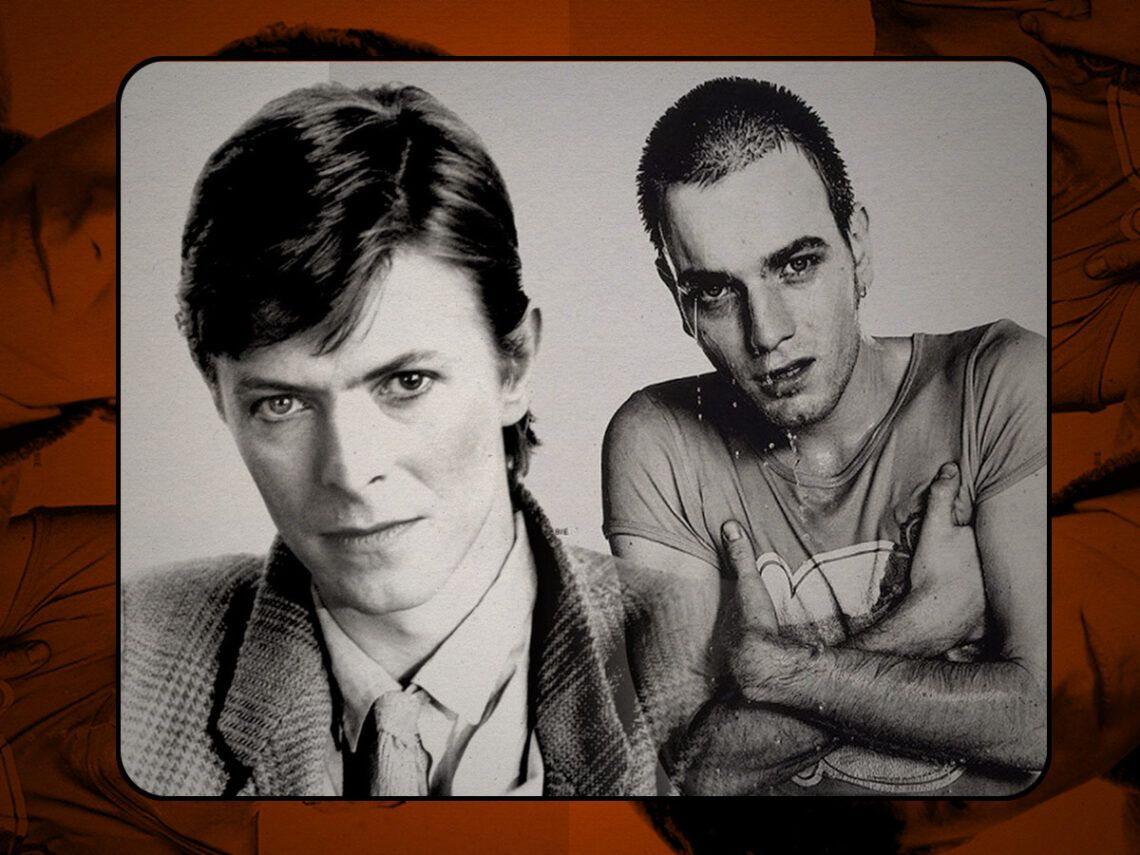
Choose not to: A hypothetical guide to David Bowie’s music in ‘Trainspotting’

One of the greatest pieces of advice in journalism I’ve ever heard is that sometimes, the stories you choose not to tell are as important as the ones that you do. It rings so true because it’s a sentiment that applies to every corner of life, no matter how unsuspecting: the secrets you tell people, the things you let slide, the opportunities you deliberately miss. One man who seemed to understand that mantra well was David Bowie.
If one thing was clear throughout his life and career, it was that Bowie hated the idea of making music – or, indeed, any kind of art – simply for the sake of it. To give him his full dues, many people could learn from his eschewing of the simple cash-grab or the straightforward album rollout. Everything was intentional, purposeful, and finished with the greatest flair.
At the other end of the spectrum, there was the sprawling streets of Leith and the Trainspotting gang. In many ways, it is true that a man like Bowie and a story about impoverished drug users in Scotland sit at complete extremes of the cultural canon, but in this special year of 2026, as we remember Bowie on the tenth anniversary of his passing and celebrate 30 years of the Trainspotting film, the two seem closer than ever.
There is, however, one glaring issue: the infamous fact that Bowie turned down being on the soundtrack for Trainspotting. Arguably the thorn in the side of director Danny Boyle for as long as the film has existed, there’s no denying that the Starman possessed a stubbornness that no one would ever dare to challenge. As such, when he said no, the answer was final.
Although Boyle was patently a Bowie fan, he obviously wasn’t the only one. The feeling was also shared in abundance by Trainspotting’s author, Irvine Welsh, who went as far as to say that the musician was a “one-stop art school”, among many other glowing praises and analyses on how he affected his view on life as a writer and beyond.

So, it seemed perfect, in this sense, for Bowie to be the leading sonic light when it came to Trainspotting. He was a known fan of Boyle’s previous 1994 directorial effort, Shallow Grave, and Welsh’s lavishing fanatical stance was sure to sway him. But no. The director and the author’s shared pipe dream – if you’ll pardon the pun – of ‘Golden Years’ being used in the iconic toilet scene never got off the ground, because Bowie never allowed them to.
But all was not lost, and he was very much not the villain in this story. Instead of simply signing the dotted line and giving permission for his music to be used, Bowie pulled on the strings of his connections to Lou Reed and Iggy Pop instead, waiving the rights for their songs to be used in his place. You don’t need me to spell out what happened from there.
With the iconic cuts of Iggy and Reed providing the sonic muse to gritty drama and trippy dreams, it seemed at the time that Bowie could put his magician’s hat away and see an end to the whole Trainspotting affair. Yet as a stroke of fate would have it, when he died a decade ago, it happened to be the same time that the long-awaited sequel, T2: Trainspotting, was being filmed. Boyle knew he had to do something.
However tempting it might have seemed, the answer was not to include Bowie in the movie, at least in the conventional sense. But in a passing scene, when an aged Renton flips through his old record collection, the most eagle-eyed will catch a glimpse of a few records by the Starman within their number: totally silent, a tribute unsaid was the perfect way to honour Bowie in these conditions.
Of course, even with this story reaching its poetic conclusion, it doesn’t stop the mind from wandering and fantasising over what Bowie could have been within the Trainspotting legacy, even now three decades down the line from when it first beamed on to the screen and seared itself into the cultural mood of an entire society.
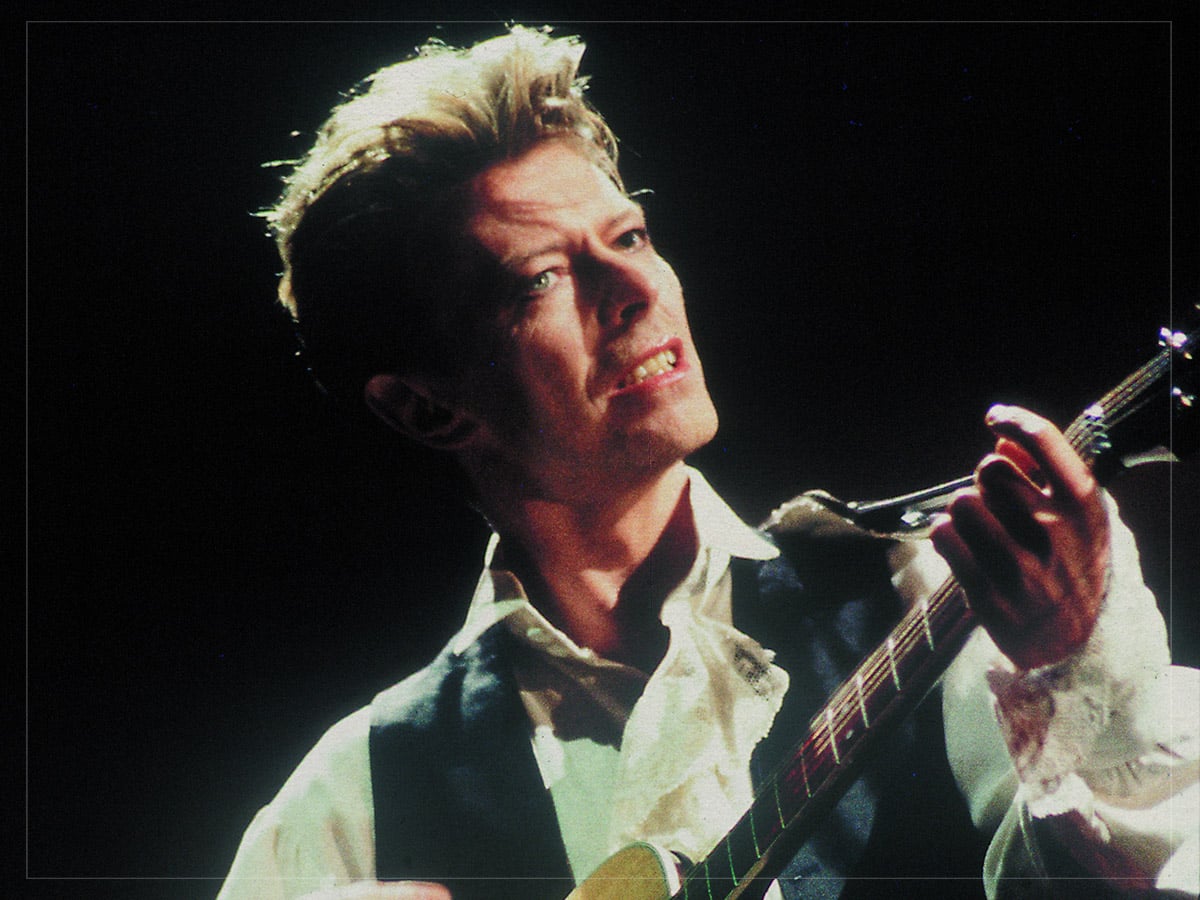
‘Golden Years’ is the obvious starting point, given that it is the only solid evidence we have to go on, but as you delve into that underworld even further, the more the untapped treasure trove of potential continues to reveal itself. What about ‘Station to Stations’ as all the characters descend into the trenches of addiction, or ‘Ashes to Ashes’ as Renton suffers his overdose?
Then you hit the rock bottom of despair when baby Dawn dies, hypothetically, for which a song like ‘Lazarus’ from Blackstar would have been fitting, if it had been released at the time. That sense of mortality, mistakes made, and roads not taken could also be found in something like ‘The Man Who Sold the World’.
But then you get to the real thrill, at the very end of the film, as Renton walks through the streets of London and escapes, with his friends’ stolen cash in hand. There is nothing that could fit in better with that exhilarating high than ‘Heroes’, with Bowie’s ironic commentary on youth, hedonism, and naivety perfectly encapsulating the mindset of a man who genuinely believes he has solved all his problems.
In short, Bowie was the essential muse of Trainspotting that never came to be, probably much to his own personal sense of satisfaction. The man was hellbent on never changing his mind, so it was clear that he would never budge on his decision. In doing so, he obviously made the film’s soundtrack the iconic entity it was, but always with the tragic absence of his own soaring sound.
It feels like 2026 is a pretty significant juncture in the crossroads between the life of Trainspotting and the death of Bowie, using the palette of a film that is immortal against someone who was ultimately not. Yet somewhere in the clouds, between the stars and the trippy highs, the subtle paths created among them both made for a massive shared cornerstone of British culture that will never be forgotten.
