


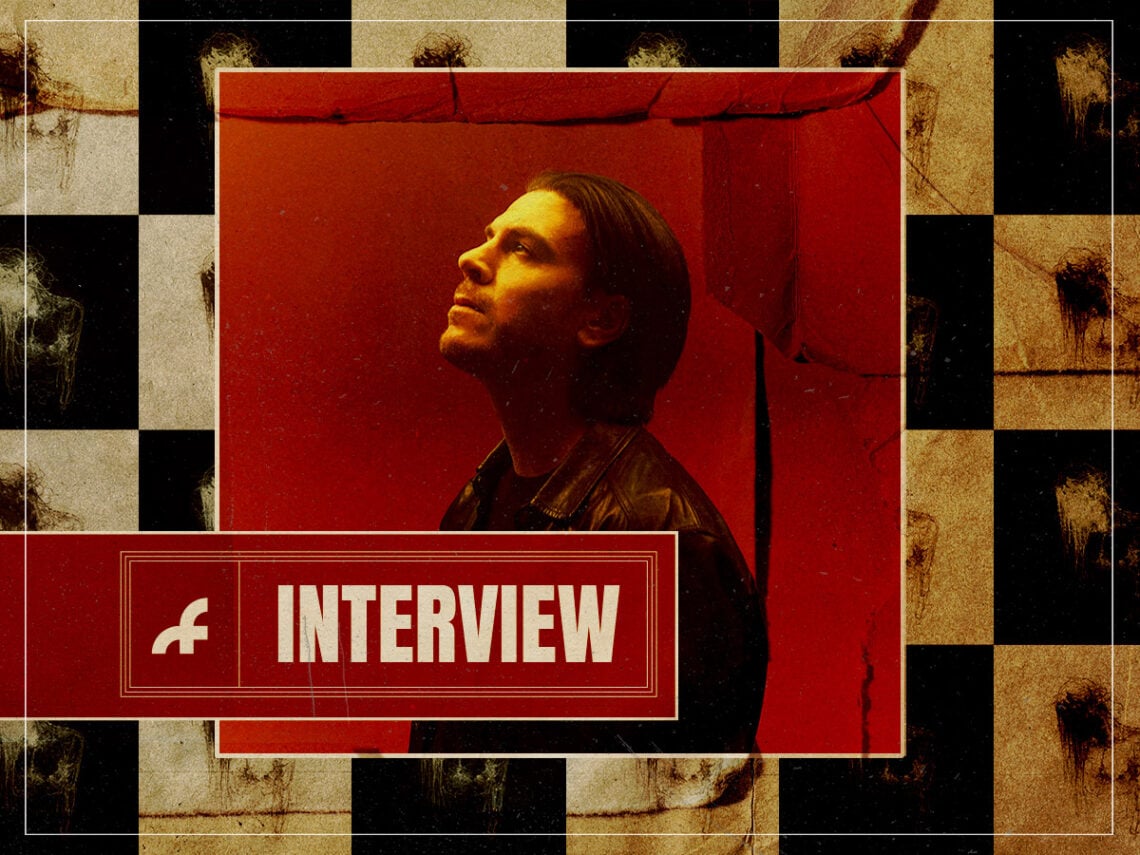
“He holds onto his ego with the grip of a beast”: Humanist’s Rob Marshall on life, death, and Dave Gahan

“It’s like Christmas,” Rob Marshall, the mastermind behind his music project Humanist, explains. “It’s like the build-up,” he continues, comparing his latest effort, On The Edge of a Lost and Lonely World, to one of the most exciting times of the year. Like his debut album, his latest record blends the visions of his featured artists while creating unique spaces where different creative touches can thrive. However, this time, Marshall has become more aware of the dramatic and delicate beauty of life itself.
Usually, when asking an artist how a project came together, it’s met with recounts of serendipitous moments or a recognition of the power of infusing authenticity into music. While Marshall ticks those boxes in one way or another, the fact that Lost and Lonely World was borne out of something entirely natural seems to speak volumes about its brilliance in a more broader sense.
“I didn’t do a lot for about six months,” Marshall explains, not because he didn’t want to or for lack of trying, but because his last album almost coincided entirely with the UK lockdowns. “I was pretty burnt out anyway and just sat around for a while. I had two balconies, so I spent most of the time drinking Prosecco in the glorious sunshine,” he laughs. “But then I started writing some music with Mark Lanegan.”
The preface to Lost and Lonely World wasn’t just falling into creativity naturally—although that was, of course, a major part—a series of life events also ushered Marshall into a certain direction musically, and so throwing his heart and soul into the art felt like a necessary catharsis. “Music is always a response to whatever’s going on in my life,” he explains. “I lost my main collaborator, [Lanegan], one of my best friends, and also I had a little brush with cancer, so music became a kind of cathartic counselling thing,” he shares.
Although Marshall entered what could only be described as a form of “survival mode”, music didn’t just provide an outlet for expression; it allowed him to tap into something he always felt connected to, guided by those who shared his artistic vision the most, like Carl Hancock Rux, who features on ‘The Beginning’. Working with Rux also caused Marshall to unintentionally stumble upon the perfect name for an album that emits an evocative expression of vulnerability and introspection.
“As soon as I heard the bits that he sent through, I knew that I was going to make it into a looped gospel repetitive thing,” he says. “He also sent this vocal, which was a bit of spoken word stuff. It was a little bit like the track that we had done previously, ‘Ring Of Truth’, but I just didn’t feel like I wanted to go there with that track.”
Revealing the genesis of the record title, he adds: “I was kind of scanning through [the lyrics], and he said, ‘on the edge of a lost and lonely world’. I thought, that’s it. I’ve got the title. And I knew at that point that ‘The Beginning’ was going to be the first track.”

Although there are many challenges to being a musician and a successful one, releasing the sophomore album is quite possibly the most difficult aspect of any artist’s career. There are a handful of risks when releasing the debut album, but the second effort requires a certain level of growth to make it work without losing all the reasons audiences became drawn to the music in the first place. For Marshall, Lost and Lonely World felt much more organic because of what he had already been through in his personal life.
Although he explains that nothing was preconceived, the common themes in both Humanist and Lost and Lonely World are the dichotomies between life and death. Marshall’s signature lighter and darker counterpoint components might be there across both records, but they manifest differently purely because they are rooted in circumstance. In a way, relinquishing control meant exploring things he couldn’t have possibly predicted or executed with purpose.
“[Losing Lanegan] was a huge thing for me because he was a massive part of my life,” he tells me. “This probably sounds too profound, but it was like I had a purpose [with him] because I was always writing for him, and I really enjoyed that process. Then, dealing with my own kind of mortality and the shake of that—once I had that track, I knew I had the beginning and the end. And [Life and death] really seems to be a subject that feels comfortable to tap into.”
These two opposing features, life and death, infiltrate the entire piece, both constantly in a battle with each other and coming to the fore in gorgeous complexities where often it’s difficult to work out which is which. However, those are the moments where Lost and Lonely World peak and all of the weird and wonderful aspects of being human come out in confrontational but intoxicating ways. Take ‘Born To Be’, for instance. Another darker instalment with notes of hope and romanticism, this track feels like it touches upon every aspect of human emotion in just under five minutes.
“When you listen to something like ‘Born To Be’, what Pete [Hayes] did is genius,” Marshall says. “It’s one of my favourite things. I love [Black Rebel Motorcycle Club], and I love his voice, but even if you take his voice away, and you were to just listen to the music instrumentally when it breaks into the chorus, there is so much hope and light in it. And I’m all about that. I like sitting in the pockets of darkness,” he adds, “I don’t really like listening to it, but it felt right and appropriate to put it on the record because it was reflective of something that was very relevant.”
Injecting musicality with paradoxes—life and death, light and dark, love and loss—often invites labels like ‘gothic’. However, what’s even more intriguing is how those descriptions evolve over time, with legacy acts becoming more attractive to new generations who apply terms like gothic to music that historically catered to different eras and audiences. Perhaps this is the natural cycle of musical reinterpretation, but for whatever reason, Humanist falls into similar categories as acts like The Cure, Siouxsie and the Banshees, and even Depeche Mode. This alignment might be more related to Marshall’s ties to the leader of the synth-wave himself, Dave Gahan.

Marshall has worked with Dave Gahan multiple times in the past, but their collaboration on ‘Brother’ seems to be their best yet. The numbers speak for themselves: ‘Brother’ is currently Marshall’s most popular track on both Spotify and YouTube. Among the tracks from Lost and Lonely World, ‘Shock Collar’, which also features Gahan, holds the title of his most-viewed video on the streaming site. It’s clear that when these two artists’ worlds collide, they create pure magic.
‘Brother’ is the ultimate invitation—Gahan’s strong vocals, the endearing melody, the soft arrangements, and the soulful melodic climaxing of the second half feel as much a ballad for Marshall as it is for Gahan, not just in terms of also recently losing someone close but when looking at his previous experiences with addiction. “The opening line, ‘I have died a million thousand times,’ I thought, ‘Wow, if anybody can sing that line with genuine conviction, it’s Dave’ because of his history,” Marshall reflects.
“He’s such a genuine and gentle character,” Marshall adds, describing the allure of Gahan. “I don’t know what he was like in the ’80s and ’90s, but he’s somebody that is essentially a superstar. For somebody who can stand in front of a crowd and sing to that amount of people and then hold a very normal conversation afterwards, it’s quite staggering, really. He holds onto his ego with the grip of a beast. He’s a very, very nice guy.”
‘Brother’ was inspired by Marshall losing Lanegan, but the parallels make for a delectably layered listen, which, on the face of it, is what Lost and Lonely World is all about. According to Marshall, the record isn’t just representative of one specific moment in time. It pulls together everything he adores about music and creativity. “I’m not afraid to say I’m making the music that I want to make,” he says, his statement more a sign of effortless brilliance than egotistical bravery. “I’ve never been in a position where I’ve been forced by a label or asked by a label to write a pop song or anything like that. I just write the music that I want to make.”
What makes Marshall’s vision work and ensures it is executed so powerfully is that there are no limits. Lost and Lonely World sees the musician collaborating with some of the best in the business, including Tim Smith, James Cox, Rachel Fannan, Isobel Campbell, Madman Butterfly, and more—and what keeps it fresh, profound, and relevant is that he could truly take his creativity anywhere.
“The only limits are the ones you put on yourself,” Marshall states. “And I don’t have any. I don’t have those things. I’m never afraid to approach anybody because I believe in it. In any other aspects in life, I’m shy or don’t feel good enough, but in music, and my whole self-worth is wrapped up in it. So I put everything I’ve got into the music because I really believe in it.”
