


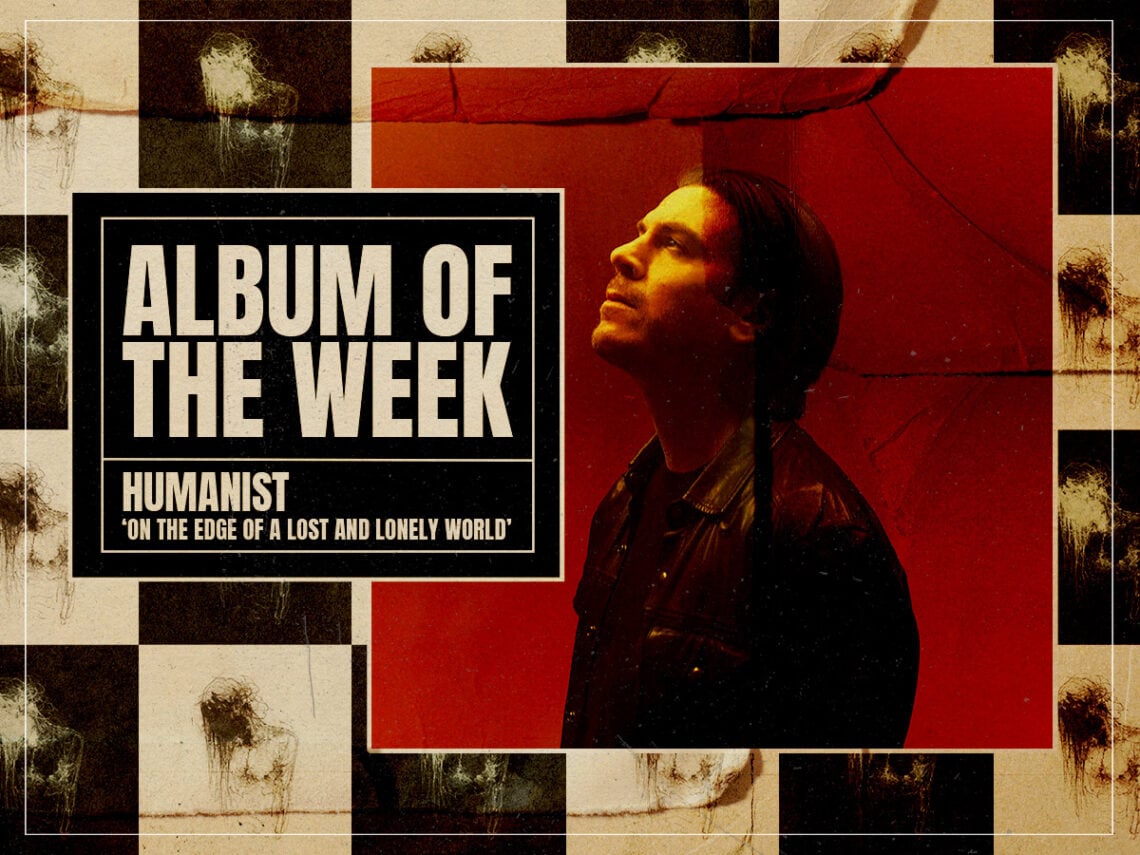
Humanist – ‘On The Edge of a Lost and Lonely World’ album review: an evocative expression of vulnerability

THE SKINNY: The debut of Rob Marshall’s musical project Humanist was largely lauded due to its unique listening experience and cohesive sound—a seemingly impossible feat when incorporating the various styles of differing music artists at play, entirely subverting pop. Most musicians strive to create music that taps into emotions more significant than words can describe. On The Edge of a Lost and Lonely World masterfully achieves this by blending diverse influences into a singular, evocative expression of vulnerability and introspection.
Like Humanist, Marshall’s second album blends the visions of his featured artists while creating unique spaces where different creative touches can thrive. Delivering emotionally potent, guitar-driven music with a broader palette, Lost and Lonely World does well to integrate Marshall’s signature lighter and darker counterpoint components, tapping into the dramatic and delicate beauty of life itself.
In today’s world, describing a piece of music as ‘post-punk’ has become too much of an understatement to yield anything meaningful while also appearing strangely reductive despite the vagueness it implies. In this case, however, Marshall delivers post-punk music as intended, reaching into the depths of the soul with music that genuinely charms.
What this album truly excels at is providing fullness at a capacity that once felt long gone: its substance is almost overwhelming, the material the kind of insatiable food you keep coming back for time and time again, and not in the meaningless way that sentiment is often uttered. It’s entirely fulfilling, but only because it reminds you how hungry you were for music that delivers on its promise to reflect real human experiences with the gravitas great big things like love and loss deserve.
For fans of: Interview with the Vampire and Pringles.
A concluding comment from a punk fan: “Where’s all the shouting?”
On The Edge of a Lost and Lonely World track by track
Release date: July 26th | Producer: Rob Marshall | Label: Bella Union
‘The Beginning’ (feat. Carl Hancock Rux): Nothing feels more fitting an interlude than a heart-pumping track that feels simple in execution but accessible and demanding all the same. Although not as strong as other parts of the record, ‘The Beginning’ surely sets the scene for what’s to come. [3/5]
‘Happy’ (feat. Ed Harcourt): The twinkling display of guitar greatness in this track proves something that was clear in Marshall’s debut—this is a musician who knows how to best utilise every single component of a song without oversaturating its feel. [3.5/5]
‘Too Many Rivals’ (feat. Tim Smith): Although a change of pace, the sudden increase in visceral quality draws you in even more as Marshall taps into his own affinity with gothic elements with heavy emotions matching perfectly with the soft and ethereal notes. [4/5]
‘The Immortal’ (feat. Ed Harcourt): Venturing into even darker territory, ‘The Immortal’ works because the unsettling aspect is condensed into the gorgeous harmony, while the accompanying arrangements stir up the same heaviness that drew you in in the first place. [3.5/5]
‘This Holding Pattern’ (feat. James Cox): In a perfect execution of Depeche Mode and Joy Division-esque electronic and post-punk quality, ‘The Holding Pattern’ remains linear in its vocal delivery while keeping an endearing dose of climactic energy. [4/5]
‘Brother’ (feat. Dave Gahan): Anything with Dave Gahan is likely to be great, but ‘Brother’ still succeeds in emitting the element of surprise with its unsuspecting sentimentality. Everything invites you in—Gahan’s strong vocals, the endearing melody, the soft arrangements, and the soulful melodic climaxing the second half. Undeniably, it is an album highlight and a worthy choice for the lead single. [4.5/5]
‘Born To Be’ (feat. Peter Hayes): Another darker instalment with notes of hope and romanticism, ‘Born To Be’ feels like it touches upon every aspect of human emotion in just under five minutes. [3.5/5]
‘Keep Me Safe’ (feat. Rachel Fannan): These are the songs on the record that make it worthy of attention in 2024—many musicians attempt to replicate the past, but Lost and Lonely World effortlessly and coherently channels elements of past, present, and future in a way that keeps you engaged throughout. [3.5/5]
‘Dark Side Of Your Window’ (feat. James Allan): It’s difficult to describe a record as “goth” or “emo” and be taken seriously, but this is a common thread throughout Lost and Lonely World, with many of its songs touching upon the very real experience of life and love that feels all-consuming. [3.5/5]
‘Love You More’ (feat. Isobel Campbell): Marshall is incredibly adept at scene-setting, and ‘Love You More’ communicates everything it’s putting down in the first ten seconds. Its almost ballad-like quality becomes an immersive experience, making this another notable album highlight. [4/5]
‘Lonely Night’ (feat. Madman Butterfly): This one comes in relatively short and sweet, rather like a condensed Cigarettes After Sex composition, proving that simplicity can be beautiful. [3.5/5]
‘The Presence Of Haman’ (feat. Madman Butterfly): This album’s closing tracks bring together Marshall’s concept in a perfect amalgamation of ethereal and sinister qualities, the focus on instrumentation bringing out its ability to appeal emotionally. [3/5]
‘The End’ (feat. Madman Butterfly): Like ‘The Beginning’, ‘The End’ closes the curtain once and for all, not leaving any scope for activity or energy beyond the final notes, leaving you without a choice but to begin it again. And then again. [3/5]

Never Miss A Beat
The Far Out New Music Newsletter
All the latest New Music from the independent voice of culture.
Straight to your inbox.