


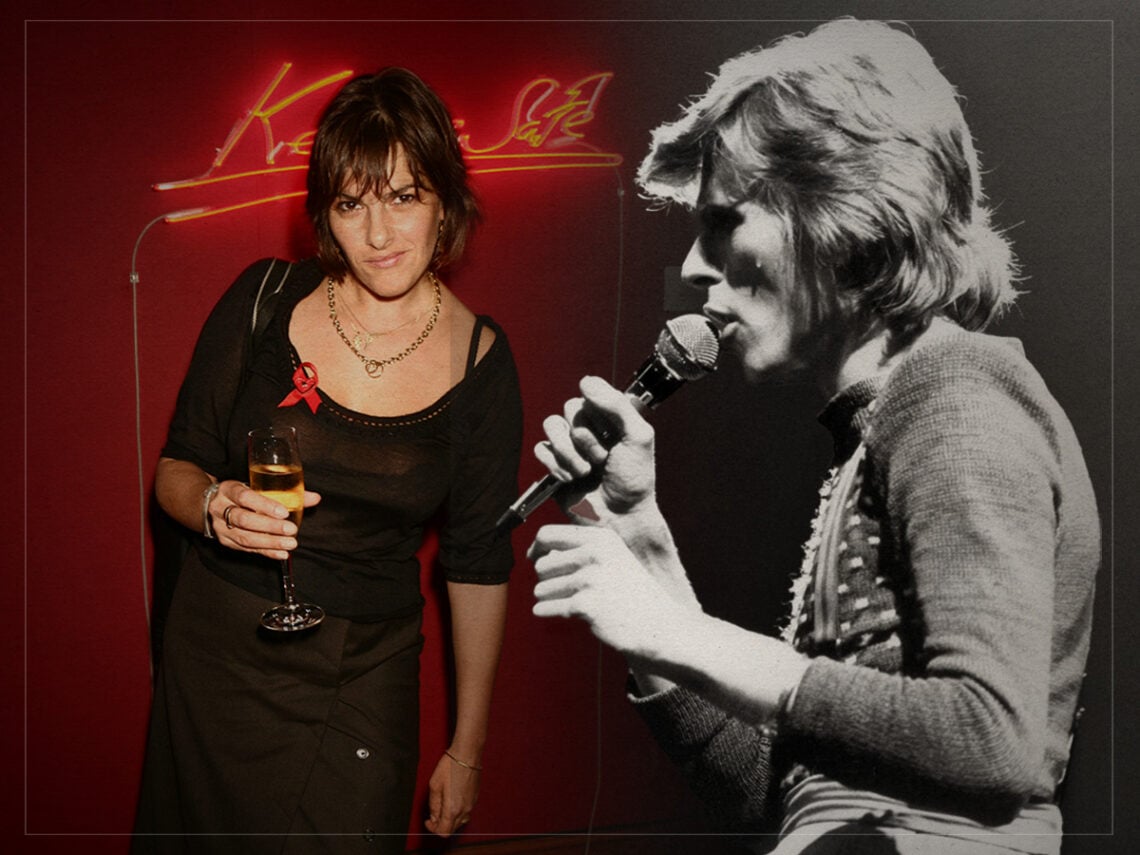
How Tracey Emin was transformed by David Bowie: “I could get you to sing”

Across seemingly infinite mediums, Tracey Emin has continued to disrupt the art world with her provocative, vulnerable displays of womanhood, mental health and sexuality through an unflinching gaze.
Her confessional style began in her studies at the Royal College of Art in the late 1980s, emerging as a primary figure of the Young British Artists of the decade with works like Everyone I Have Ever Slept With 1963-1995, a tent appliquéd with the names, and My Bed, a rendering of her actual bed after days spent in it, in the midst of a depressive state.
From the beginning, her art was intended to be a raw depiction of emotion, much of it rooted in literal and psychological pain, that would expand conversations. In a life that, from a young age, was marred with turmoil, art was Emin’s sole constant where she found solace and escape. Music was another form of comfort and, in the soundtrack to her life, David Bowie remains a favourite.
Emin’s love of Bowie can be traced back to childhood, when she was first introduced to his music at around 12 years old. In stark contrast to her friends’ love of bands like the Bay City Rollers, Emin resonated with the literary sensibilities of Leonard Cohen and Lou Reed but, most importantly, the alien-like mystique that Bowie reverberated.
“His whole ethos meant you could be different, and you could be outside, but you didn’t have to be a victim to that,” the artist explained, during an interview on BBC Radio Four’s programme This Cultural Life in 2021. “You could use all that, and you could be creative with it.”
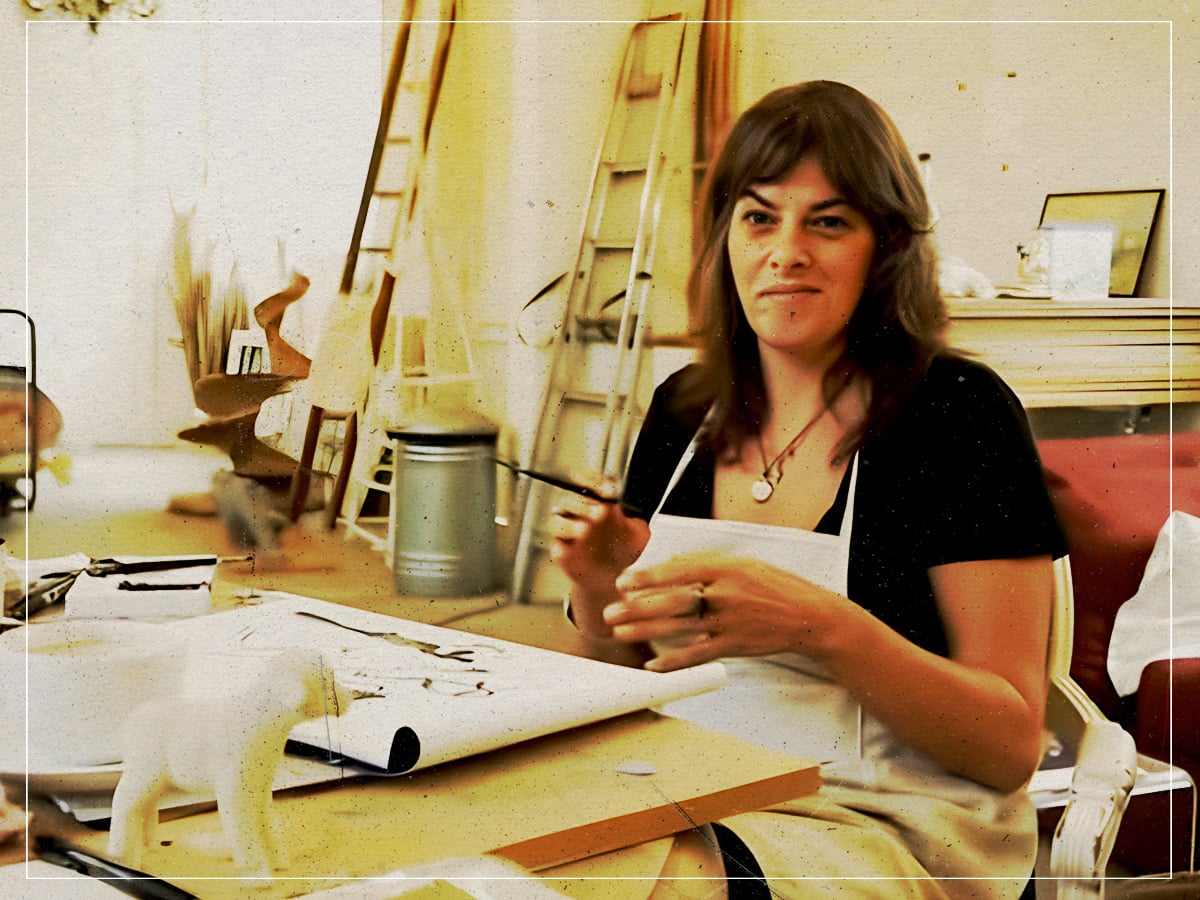
Bowie’s music, as it did for many, split Emin’s world open, and she taught herself the words to every one of his songs in devotion. In 2004, on Desert Island Discs, she named Bowie’s ‘Young Americans’ as the one song she could not live without because, in her words, “I can dance to it, I can sing along to it, I could try and remember all the lyrics to it.”
She likened Bowie’s writing process to an artistic approach, explaining, “I could write the lyrics down and then cut them up, do what David Bowie does and make some other kinds of collages and poems out of them.”
Bowie’s music introduced Emin not just to a new style of sound and presentation, but a vast array of artistry across mediums, and through Bowie, she discovered and became a fan of Egon Schiele, an Austrian Expressionist painter whose work was a prominent visual influence on Bowie. Schiele is often remembered for depictions of sexuality, frequently shown in nude self-portraits. Schiele’s intensity reflects as an influence on Emin, who went on to include select pieces by the Austrian painter in one of her shows at the Leopold Museum.
On This Cultural Life, Emin recounted the time she met Bowie, by chance, in 1996. Sitting in a Lebanese restaurant, she recalls, “someone leaned over the table and said, ‘I’m so very sorry to interrupt, but my name’s David, and I just want to say how much I love your work.’” Emin replied, “‘Likewise,’” and thus began an enduring years-long friendship between the two artists. They became so close that Bowie even invited her to sing on a song, which she refused and now looks back on with regret. “I can’t sing a note,” Emin said, “and [Bowie] said to me, ‘I could get you to sing. We could do a song together. I’ve got the perfect song.’”
“I really wish I’d done it,” Emin continued, “because at least I would have something else in history with my association with him.” Emin’s love for Bowie reflects an appreciation for art that disturbs all notions of normalcy, rendering thought-provoking worlds of sound and visuals that prove timeless, as her own legacy continues to do.
