


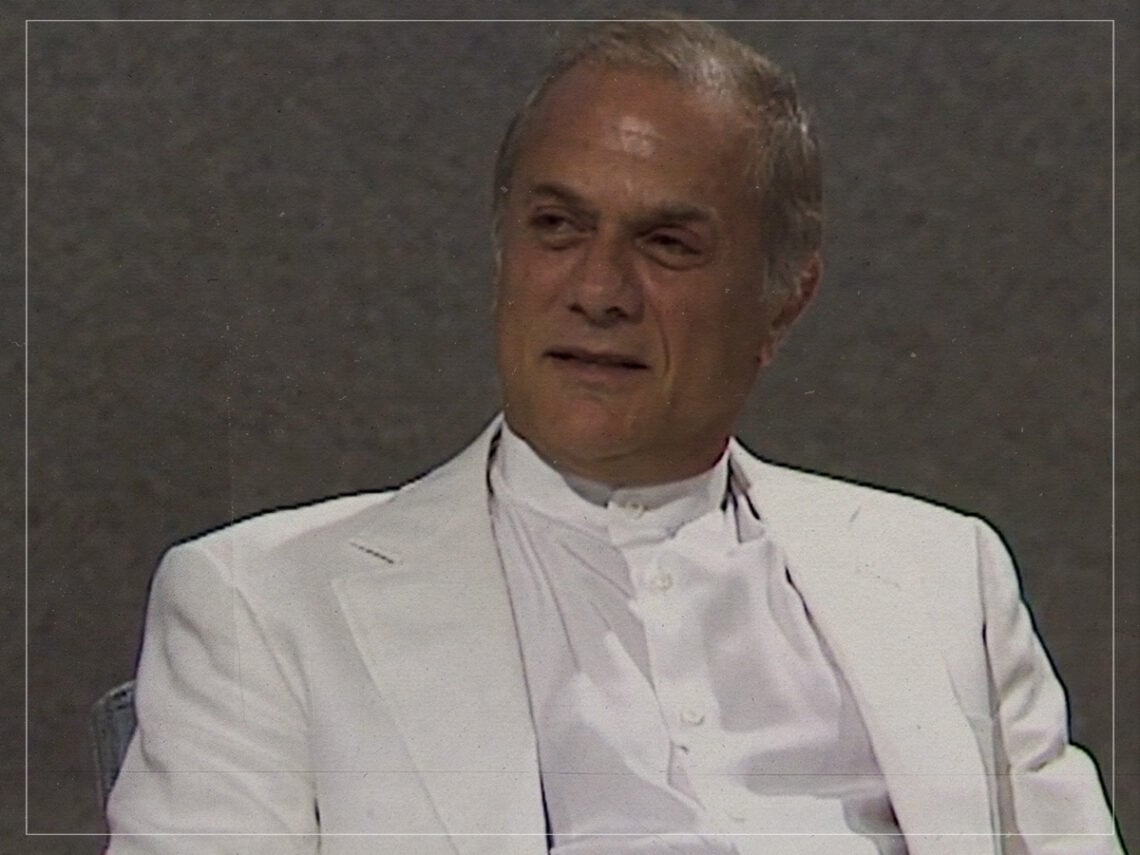
How “the most generous act” of Tony Curtis’ career changed Hollywood forever

It’s funny how a little decision can result in ripples that lead to a seismic shift, although often not one that the doer even enacts consciously, which is what happened with the legendary Hollywood star Tony Curtis.
Curtis, who made his most iconic turn as one of the shape-shifting protagonists in Some Like It Hot, did something “generous”, not knowing he was thus able to help alter the course of Tinseltown forever.
The year before he landed his popular role alongside Jack Lemmon and Marilyn Monroe, he starred in The Defiant Ones opposite Sidney Poitier. He served as an executive producer with his wife, Janet Leigh (the pair ran Curtleigh Productions together), but it was Stanley Kramer who ultimately directed and produced the award-winning film.
The movie follows Curtis and Poitier as escaped prisoners, shackled together by a warden who assumes that the pair won’t make it far before prejudice takes hold and they kill one another. Despite initially acting hostile towards one another, the pair eventually gain respect for each other as they fight to both make it out alive.
Considering they were shackled together for so long, you wouldn’t think that one actor would be billed lower than the other, but in a classic, disappointing case of Hollywood racism, Poitier’s contract claimed that he would be billed as a supporting actor, while Curtis would be billed as the lead star.
It didn’t make any logical sense, and Curtis wasn’t about to let this fly. Poitier once revealed that “Tony performed the most generous act I ever received from an actor in my life. My contract called for me to be listed among the supporting actors. Tony had top billing alone, but he went to Stanley Kramer and said, ‘I want you to put Sidney’s name up there with mine’. And that’s exactly what happened.”
As a result, Poitier’s career changed forever. “That’s how I got top billing for the first time in my life. I think that speaks a lot of him,” the actor said. At the Academy Awards that year, both Curtis and Poitier went head-to-head in the ‘Best Actor’ category, rather than Poitier being reduced to ‘Best Supporting Actor’, and in the process, he made history as the first Black actor to be nominated in the category.


Considering that the Oscars had existed for around 30 years at this point, there was no excuse as to why a Black man hadn’t been nominated before, other than the racial prejudices that defined Hollywood. Poitier proved to be a major figure in the fight for visibility on the big screen, with the actor soon going on to lead many films at a time when Hollywood still prioritised white stars, even if they weren’t half as good as Poitier.
Further establishing him as a sublime talent, the ‘60s saw Poitier become one of Hollywood’s most impressive actors, with roles in the likes of In the Heat of the Night and Guess Who’s Coming to Dinner, and in 1963, he would become the first Black man to win ‘Best Actor’ for his performance in Lilies of the Field, as well as winning an Honorary Academy Award in 2001.
