


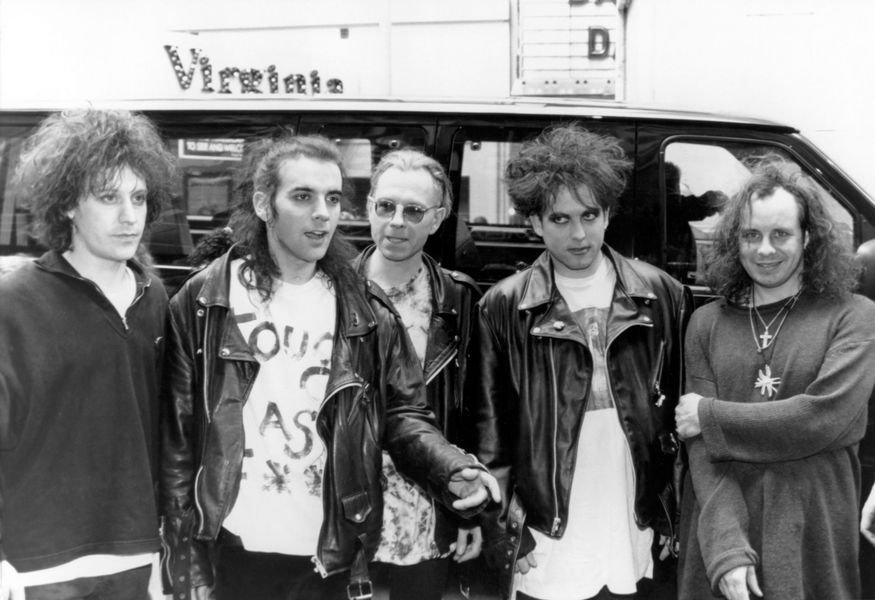
How The Jam helped The Cure record their “least favourite” album

The punk years of the late 1970s were brimming with brilliant acts, and in the UK, two of the finest were The Jam and The Cure. Although they are artistically quite different, both outfits helped to advance the cause of genuinely interesting guitar music, and without their efforts, culture would be a very different place today.
The Jam are Woking’s finest export. Led by the sharp genius of frontman and guitarist Paul Weller, and complete with the dynamic rhythm section of bassist Bruce Foxton and drummer Rick Buckler, they fused punk anger with mod revival panache and delivered many iconic cuts in the process.
Discussing the horrors of everyday life in Britain in the 1970s, from ‘The Eton Rifles’ to ‘That’s Entertainment’, their work is timeless, and it comes with a real, substantial message that marked them out from many of their peers. By the time the band imploded in 1982, their job was done, with Weller continuing to go from strength to strength, with his work in The Style Council about to surprise everyone in the best way possible.
As for The Cure, they formed in another London satellite town, Crawley in 1978, but the members had been cutting their teeth in other groups since the middle of the decade. Much like The Jam, they were led by a creative mastermind, the iconoclastic Robert Smith, and without him, the whole operation wouldn’t have got going.
They rose off the back of the post-punk movement, releasing their debut album Three Imaginary Boys in May 1979. After a career-changing tour with Siouxsie and the Banshees in late that year, they hit their creative stride, releasing the atmospheric goth masterpiece Seventeen Seconds in 1980, which confirmed them as pioneers of the burgeoning goth movement.
The band continued to be prolific over the decade, releasing hits such as The Head on the Door and Disintegration, and by the time they released Wish in 1992 they had taken America, and were duly hailed as one of the most influential rock bands of all time.
Whilst artistically, The Cure’s career has been remarkable, it has not been without its twists and turns, and for Robert Smith, there are moments that he’s not happy with, including the band’s debut album, which particularly irks him.
Famously, during a 1987 interview with Spin, he said of Three Imaginary Boys: “A lot of it was very superficial – I didn’t even like it at the time. There were criticisms made that it was very lightweight, and I thought they were justified. Even when we’d made it, I wanted to do something that I thought had more substance to it.”
Then, when speaking to Rolling Stone in 2004, looking back on each of The Cure’s albums, Smith discussed the recording of their debut and revealed that they got it done with a little help from The Jam, even if Paul Weller and Co. weren’t exactly aware of it. Smith said: “I was writing songs for the first album for a period of about two or three years. I wrote ’10:15 Saturday Night’ and ‘Killing an Arab’ when I was about sixteen, and we recorded the album when I was eighteen, so I wasn’t really still convinced by some of the songs. The pop songs like ‘Boys Don’t Cry’ are naive to the point of insanity [laughs]. But considering the age I was and the fact that I had done nothing apart from go to school – no real life experience, everything was taken from books – some of them are pretty good.”
He continued: “The Jam were recording their album during the day and we used to sneak in at night and use their equipment – we knew the bloke who was looking after it – to record our album. We just borrowed tape and stuff”.
Smith then explained why The Cure’s debut is his least favourite: “The first one is my least favourite Cure album. Obviously, they are my songs, and I was singing, but I had no control over any other aspect of it: the production, the choices of the songs, the running order, the artwork. It was all kind of done by (Chris) Parry without my blessing. And even at that young age, I was very pissed off. I had dreamed of making an album, and suddenly we were making it, and my input was being disregarded. I decided from that day on we would always pay for ourselves and therefore retain total control.”
