


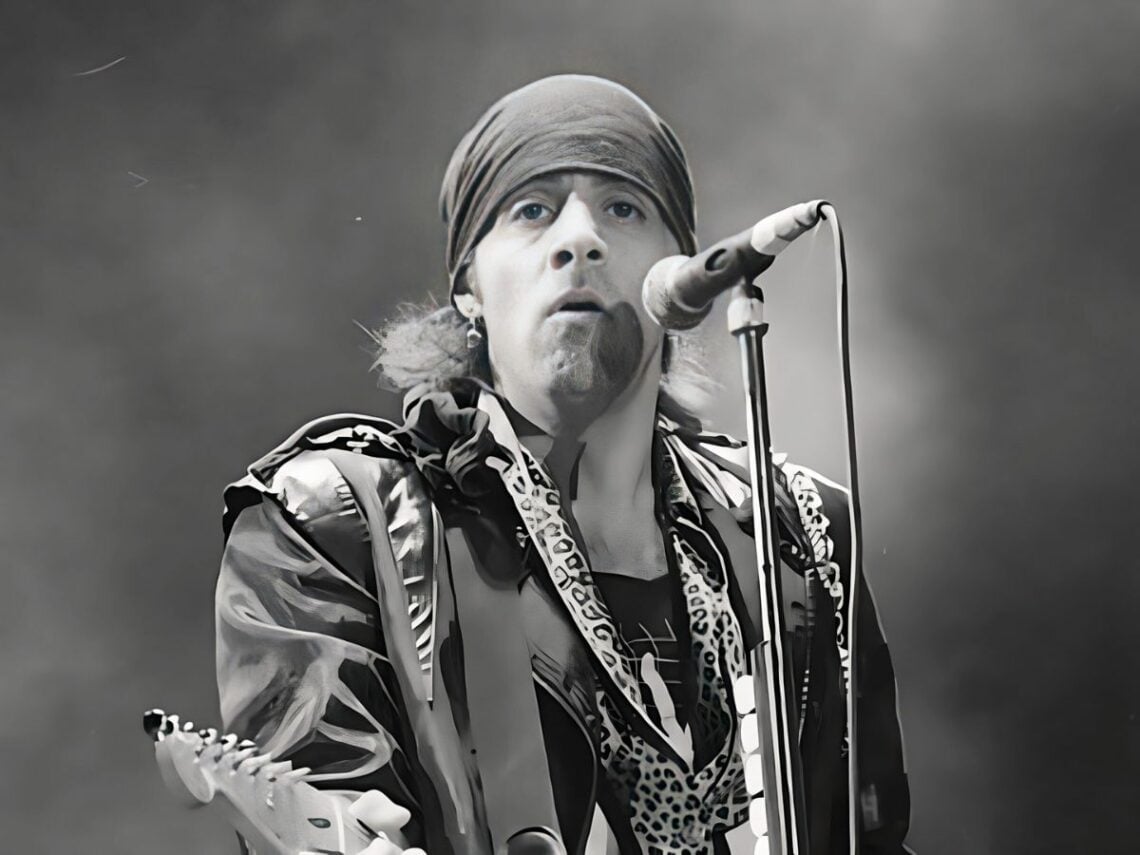
How Steven Van Zandt helped to spearhead the anti-apartheid movement

With such a shameful legacy in modern history, it seems almost unbelievable that some of the biggest names in music would defy the international cultural boycott of apartheid South Africa during the 1980s. Yet, as we’ve seen with certain prominent artists today offering justifications for performing in Israel, the obvious moral implications of playing in oppressive states can often be overlooked—whether for financial gain or sheer arrogance.
The notorious whites-only holiday villa Sun City hosted numerous stars, including The Beach Boys, Linda Rondstadt, Elton John, and Queen, while Paul Simon received fierce criticism for recording his album Graceland in Johanesbourg’s Ovation Studios.
Originally intended as a single for a solo record, by 1985, Steve Van Zandt had left Bruce Springsteen’s E Street Band and sought to cut a song protesting the luxury resort that existed to sanitise the country’s racial segregation internationally. Inspired by Peter Gabriel’s ‘Biko’ and teaming up with hip-hop producer Arthur Baker, Van Zandt assembled Artists United Against Apartheid and cut the Sun City album.
Recalling when he first educated himself on South Africa’s supremacist state, Van Zandt confessed in 2013: “Shocked to find really slavery going on and this very brilliant but evil strategy called apartheid… At the time, it was quite courageous for the artists to be on this record. We crossed a line from social concerns to political concerns.”
As the concept of big media charity faces increasing critical scrutiny, Band Aid’s Do They Know It’s Christmas? stands out as a queasy relic of performative politics—patronising and tone-deaf, particularly given that many Ethiopians enduring the famine were Orthodox Christians. In contrast, the Sun City project, featuring a mega cast of committed artists, feels far more appropriate. It served not only as a broadcast to the cultural world but also as a direct message to their peers to shun the racist resort and its oppressive regime.
Cutting a much cooler contrary to the saccharine stodge of ‘We Are the World’, Sun City boasts an infinitely hipper ensemble of artists. Bono’s in there, obviously, but the LP boasts Joey Ramone, Gil-Scott Heron, Miles Davis, Bob Dylan, Afrika Bambaataa, and even Dead Boys’ Stiv Bators. ‘Revolutionary Situation’ features Keith LeBlanc’s dystopian drum machine groove, saturated in news samples of Apartheid violence and civil unrest, which wouldn’t feel out of place on the Wax Trax! Records label and Bono offers a sincerely dusky, introspective piece with Silver and Gold featuring Keith Richards on slide guitar.
The ‘Sun City’ single is the powerhouse beast of the LP, a giant shiny rock stomper that rolls around in Born in the USA‘s glossy production and rejects Band Aid’s maudlin precedence of preachy sanctimony for a more passionate and vigorous affirmation of solidarity rather than “oh isn’t it sad” lyrical dross. Proving a unique cultural crossover between hip-hop and rock, Van Zandt struggled to find a presence on mainstream radio but took off on MTV and BET cable channels, explaining: “They really embraced it and played it a lot. Congressmen and senators’ children were coming up to them and telling them about apartheid and what they saw happening in South Africa. That put us over the edge.”
Cut at a time when the West was still providing political and diplomatic cover for the supremacist state, as America and the UK are cow-towing to Israel’s murderous campaign today, Van Zandt and his ensemble helped nudge the world that bit closer to moral clarity and Apartheid’s eventual dissolution.
