


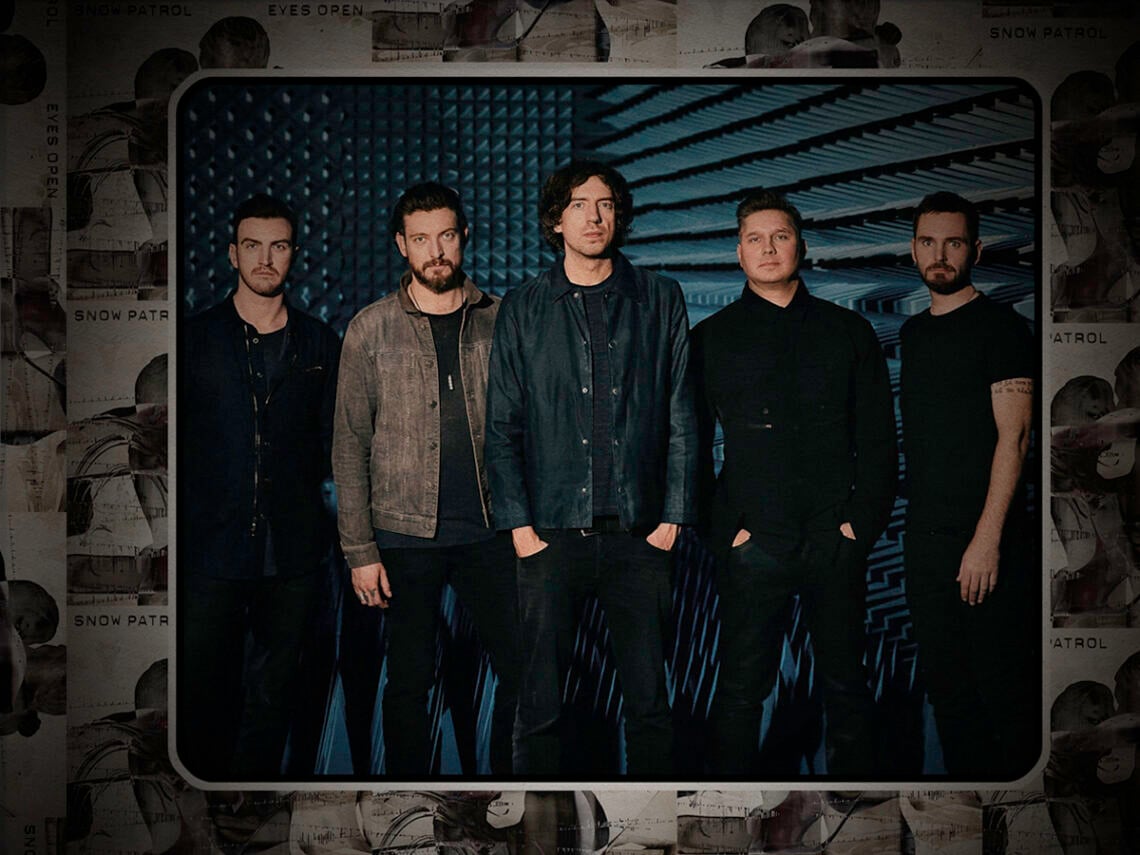
20 years of ‘Chasing Cars’: How Snow Patrol accidentally created a cultural juggernaut

“It’s the song that took us to the whole world,” Snow Patrol leader Gary Lightbody recently said. “We just followed it along like little ducklings.”
‘Chasing Cars’ feels like one of those songs built in from birth; one you’ve always known the words to, even without any real recollection of the first time you heard it. For some of us, its persistence in modern culture is a little jarring. For others, it’s a comforting reminder of the art of a good, simple love tune.
That’s also part of the reason why it remains so significant in the modern musical landscape. At the time, Lightbody was more skilled in the art of writing love songs with a twist, ones that had some sort of darkness to them that more closely resembled the experiences he was going through in his personal life.
‘Chasing Cars’, on the other hand, sort of happened by accident, taking on a naturally simpler tone that still baffles him to this day. As he put it himself, “It’s the purest love song that I’ve ever written. There’s no knife-in-the-back twist. When I read these lyrics back, I was like, ‘Oh, that’s weird.’ All the other love songs I’ve written have a dark edge.”
The seed that would eventually blossom into the fully-fledged song began with the lyric, “If I lay here / If I just lay here / Would you lie with me and just breathe in the world?”. These words first appeared in 2005 in a back garden owned by producer Jacknife Lee during what was initially intended as a casual jamming session “over quite a few bottles of wine” with Lightbody bouncing around ideas for other musicians.
At the time, he enjoyed the lack of pressure in exploring different musical ideas, first and foremost, having fun with those around him without ever thinking about creating something that would alter the course of his own career. As soon as he came up with the lyrics, however, he immediately knew that he’d accidentally stumbled upon greatness, and proceeded to dedicate himself to working on it for months, changing the lyrics until they felt exactly right.
Granted, it took a fair bit of work before it was the version we’ve heard a million times over – the band even performed it a few times live “without finished lyrics”, as Lightbody recently told the BBC, a performance that still exists in the depths of YouTube. However, it eventually morphed into a more straightforward ballad about enjoying the present moment with your one and only.


And clearly, Lightbody’s hunch was right. On Spotify, the song has over 1.83 billion streams. In 2019, it was named the UK’s most-played radio song. It has enjoyed an impressive run of entering and re-entering the charts and is used extensively in pop culture across countless ads, films, and television shows. It’s a go-to for the ultimate heartache soundtrack and also a moment of contemplative pause for anybody who has ever wanted to float away with a significant other.
And, of course, it’s also horrifically overplayed. But that’s also a sign of the ultimate musical magic: a natural cultural juggernaut that appears to have little to no expiration date. Lightbody knew, at the time, that the song was going to change his life. And here we are, 20 years later, still very much in the haze of its unique, undying presence.
As Lightbody put it: “It’s just never going to work that way again, because it’s just about the magic that’s in the air, the environment, the mood that you’re in that day. All the chemistry comes together in that moment, and it can’t be recreated.”
