


September 29th, 1992: How one day changed music forever

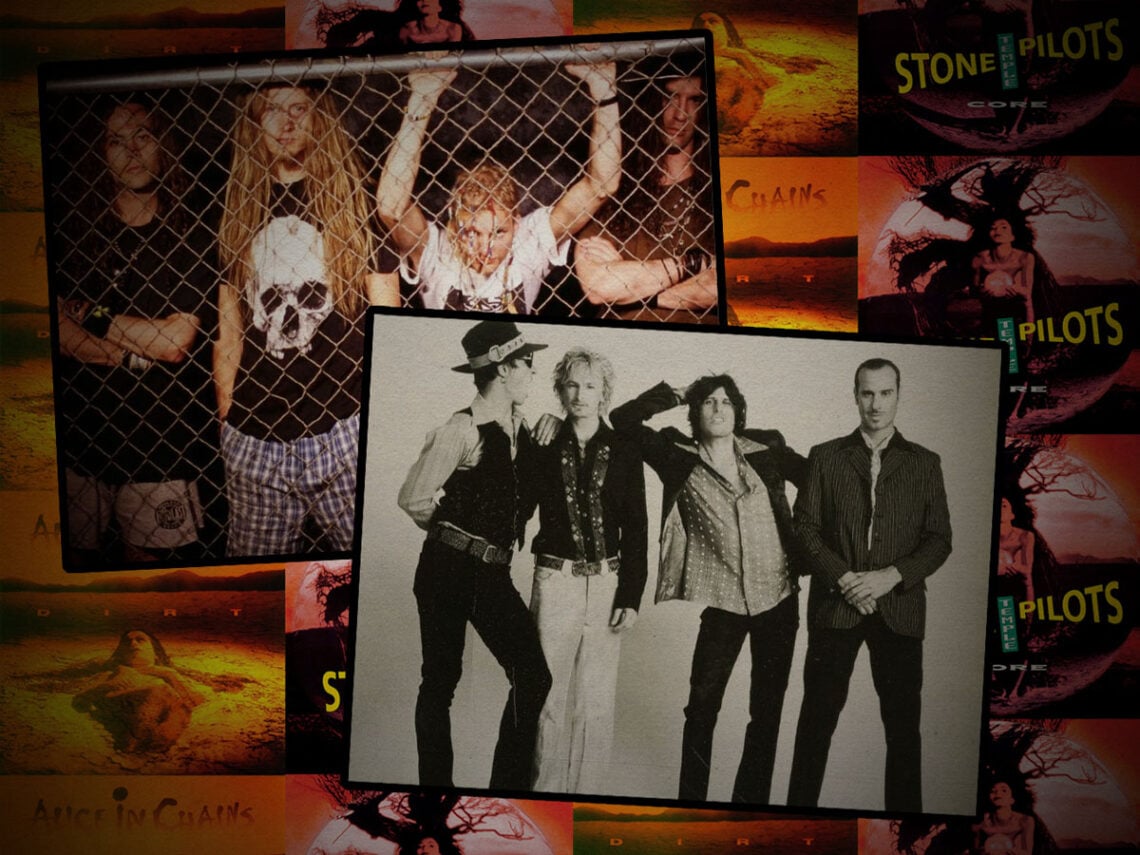
On September 29th, 1992, music shifted course when two of rock music’s most vital albums came into the world: Alice In Chains’ sophomore release, Dirt, and Stone Temple Pilots’ debut, Core.
At the beginning of the decade, from the sensation of Nirvana’s Nevermind the year before, another door had been opened in the mainstream for songwriters to be increasingly confessional; while not a new thematic anchor, this time, the wave came as a revived sense of vulnerability seeped in anger.
Lyrics confronted the unsavoury facts of life that lay within the songwriter, within others and among the wider generations, holding up mirrors and purging the darkest facets from every orifice. Whether such confessionals inspired contempt, discomfort or (hopefully) a reckoning with oneself, the so-called “alternative culture” in the 1990s would be defined by this gripping honesty.
Both Layne Staley of Alice In Chains and Scott Weiland of Stone Temple Pilots were in their early 20s when their albums came out in 1992; Staley had turned 25 by Dirt’s release, while Weiland was nearly 25 when Core was released. Since then, there have been consistent writings of the thematic “grunge” and “alternative” lyrics of the ‘90s stemming from tension that Generation X felt against the generations that came before, but it is worth emphasising just how young these musicians were.
Not only does this yield consideration of the fact that already, in their early 20s, Staley, Weiland and their contemporaries felt such discomfort with the way that the world operated – whether that be systemic issues, social injustice, alienation and much more – but also, how this discomfort translated into seeking a semblance of peace in unfortunate false solutions, namely addiction.
Dirt was born, lyrically, from Staley and Jerry Cantrell’s ongoing battles with addiction and the tensions between sobriety and relapse. The album was written primarily while on the road, and as the lyrics took shape, Staley saw two primary themes that crafted its contents into a slightly conceptual story arc: one, as he described, centers on “painful relationships and involvements with persons,” heard in the sentiments of songs like ‘Rain When I Die,’ which opens with the question, “Is she ready to know my frustration?”

The other, in Staley’s words, is about “dealing with kind of a personal anguish and turmoil, which turns into drugs to ease that pain, and being confident that that was the answer, in a way,” he explained to M.E.A.T. in December of 1992. He describes how the sequence of the songs on Dirt mirrors a descent into hell, coming to the conclusion that drug use is not a salvation from pain.
“Basically, it’s the whole story of the last three years of my life,” he surmised.
Some of the songs on Dirt tackle the overbearing force of addiction more blatantly than others. ‘Sickman’, for instance, with its nightmarish instrumentation, comes to life with lyrics that stare in the face of death: “What’s the difference? I’ll die / In this sick world of mine,” Staley wails. ‘Junkhead’, from Cantrell’s view, begins a succession of songs that spiral downward from the hedonism of a rock ‘n’ roll life into a sobering reality. “What’s my drug of choice? Well, what have you got?” they contemplate in the chorus, and Staley later declares, “But we are an elite race of our own / The stoners, junkies and freaks.”
The latter is not sung as a way of glamorising the lifestyle of an addict, but rather to sing from a sense of false pride, a warning against how such a life can quickly turn into one of intense pain and suffering. As we hear on the title track, ‘Dirt’ is weighed down by frustration and begs not to live any longer, admitting, “I’ve tried to hide myself from what is wrong for me.”
‘God Smack’ asks, “What in God’s name have you done? / Stick your arm for some real fun.” Dirt becomes a visceral immersion into the duality of an addict: the knowledge that the life being led will only bring suffering, but there’s the battle to pull oneself from it before it’s too late.
“A good portion of it is a story, and it’s meant to be that way,” Cantrell surmised of Dirt, to RIP Magazine in 1993. “It’s kind of overwhelming and unpleasant at times, unsettling maybe, but that’s why all those songs are together. Even if it’s disturbing, it’s not something anybody else needs to worry about or the way somebody else needs to live their life.”
Core saw the emergence of Stone Temple Pilots and, particularly, Scott Weiland, the storyteller. Whether he was conjuring a voice from personal experience or on behalf of other people, Weiland displayed, from the beginning, the uncanny talent of turning songs of tragedy into poignant metaphor.
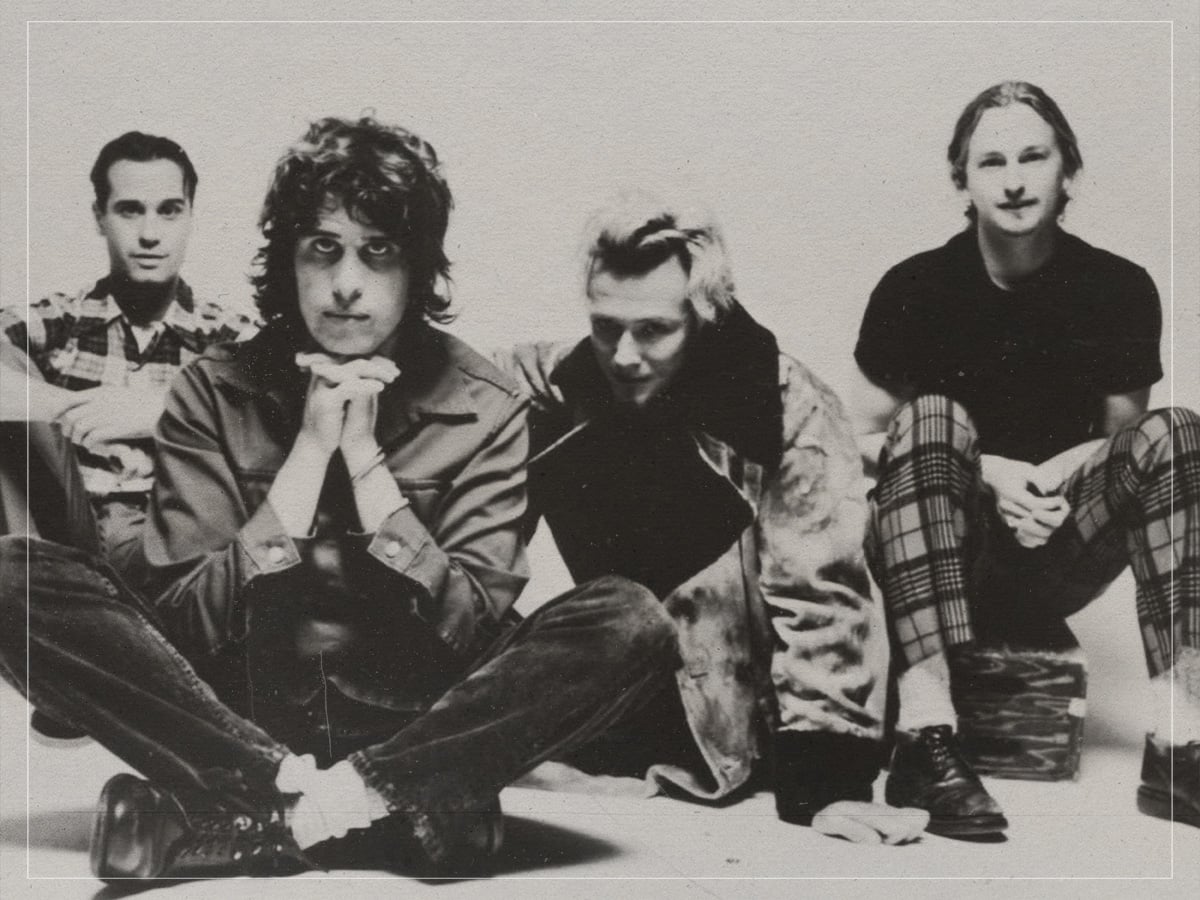
“We were ecstatic, but we were also dead serious about crafting and playing the kind of self-reflective rock that we respected,” Weiland explained of their sentiment behind the creation of Core, in his 2011 memoir, Not Dead and Not For Sale. “We weren’t going to do crap; and we weren’t going to be imitators. We thought we had an original voice, original stories and an original sound. We wanted to get to the essential elements of what we were all about — the core of our music — so we called the record Core.”
Where Stone Temple Pilots are occasionally, mistakenly grouped into the “grunge” pantheon, Core heard them settle within a metal-driven sound, heard from Weiland’s opening screams recorded from guitarist Dean DeLeo’s guitar pickup, mimicking a megaphone sound, on ‘Dead and Bloated’: “I am smellin’ like the rose / That somebody gave me on my birthday deathbed.”
“I think that a lot of the lyrical content on that record was about the big question mark that stood in front of us about the future,” DeLeo said of Core, to Rolling Stone in 2017. “What was going to happen to loved ones? What was going to happen to family? Where were we going to be? Were we going to be at home much anymore?”
Core was something of a slow-burn album, initially shredded to pieces by critics for being too derivative of the grunge that Stone Temple Pilots followed, and in spite, songs like ‘Sex Type Thing,’ a critique of assault, caused instant controversy in Weiland’s first-person lyricism from the view of an assailant and sparked accusations which he vehemently denied: “Because the song was written in the voice of the deranged character, there were critics who presumed I was that character,” he wrote in his memoir.
Stone Temple Pilots travelled into the sort of “big picture” questioning that DeLeo saw them preoccupied with. Meditations on apathy and salvation formed on the groove of ‘Wicked Garden,’ while ‘Sin’ is haunted by visions of the past: “Still shackled to the shadow / That followed.” The balladry of ‘Creep’ seems to encapsulate the sentiment of a generation, if there ever was one: bearing the weight of not knowing who you are or where you will turn next, feeling as though you’ve failed despite life only just beginning. Weiland’s wail of, “Well, I’m half the man I used to be,” rings with a painful resonance still, decades later.
Both may (debatably) stand as Alice In Chains’ and Stone Temple Pilots’ darkest records, a capture of various heights of suffering, both inconceivable to the average listener and yet all the more relatable, from a generation followed by such shadows. In this, what both Dirt and Core achieved was a timelessness, as any album hopes to do. Yet, they did so with respectively unrivalled musicianship – no matter how imperfect moments on each may be, these make them stand all the more powerful.
