


“We enjoy being glamorous”: How Placebo ended up in ‘Velvet Goldmine’

After the release of their self-titled debut album in 1996, Placebo were basking in the surprise success of its final single, ‘Nancy Boy’.
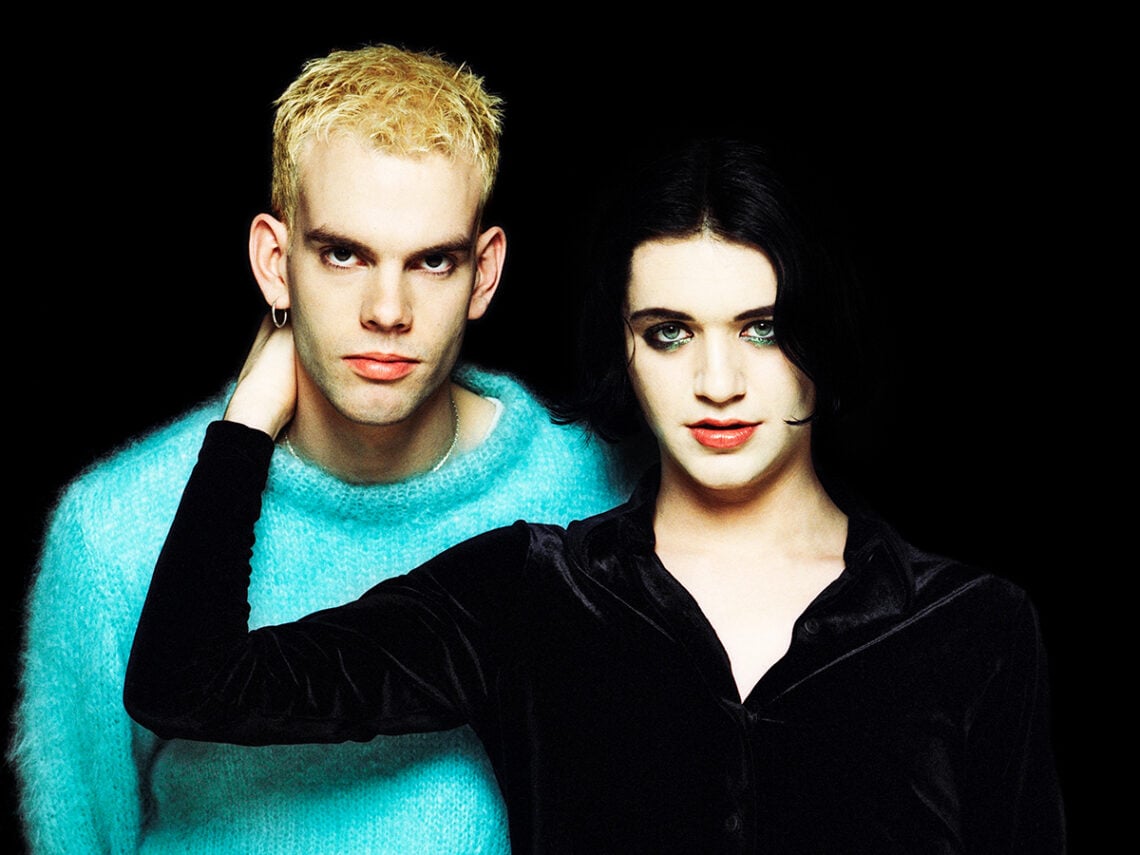
The song, centred on themes of bisexuality, drug use and sex, caught the attention of David Bowie, who invited the band to open numerous concerts of his the same year. This began Placebo’s unexpected association with glam rock territory, and with a Bowie endorsement to their name, they forged a connection between the glitter-rock of the past and their subversive rendition of alternative rock in the present, which was furthered when frontman Brian Molko received a call, asking him to audition for director Todd Haynes’ upcoming third feature, 1998’s Velvet Goldmine.
The director had already garnered notice for his 1987 short film Superstar: The Karen Carpenter Story, telling the life story of Karen Carpenter using Barbie dolls, and his two feature films, 1991’s Poison, a pillar of the decade’s New Queer Cinema movement, and the 1995 psychological drama Safe, and for Velvet Goldmine, Haynes would craft his tribute to the glam rock era of the 1970s with its two main characters of Brian Slade (portrayed by Jonathan Rhys Meyers), an androgynous and bisexual glam rock icon influenced by Bowie and Marc Bolan, and Curt Wild (portrayed by Ewan McGregor), a provocative rock musician depicted as a hybrid of Lou Reed and Iggy Pop.
Both indulge in the hedonism of the era filled with sex, drugs and the perils of fame, and are focused on the themes of sexuality and gender identity, and with the narrative rooted in the teachings of writers Oscar Wilde and Jean Genet, two of Haynes’ favourites, the characters showcase the freedom that could be found in the age’s liberative energy, but also the thin line between abundance and destruction.
Their story is presented through the lens of British journalist Arthur Stewart (portrayed by Christian Bale) in 1984, as he pursues a story on Slade’s departure from the public eye, resulting in flashbacks to his time as an obsessive fan stepping into his sexuality and existing on the fringes of such larger-than-life characters. Heavily influenced by the exuberant live shows and fashion of the era, Velvet Goldmine is both a retelling and a time capsule of the highs and lows of a period that permanently changed rock music.
Depicted in technicolour glitter and disco-grunge, Brian Slade and his persona, ‘Maxwell Demon’, and Curt Wilde perform as icons of a not-so fictional generation, epitomising the era’s rock, punk and glam concoctions that are situated alongside a formidable soundtrack, co-produced by Michael Stipe. While Bowie refused to have his music included in the film, the soundtrack is compiled with covers including songs from Roxy Music, The Stooges and the New York Dolls, performed by members of Radiohead, Suede, Sonic Youth and more, while originals from the likes of Reed, Brian Eno and T Rex are also featured. Such was the energy that Placebo could see themselves fitting right into it, sparking their interest in auditioning for the film when asked.
“I was a big Todd Haynes fan anyway, so I was really keen,” Molko enthused to Melody Maker in 1998, two years after Placebo filmed for Velvet Goldmine. Molko was eventually cast as the frontman of the fictional band, The Flaming Creatures, with brief speaking lines and performing in two scenes in the film, one of which hears their sensational version of T Rex’s 1973 song ‘20th Century Boy’. “They were doing ‘20th Century Boy’ in the film, so we suggested we record it for them,” Molko explained and he, alongside drummer Steve Hewitt (as Malcolm and Billy, respectively) would perform with The Flaming Creatures while bassist/guitarist Stefan Olsdal played in Elastica guitarist Donna Matthews’ fictional band, Polly Smalls, both bands of whom remain pivotal to Arthur Stewart’s immersion into glam rock’s live music scene.
While performing with The Flaming Lips, Molko appears in a top hat, glittering trench coat with a burgundy-feathered collar, sparking eye makeup and towering platform boots, a striking image of the era’s most distinctive fashion that showed a disregard for gendered traditions and an embrace of individuality. “There is a big difference between glamorous and glam,” Molko reasoned, “To me, glam is lager lads in makeup-up. We enjoy being glamorous, we enjoy dressing up and wearing make-up, but we’re not any way in that glam tradition, on a musical or physical level, really.”
While perhaps not exactly parallel to glam rock, Placebo’s influence in the 1990s rock culture surely carried a similar ethos from the era two decades prior, a disruptive energy that prioritised authenticity and honesty in its music, and thus, their inclusion in Velvet Goldmine solidified the film’s history as a sonic and visual ode to the past, and a hopeful reminder for the present.
