


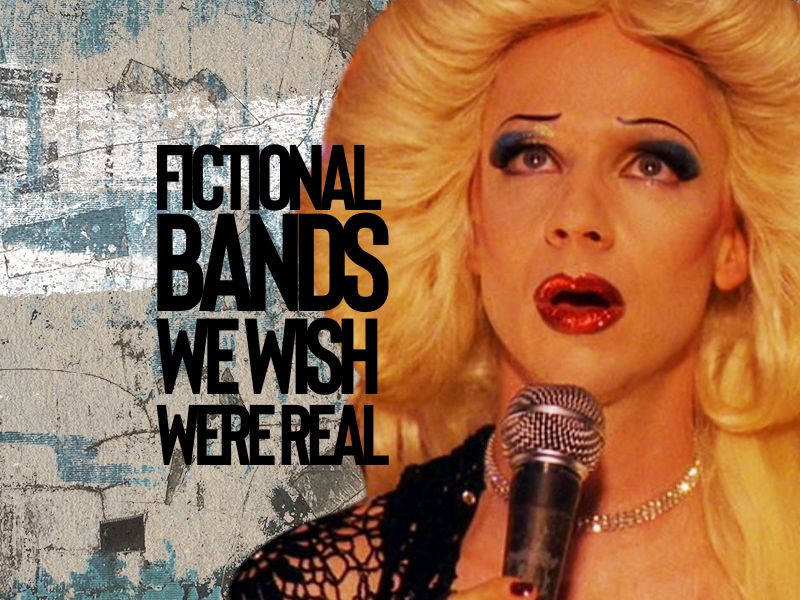
Five fictional bands we wish were real

There have been countless musical biopics released over recent years giving music lovers the chance to indulge in the lives of beloved bands and artists. Successful efforts include Love and Mercy, which sees both Paul Dano and John Cusack play Brian Wilson at various stages of his career, and Control, a gritty look at the life and death of Joy Division’s Ian Curtis.
Most recently, we have seen the release of Elvis, Baz Lurhmann’s extravagant look at the life of the King of Rock ‘n’ Roll. Whilst films such as these have given us some fantastic musical performances to immerse ourselves in, there are also plenty of fictional bands out there that have given us equally enjoyable performances – so much so that we wish they were real.
Films about fictional musicians often push the expectations of the rock ‘n’ roll lifestyle to the limit, revelling in the glamour of being in a band (or lack thereof). There are countless fictional bands to choose from for this list, and having to pick just five means leaving out some fantastic and unforgettable acts.
From garage rockers, Sex-Bob-Omb to glam rockers The Venus in Furs, check out five fictional bands we wish were real…
Five fictional bands we wish were real:
The Fabulous Stains – Ladies and Gentlemen, The Fabulous Stains (1982)
Record and film producer Lou Adler, who had previously worked with the likes of Carole King and the Mamas and the Papas, has two directing credits to his name. One of these is Ladies and Gentlemen, The Fabulous Stains, a story of three teenage girls who start a punk band set against the backdrop of the early 1980s recession. Starring Diane Lane as the outspoken Corrine, and a 13-year-old Laura Dern as her band member and cousin, the film was largely overlooked until its DVD release in 2008.
The Fabulous Stains start off a little rocky; however, they come to embody the true spirit of punk as they must prove themselves in a male-dominated environment. The band don’t give up easily, and their defiant new looks (sheer blouses, dramatic eye makeup, and ‘skunk’ inspired hair) inspire a wave of teenage girls to copy their looks and congregate at their shows. Yet they also had a major influence on music in real life too. The Fabulous Stains are cited as an inspiration for the riot grrrl movement, with fans of the film including Bikini Kill, Bratmobile, and Courtney Love.
Sex-Bob-Omb – Scott Pilgrim vs. the World (2010)
It is no surprise that director Edgar Wright is a self-confessed “music nerd” – one of his most recent projects was a documentary film dedicated entirely to musical duo Sparks. His 2010 film Scott Pilgrim vs. the World stars Michael Cera as an unsuccessful, slacker musician who must defeat the ‘seven evil exes’ of his newest love interest, Ramona Flowers, whilst also trying to bag a record deal. His failing band is the comically titled Sex-Bob-Omb, an indie garage rock outfit for which he plays bass.
We see the band play a few times during the film, including the opening credits, which introduce us to their gravelly garage rock guitar riffs. Although the band are supposed to sound rough around the edges, that becomes part of their charm. The potential behind Sex-Bob-Omb’s sound is perhaps due to the fact that their music was penned by none other than Beck. Discussing the tracks, he said, “It needed to be under thought. They had to be funny, but I also wanted them to sound raw. Like demos.”
Stillwater – Almost Famous (2000)
Cameron Crowe’s semi-autobiographical film Almost Famous follows a teenage music journalist as he tours alongside fictitious rock band Stillwater during the early 1970s. The film sees Kate Hudson play the iconic role of groupie Penny Lane, inspired by Pamela Des Barres, who refers to herself as a “band aid.” Both touching and humorous, Almost Famous encapsulates an era that was simultaneously glamorous and tragic.
Stillwater, which features Billy Crudup as lead guitarist Russell, were inspired by classic rock bands of the ’70s that Crowe encountered while working as a music journalist as a teenager. His then-wife Nancy Wilson from Heart helped him to write the tracks that define Stillwater, which he recalls were a “stone blast” to create. Crowe described the writing process as “channelling all our favourite bands that kind of, sort of have been in that position. Like, they’re not Led Zeppelin, but they sure like Led Zeppelin.” He also cites the Allman Brothers and Bad Company as inspiration.
The Venus in Furs – Velvet Goldmine (1998)
Another film that explores the musical landscape of the 70s is Todd Hayne’s Velvet Goldmine. However, this drama places its focus on Britain’s glam rock scene. Starring Jonathan Rhys Meyers as androgynous glam rocker Brian Slade, inspired by David Bowie, and Ewan McGregor as the hedonistic Iggy Pop-inspired Curt Wild, the film is surreal and extravagant; a “feast of sight and sound, […] re-creating an era as a gorgeous carnal dream.” It was only fitting that Haynes created a show-stopping soundtrack for the film, employing tracks from Pulp, Brian Eno, Placebo, Lou Reed, Teenage Fanclub, and more.
However, the film also features multiple contributions from fictional bands. Slade’s on-stage persona Maxwell Demon, named after an early Eno band, is accompanied by a backing band called The Venus in Furs, a nod to The Velvet Underground. The band are seen to be partial to Roxy Music, and multiple covers of theirs can be found on the soundtrack, including ‘Bitter-Sweet,’ ‘Ladytron,’ and ‘2HB.’ What makes them so fantastic is some of the real musicians behind the fictional band – Radiohead’s Thom Yorke and Jonny Greenwood, as well as Andy Mackay from Roxy Music.
Hedwig and the Angry Inch – Hedwig and the Angry Inch (1998)
Since 1998, rock musical Hedwig and the Angry Inch has gained cult status for its exploration of gender identity and sexuality alongside the electrifying performances by writer, director, and lead actor John Cameron Mitchell. The film follows Hedwig as she moves to America after a botched genital reassignment surgery, which has left her with a chunk of flesh between her legs that she calls her ‘angry inch.’ She supports herself by playing gigs with her band in failing restaurants, where we get to witness Hedwig’s magnificent stage presence.
The opening credits see Hedwig impressively play a guitar solo with her teeth, assuring audiences that they won’t be forgetting the film anytime soon. With inspiration coming from the music of David Bowie and Lou Reed, Hedwig and the Angry Inch revels in exuberant performances and campiness that is a joy to witness. Hedwig also has range, performing both tender ballads, energetic punk tracks, and even a country-inspired tune.
