


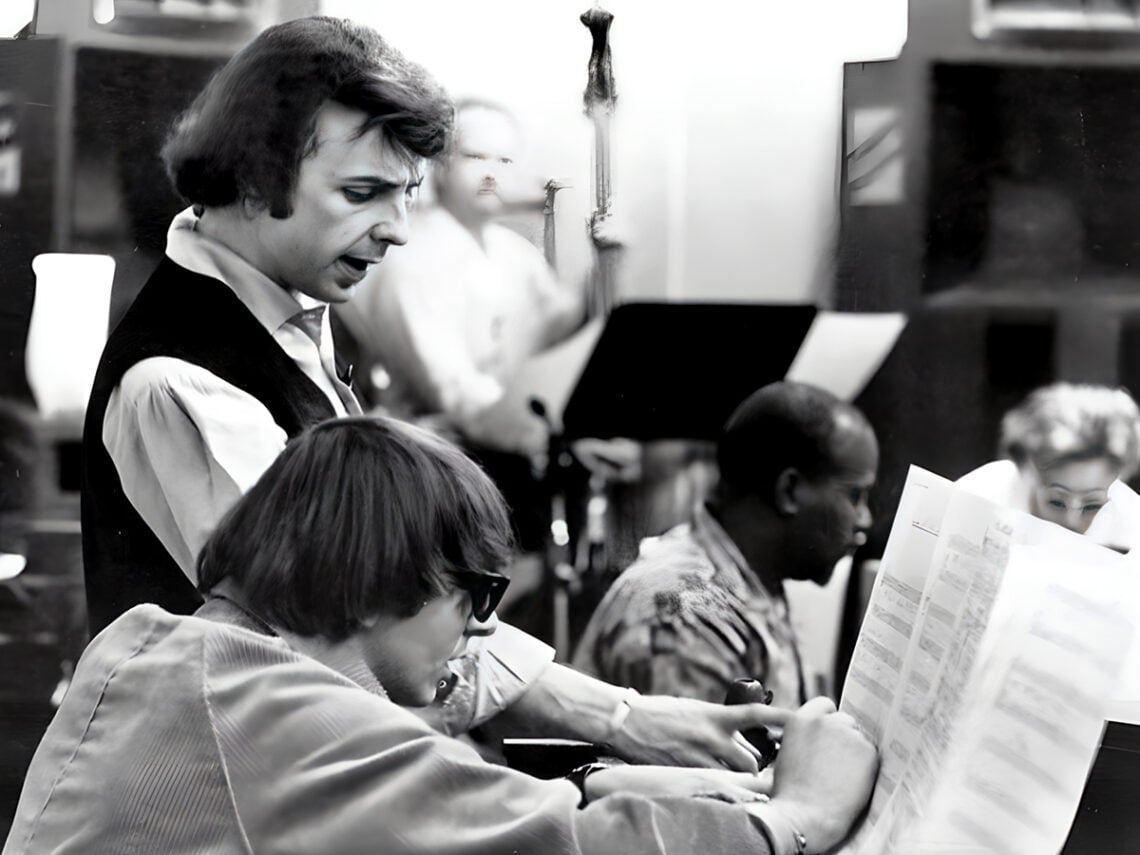
How many number one hits did Phil Spector produce?

Phil Spector’s presence in the charts has been a defining fixture of popular music from the 1950s to the present. As the producer behind some of The Beatles’ biggest hits, as well as iconic collaborations with the Righteous Brothers and Tina Turner, Spector had firmly cemented his place in music history—until his conviction for murder in 2003 tarnished his legacy. For better or worse, Spector remains an indelible figure in the annals of music, celebrated for the trail of hits he left across his career. But which of those hits managed to climb all the way to number one?
Surprisingly, some of Spector’s most famous productions, such as ‘Imagine’ and ‘Unchained Melody’, didn’t propel him to the top of the charts despite their enduring appeal and universal acclaim. Instead, it was a track he produced at the very start of his career—just months after the record charts were first established—that marked his initial breakthrough and early success.
That song was ‘To Know Him is to Love Him’ by the Teddy Bears, which held the top spot for three weeks in December 1958. Spector was just shy of 19 years old at the time. The track remained a significant moment in his life and career—not only because it was his first number one hit, but also because it was the only time he ever performed on one of his own songs, providing vocals for the group. Decades later, ‘To Know Him is to Love Him’ continued to captivate nostalgic fans, with even the late, great Amy Winehouse often performing it live.
As music transitioned into the swinging ‘60s, Spector continued to amass hits, thanks to two bands with whom he forged long-term collaborations: the Righteous Brothers and the Crystals. For the Righteous Brothers, it was ‘You’ve Lost That Lovin’ Feelin’’ that secured the jackpot—a fitting title, as it marked the duo’s first chart success in over a year in 1964.
Meanwhile, the Crystals scored their own triumph with ‘He’s a Rebel’. Signed to Spector’s Phillies Records in 1961, the girl group became emblematic of the era despite facing significant challenges under his management, including the repeated firing and rehiring of members. It was their only chart-topping hit, but other tracks, like ‘Da Doo Ron Ron’, have since earned recognition as some of the greatest songs of all time.
Lastly, we come to Spector’s involvement in the dying breaths of the Beatles, which, despite the chaos, still managed to secure the top spot in ‘The Long and Winding Road/For You Blue’ just months before the Fab Four’s disbandment in 1970. Although a string of hits wasn’t to be in this sense, Spector remained a close collaborative partner when it came to John Lennon and George Harrison’s solo ventures, creating various hits for the former, including the aforementioned ‘Imagine’ and ‘Instant Karma (We All Shine On)’ – though none of which quite nabbed the prized position – but winning big on Harrison’s ‘My Sweet Lord/Isn’t It A Pity’, scoring him his fifth and final space at the top spot.
Phil Spector’s musical legacy is extensive and iconic, with receipts in the form of his five number ones to prove it. What’s perhaps more interesting, though, is the chain of ‘nearlys’ that never quite took home the pole position but have become or remained a significant part of popular culture, not least for artists like John Lennon or the Ronettes. The end of Spector’s life may have been mired in crime and controversy, but there’s no doubt he still changed music forever.
