


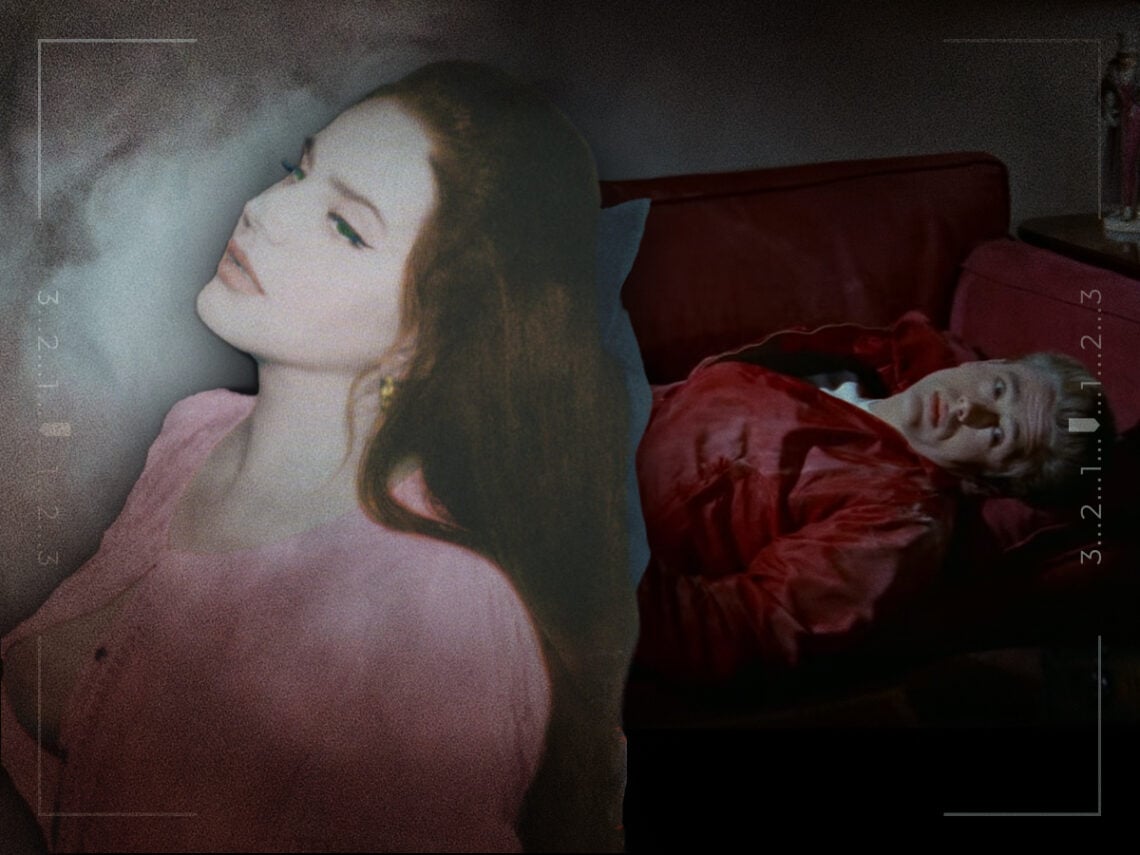
How James Dean inspired Lana Del Rey: “Live fast, die young”

In Lana Del Rey’s 2012 single ‘Blue Jeans’, the singer recalls meeting her lover for the first time by comparing him to James Dean. Immediately, we imagine this troubling man swaggering towards her, almost in slow motion, in his blue jeans and white shirt, a vision of a bygone era of youth rebellion and effortless masculinity.
The track would feature on her debut studio album Born to Die, which emerged several years after her failed attempt to launch a career with the shelved Lana Del Ray AKA Lizzy Grant from 2010. Between these two records, Del Rey would consolidate her image, ditching her fried bleach blonde hair and opting for a more glamorous persona instead, one shaped by the simultaneous tragedy and glamour of Hollywood.
While she’d explored such themes in her earlier work, on Born to Die, Del Rey finally found the aesthetic vision needed to shoot her into the mainstream, her music considerably more opulent, fuller. The sweeping orchestral strings that open the titular track, for example, feel grandiose and immersive, and Del Rey’s descriptive lyrical style further allowed her to entice listeners into a world that was at once relatable but slightly unreachable.
Themes of strained relationships and passionate love are pretty universal, but she framed them through images of Old Hollywood, of the seedier side of Los Angeles after dark, name-dropping bars and iconic figures of a period that no longer quite exists. Born to Die, and her subsequent EP Paradise, feature various references to American icons, but notice how carefully curated Del Rey’s list of famous figures is.
Besides Dean, you can find references to Bruce Springsteen, Marilyn Monroe, Elvis Presley, and Walt Whitman. All of these are quintessential American figures, so closely associated with the simultaneous glory and harsh reality of the ‘American Dream’. It’s a theme that permeates through Born to Die, where even the title itself alludes to the risk of imminent downfall that comes with new beginnings, as Del Rey constantly returns to ideas of romanticism undercut by pain and confusion.
There’s something so rooted in nostalgia here; patriotism doesn’t feel Trump-esque, but rather, it feels like a kind of searching for a sense of belonging among a landscape so vast and complex, and ultimately, steeped in history. She sings of road trips and gas stations, motels and Coca-Cola, listening to Springsteen and eating ice cream at Coney Island.
In her ‘Ride’ monologue, she sums up her hope for a better America, while referencing both Dean and Tennessee Williams’ A Streetcar Named Desire, an iconic piece of American literature. “Live fast/ Die young/ Be wild/ And have fun/ I believe in the country America used to be/ I believe in the person I want to become/ I believe in the freedom of the open road/ And my motto is the same as ever/ ‘I believe in the kindness of strangers’”.
Those lines, “Live fast/ Die young” were inspired by the line popularised in the movie Knock on Any Door: “Live fast, die young, leave a good-looking corpse”.
In fact, Del Rey has another (unreleased) song, ‘Driving in Cars With Boys’, in which she sings, “I was born to live fast, die young/ Leave a beautiful corpse/ Live my life on the run”. The line from the Humphrey Bogart movie was a particular favourite saying of Dean’s, and ultimately, he really did live fast and die young.
When the actor was just 24 years old, he died in a car accident that came as a result of his love for racing vehicles at dangerous speeds, something he enjoyed the thrill of despite the fatal risks. His short yet celebrated career as a symbol of American rebellion, as seen in his leading role in A Rebel Without a Cause, was thus cut short, the ‘American Dream’ coming crashing down around him.
So, it’s no surprise that Del Rey adopted the actor as a character in her cinematic musical world, where other iconic American figures and works of art reside. These famous figures, so well-known that they transcend their human form and linger like spectral embodiments of America itself, form a portrait of living wildly and passionately, while being aware that those promises of freedom aren’t always guaranteed.
