


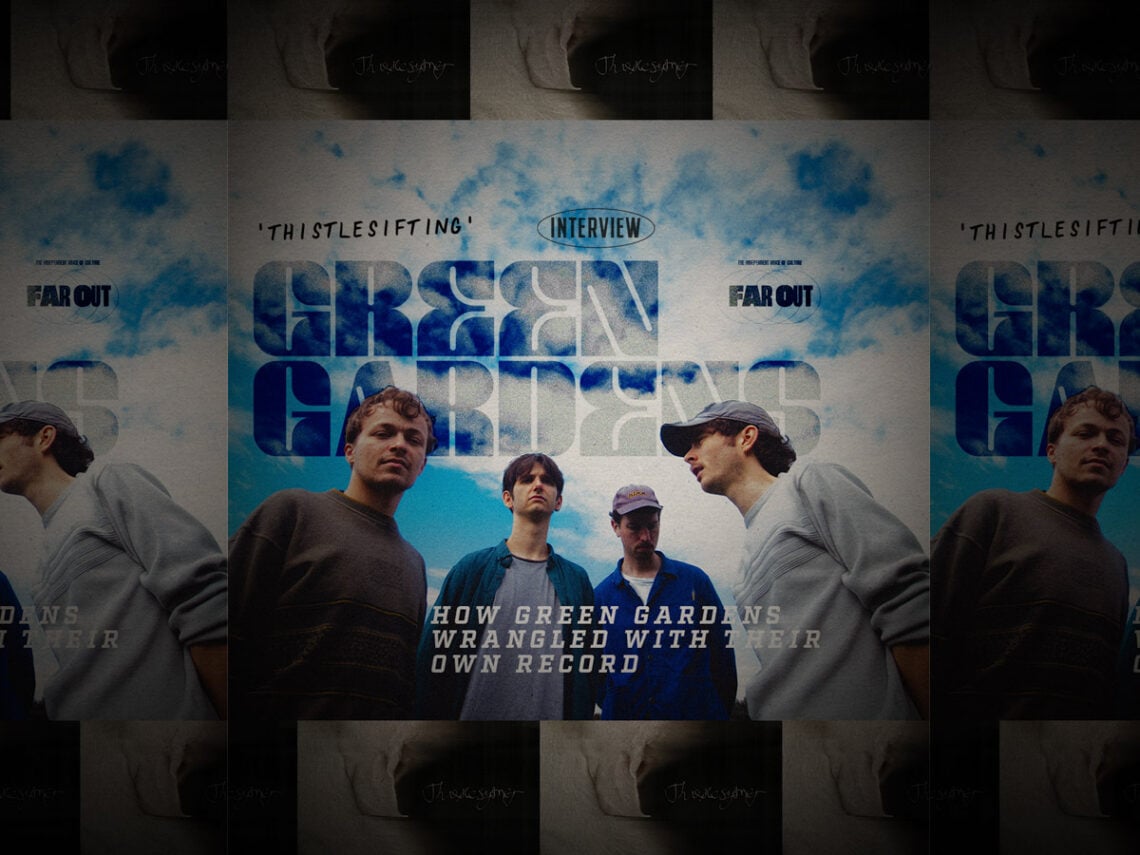
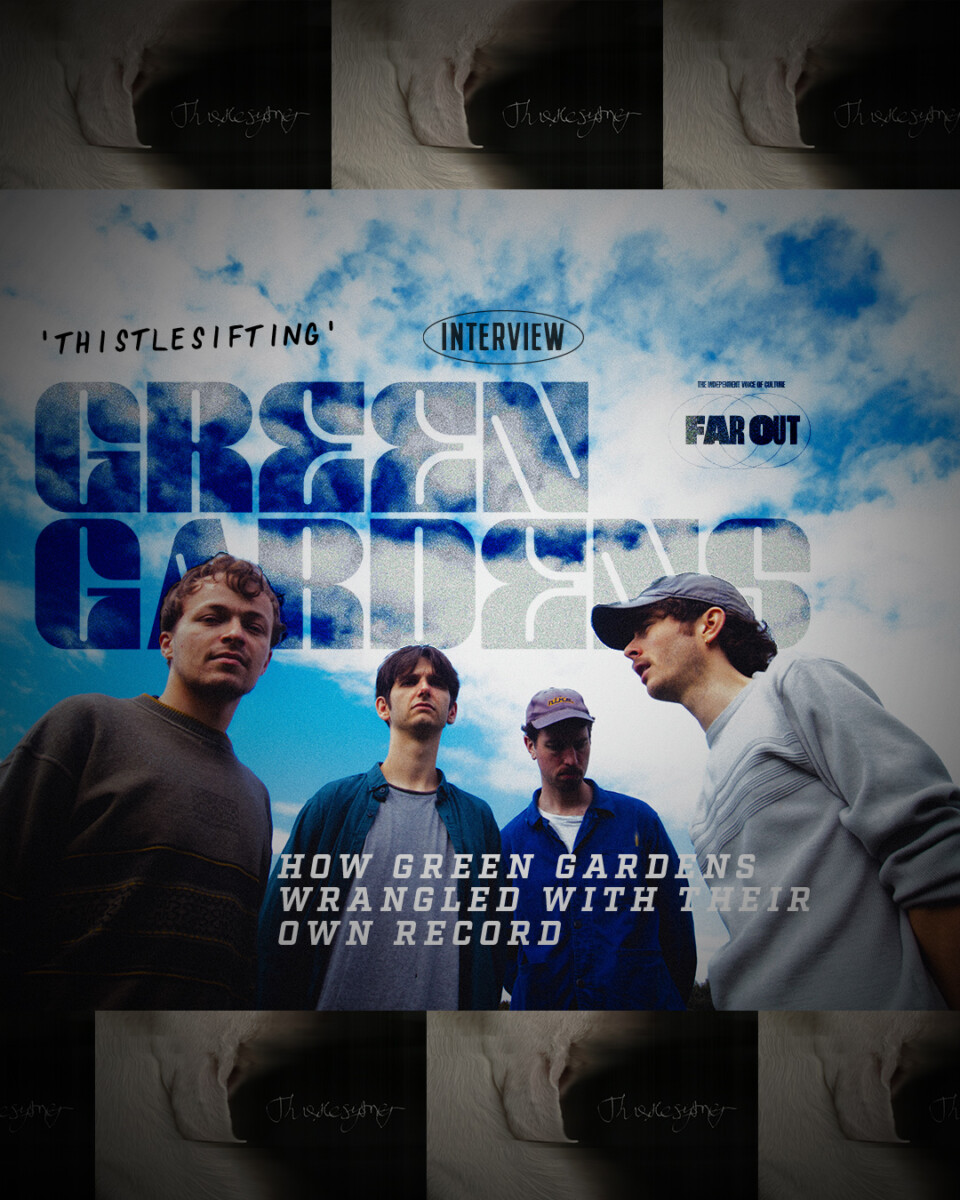
‘Thistlesifting’: How Green Gardens wrangled with their own record

When I sit down with Leeds band Green Gardens, all of us are hungover on the Sunday after a festival in Rotterdam.
A storm is blowing around us as if it’s daring the mic to even try and do its job. It’s also over two months on from the release of their second album, Thistlesifting. In the world of music journalism, these are not ideal conditions, and it really isn’t how things should be done. However, when it comes to this band and this album, something about it feels right.
There’s a looseness to the chat. I don’t really ask any questions, I just let it wander and see where it ends up. Again, it feels right, because that’s really how the record was born.
“The difference between this record and the first record is we did the arrangement in the studio,” bassist Jacob Cracknell said. It started much the same with him and his co-vocalist Chris Aitchison, both writing songs separately in their own lives. For their first album, they had the benefit all debuts have, which is unlimited time to prepare. Those songs were arranged over long periods of time in rehearsal rooms or crafted more during live shows. This time round, things were done in a situation, in the studio, and they were done mostly through play.
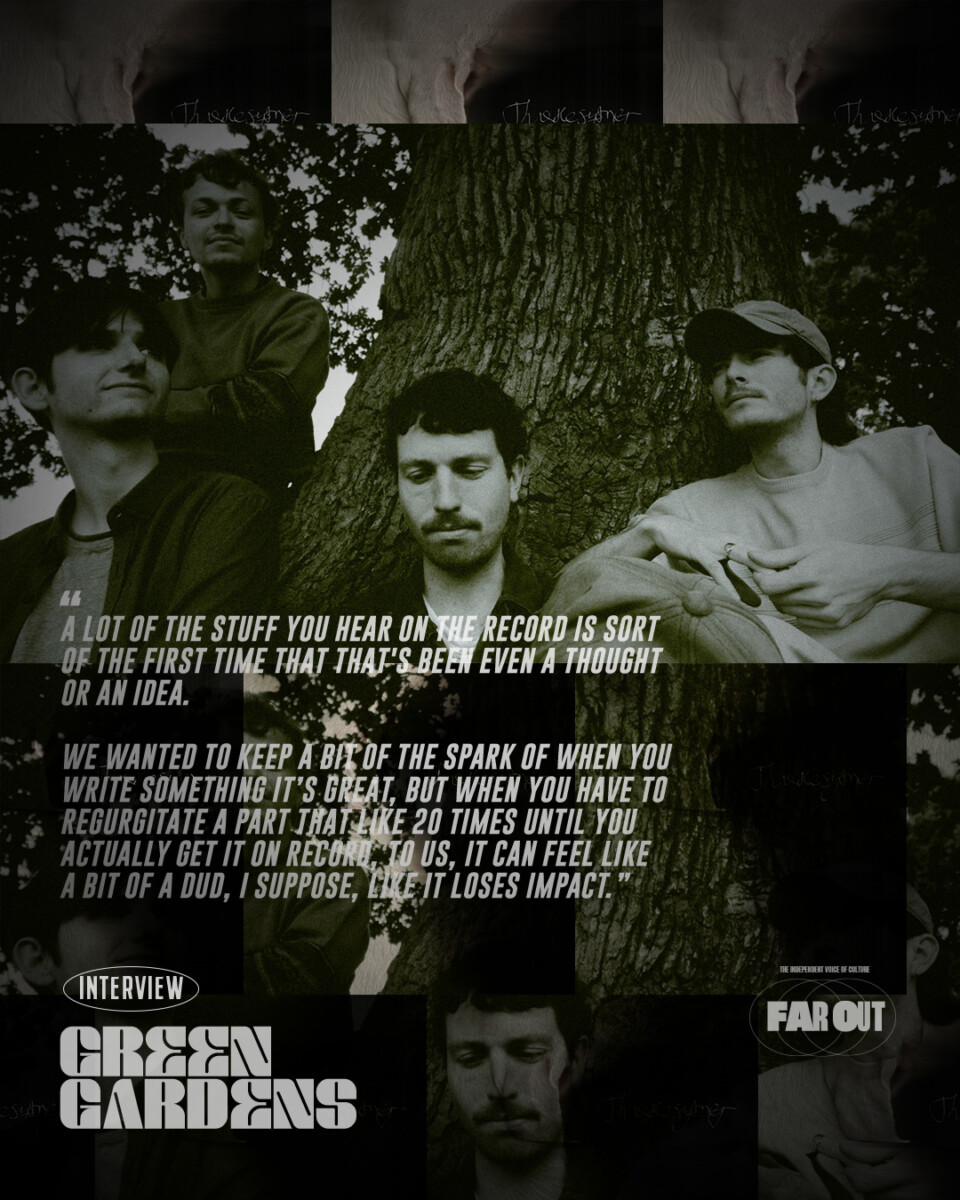
“A lot of the stuff you hear on the record is sort of the first time that that’s been even a thought or an idea,” he said as the band basically captured everything, so when something felt good, even if they really had no idea what had happened or how they’d made it happen, it was kept. “We wanted to keep a bit of the spark of when you write something it’s great, but when you have to regurgitate a part that like 20 times until you actually get it on record, to us, it can feel like a bit of a dud, I suppose, like it loses impact,” Cracknell explained.
That process seems to perfectly match up with the band’s lyrics and even their wider purpose of songwriting. On Thistlesifting, especially, Cracknell and Aitchison meet in a conversation about grief. Loss leads their work, and this album especially traverses every shade of what that experience can look and feel like, from rage to tenderness to light hope to dark sadness. Though the lyrics are often richly poetic and metaphorical, they too have the sense of simply stumbling onto the right phrase that finally and fully says what they need it to. Matching that with an instrumentation born from those magic accidents, that’s perhaps why the album, though intricate and layered, still feels so organic.
Quickly, a point comes up – it’s still too soon for the band to have any real sort of reading on their own work. “As the months went on, getting away from the first record, it’s the classic, like you release something, and then time passes, you realise what you don’t like about it or what’s bothering you playing it,” Aitchison said. However, that has happened this time round, partially because the band are still only really just meeting their own album.
There’s a logistical point here. After the record was released, co-vocalists Chris Aitchison and Jacob Cracknell went off on tour in the Far Caspian, taking them away from their own new album. But also, their process in the studio meant that when they were reunited with it, and were prepping for live shows, they essentially had to get to know their own creation, to figure it out fresh.
“With the first record, we kind of did all that work before we went in, because we only had like five days to record,” Cracknell said, as their debut was basically crafted from songs they could and did already play. This was a different story. Not only was Thistlesifting crafted through accidents, but it was crafted slowly. Produced by their friend Joel Johnson, Cracknell said, “He gave us, like, seven weeks or something, a long time. And we just go in every day and then just chip away, which is great.”
It is great. But it meant that the reality of the songs on the record was far, far away from any old demos, far away from any lyric sheets or any noted down compositions – it’s tough to plan a live set from that.
“We had to kind of relearn it all again, and that proved a lot of challenges,” drummer Bob Henderson said. “‘Death Thought’ comes to mind,” he continued, picking out an example, “That one felt like such a studio track.”
It could lead to a big decision – what kind of band do you want to be? Do you want to do what The Beatles did and retire from gigs to go all in on tracks that could never be translated? Or, if you don’t want to compromise on the studio track, the only solution is to get into the weeds of your own work once again.
“A lot of it was reverse engineered to work,” Cracknell said, “because you can get in the studio, we can record it in a way that you’d need sort of 20 people to get exactly right.” Luckily, they seem to have two secret weapons – their guitarist, Jacob Beaman, and their newest member, keys player, Meg Lama. “Jacob’s obviously doing the bass parts, Bob’s in drum parts, and I’m kind of doing the rhythm guitar parts,” Aitchison said, then simply looked towards the other two – all the rest lies with them as a two-person army strapped with the skills, pedals and effects to try and bring that 20-man studio sound to the stage.
It’s going well. At the set I caught in Rotterdam, the album-to-live-set experience is luscious, keeping the energy of the album safe on the stage. There can be no real conclusions beyond that, no big grand thoughts as they prep to finally tour the record, still with the sense that they, too, are getting to know it better each night.
If they do have one retrospective thought on the project, though, it’s a kind of thrill that their own creation still keeps them on their toes. “In the set yesterday, I was not, like, struggling, but there was a couple moments that were quite hard, and that was nice,” Aitchison said. You can’t get bored or critical of your own songs if you’re still having to concentrate on wrangling them.
“It retains a lot of emotional intensity,” he added, “It still has the charge to it.”
