


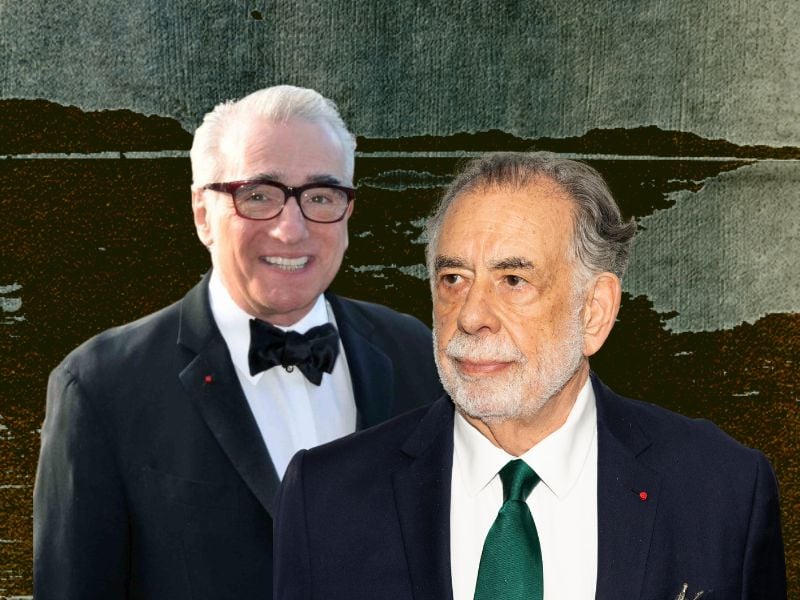
How Francis Ford Coppola helped Martin Scorsese get back in his groove

Martin Scorsese and Francis Ford Coppola are certainly two filmmakers who belong on the Mount Rushmore of American cinema. Both masters are bound by something that defines a lot of the best art: they are uncompromising without ever being cynical. However, it stands to reason that the word ‘uncompromising’ is not one that producers get elated at seeing on a director’s CV.
In fact, it translates in the studio dictionary as an expensive headache (i.e., the uncompromising eventually ran the studio into the ground). Coppola’s contemporary, Werner Herzog, once said: “I would travel down to Hell and wrestle a film away from the devil if it was necessary”. It would seem that Coppola already had Satan’s address and was a regular in his wrestling ring. His troubled path began with his first film, an act of creative whoredom that Coppola embarked upon merely to get a leg-up in the industry. It was a softcore comedy film called Tonight for Sure in 1962.
However, this was all geared towards him becoming the sort of artistic auteur who could produce masterpieces like Apocalypse Now. Thus, when he fought tooth and nail with producers and finally made The Godfather, he knew that he had to save his fellow visionaries from the same hell he had suffered. In the process, he gave Scorsese a leg-up that he has never forgotten.
Fresh from his first feature, Boxcar Bartha, which was hardly the sort of success that has studios flocking, Scorsese was wondering how he could get Mean Streets off the ground in such a way that he retained artistic control. Fortunately, his backbone of independent shorts had already endeared him to some big hitters in the industry. As Quentin Tarantino would later say, “Trying to make a feature film yourself with no money is the best film school you can do”.
Thus, when Coppola heard this promising young director wanted to make a movie about crime and criminals in fractured cities and shoot scenes in the same St Patrick’s Old Cathedral where Godfather sequences were shot, he was keen to help out. So, Coppola mobilised the brat pack. Coppola himself would put up some of the money that Scorsese needed to get Mean Streets made. And what’s more, he even told his pal Brian De Palma about it, and he helped Scorsese edit a few scenes.
The result was a film that is now in the United States National Film Registry as a “culturally, historically, or aesthetically significant” work. James Gandolfini says he watched it “ten times in a row”. It’s also Kathryn Bigelow’s favourite movie, and Spike Lee calls it a masterpiece. In short, investment in the right areas pays off. As does having friends in high places.
