


How did raga rock change the sound of the 1960s?

When it comes to rock music in general, but particularly in the 1960s, it was pretty much a straight transatlantic affair. British or American acts were your lot, with even the former overwhelmingly dominating the scene for a time as the likes of The Beatles and The Kinks took charge. But for dreamy psychedelics, it was only natural that their visions would eventually shift to more spiritual horizons, and the pull of Indian culture soon became their newest elixir.
The formula of rock and roll was very much constituted by the sound of electric guitar, drums, and vocals, and rarely had room for much else. Yet even at the peak of the ‘60s, when these kinds of outfits seemed to be in their prime, it naturally soon became a largely monotonous and regulated instruction manual that true rock stars yearned to break free from.
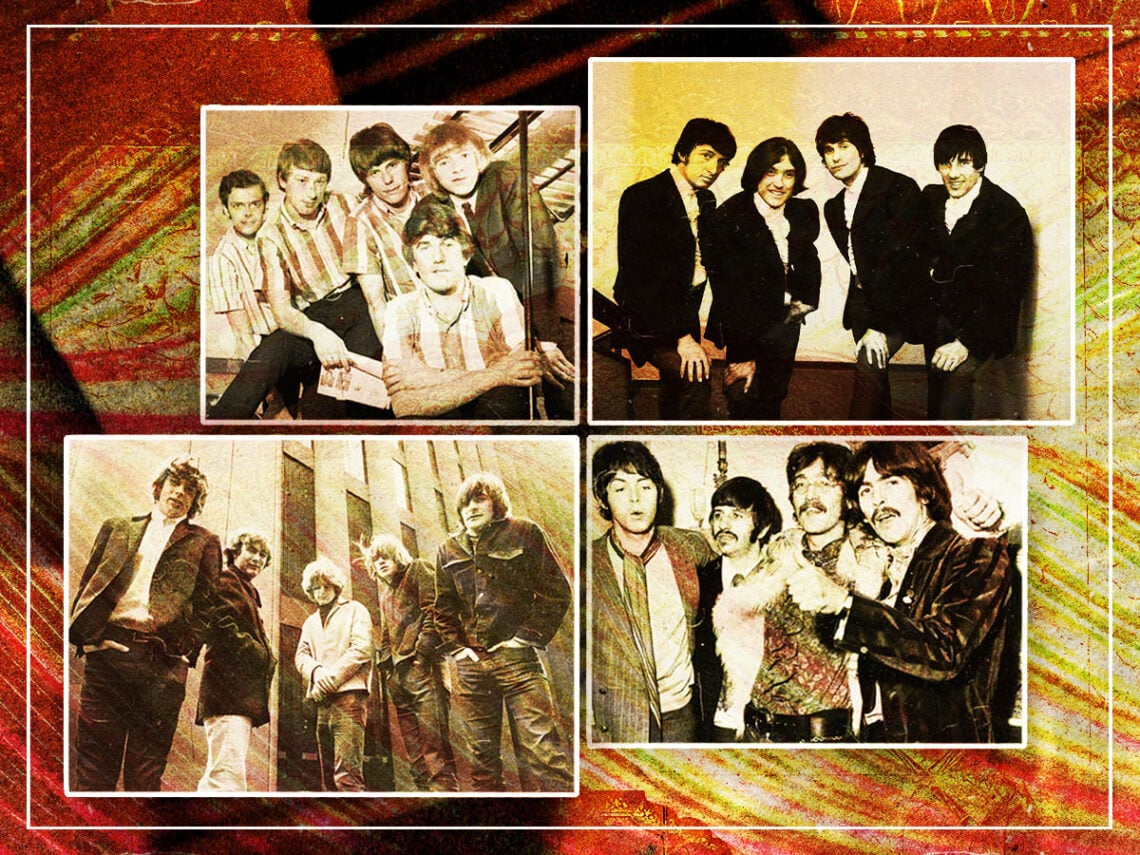
The first to branch out into new, unfettered ground was The Kinks’ Ray Davies, who, while on his worldly travels in a stopover in Bombay in 1965, quickly became enamoured by the musical culture of the country and brought it back to British shores, penning the hit ‘See My Friends’ – and thus, raga rock was born.
Inspired by the authentic Indian instrumentals of the sitar, drone, and modal melodies, stars hailing from the country, including the Bengali sitarist Ravi Shankar, soon began to gain world prominence. This gave rock music a spiritual edge that had rarely been achieved in the Western sphere. Of course, it quickly turned heads, with The Yardbirds’ ‘Heart Full of Soul’ cited as the other key example of bringing raga into the mainstream.
But when there’s a trend for the taking, you already know that everyone else was obviously going to leap on the bandwagon. However, it is worth noting that this was a fad without a name as we know it now – it wasn’t until 1966 and the release of The Byrds’ single ‘Eight Miles High’ that the band’s publicist coined the term raga rock to describe their sound, and subsequently a revolution was abound.
The resultant explosion of raga rock has simply too many examples to name individually, from The Beatles to The Rolling Stones to Jimi Hendrix. In short, anyone who was anybody in the rock world wanted a slice of the pie, and the Indian overtures then played a seismic role in what we may consider to be the exclusively Western hippie culture and Summer of Love through its psychedelic themes.
Naturally, given the musical climate of the moment, when The Beatles hit the airwaves with Revolver, it represented the peak of the style, with George Harrison’s ‘Love You To’ written with sitar and tabla infusions, as well as John Lennon’s ‘Tomorrow Never Knows’ featuring similar instrumental qualities. Of course, in Harrison’s case, the influence of raga rock went on to have a pivotal impact on the rest of his musical life and career, so as much as the popularity of the sound was ultimately short-lived, it proved transcendental to the rest of rock history.
The 1960s are rightly associated with psychedelia, peace, and love, but as the advent of raga rock demonstrated, a far more wide-reaching world span had a hand in creating this. It may not have lasted forever, but raga rock was the centre of the musical world for a time, with sitars replacing electric guitars.
