


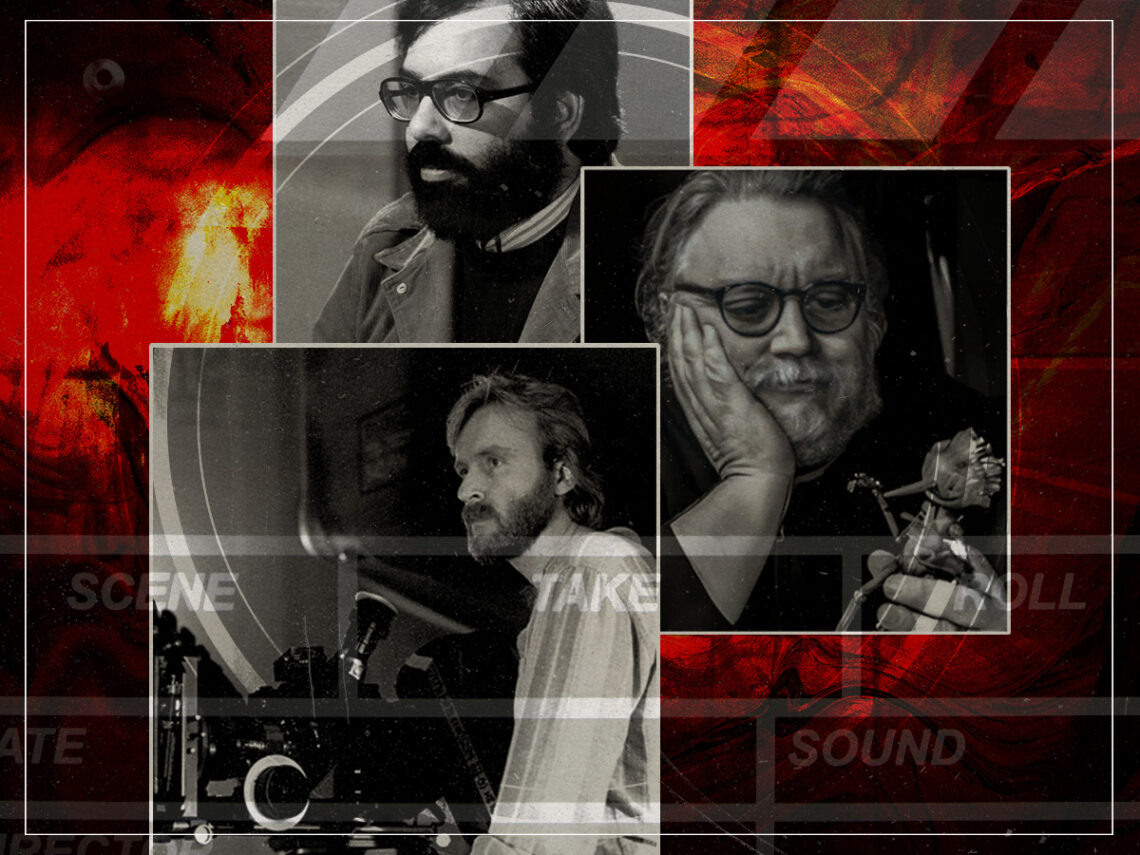
How did horror become the proving ground for the biggest directors in cinema?

There are countless ways for a director to get started in the film business, and no two talents ever follow an identical path, but it’s becoming increasingly obvious that debuting on a low-budget horror flick is one of the safest ways to take that first step towards greatness.
Plenty of filmmakers have become synonymous with the genre and have plied their trade almost exclusively within it, but that’s not entirely reflective of the trend. Behind-the-camera talents who’ve made countless classics, scooped almost every major award, and conquered the box office several times over arrive in all shapes and sizes, but horror tends to be the thing that binds many of them together.
James Cameron got his start on Piranha II: The Spawning before making a habit out of reinventing cinema, Francis Ford Coppola’s first feature came on 1963’s black-and-white terror Dementia 13, Kathryn Bigelow’s second film was the vampire thriller Near Dark, Guillermo del Toro made his mark with Cronos, and Peter Jackson’s Bad Taste more than lived up to its title.
Every single one of those names has an Academy Award for ‘Best Director’, and with the sole exception of del Toro, none of them has made a horror movie in decades, if they’ve even made another one at all. Sam Raimi graduated to blockbusters once The Evil Dead put him on the map, James Gunn oversees an entire studio after Troma and Slither got his foot in the door, Adam Wingard has been handed the keys to the MonsterVerse, and James Wan is the only director not named James Cameron to have directed two billion-dollar box office hits that aren’t part of the same franchise.
Andy Muschietti has gone from Mama to rebooting Batman, Richard Donner’s first hit was The Omen before he became a blockbuster icon through Superman, The Goonies, and Lethal Weapon, Zack Snyder remade Dawn of the Dead prior to inspiring a curiously passionate fandom, Alien was Ridley Scott’s sophomore effort, Cloverfield ended a 12-year directorial exile for Matt Reeves, and Eraserhead was as Lynchian as it gets before the term had even been coined.
That’s multiple generations of top-tier filmmakers with an insane amount of accolades, billions upon billions of dollars in ticket sales, their DNA embedded into many of the industry’s biggest properties, and a cavalcade of all-time classics under their belts, all of whom made either their first or second films in horror. It’s the most fertile proving ground there is, and a lot of it is down to creativity and ingenuity.
Working with miniscule budgets, minimal resources, and the freedom to take risks fosters imagination and inventiveness, with one of the simplest ways to showcase undoubted talent always having been the ability to do a lot with a little. Horror lends itself to that when the expectations are arguably lower and the edges are a whole lot rougher, which in turn encourages filmmakers to display their style from the very beginning.
The genre is heavily indebted to tone, pacing, atmosphere, the importance of music, and the deployment of special effects at the right time to extract the desired reaction from the audience, sentiments that are applicable to all walks of cinematic life but integral to scaring folks shitless. Trying to convince viewers that the characters are as scared as they should be also emboldens the director to work closely with their actors from the start of their careers, too, something that comes in increasingly handy the higher up the ladder they get.
It’s not a bulletproof strategy by any means, but enough first-timers have dabbled in horror before going on to achieve great things that make something go bump in the night is about as sure a way as any for an aspiring auteur to set out their stall from the very first frame.
