


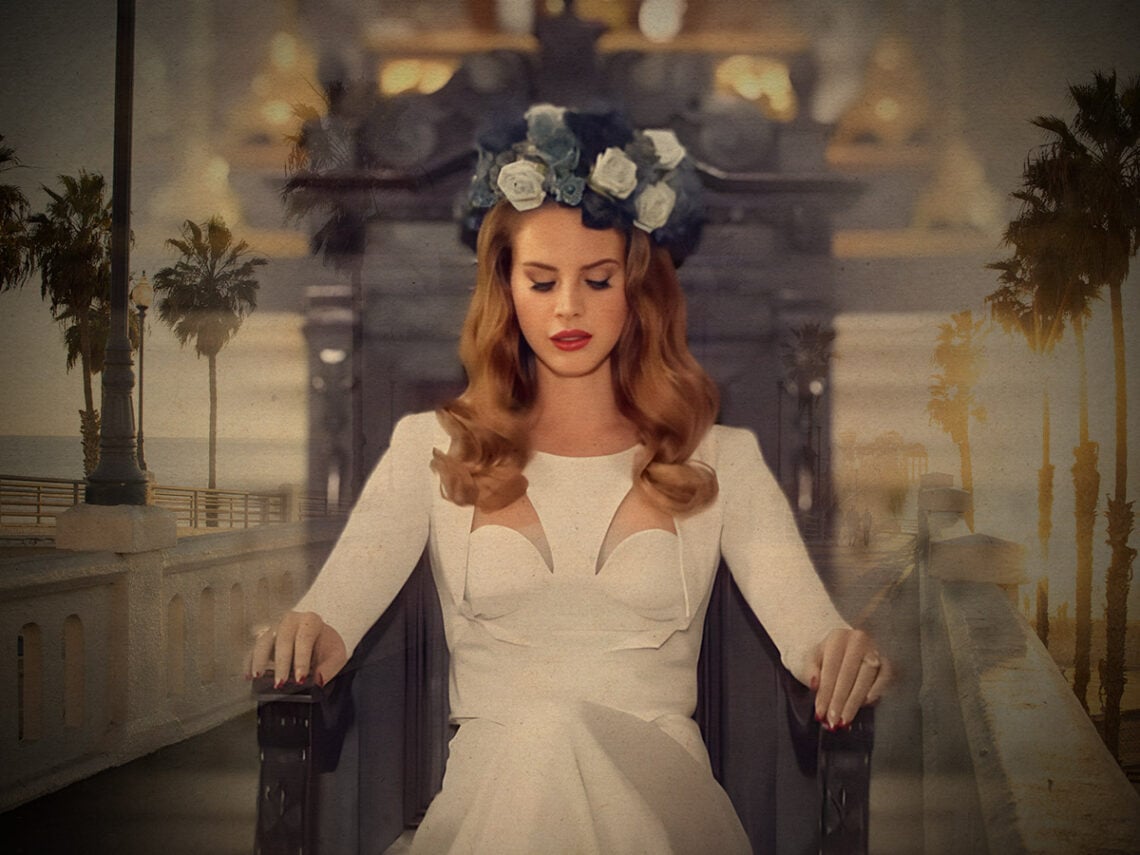
How California became a character in the musical world of Lana Del Rey

Lana Del Rey is a New Yorker, born and bred, and yet, if there’s any one place that takes on a vital role in her music, it’s California.
Del Rey, or Elizabeth Grant, is about as New York as they come, born in Manhattan and then moving out to Lake Placid as a child, she grew up there in a quiet town in New York State before coming back to the boroughs as a young adult, studying in the city and living out in the Bronx.
Her entire foundation was New York, from her early life to her schooling to her first musical forays. When she was discovered, it was in New York, and that’s where she stayed until 2012, when the major industry swept her up with Born To Die. But still, even long before she moved to the city of angels, it was there in her lyrics. Through so much of her early Lizzy Grant work, the images are so vividly Californian. “It only takes two hours to Nevada,” she sings on ‘Yayo’, a track that appeared on early releases long before her debut and her move to California, but already, that’s clearly where her narrator is.
That’s a pattern; in pretty much all of Del Rey’s music, the narrator is in California. “He doesn’t mind I have a LA crass way about me,” she sings on ‘Off To The Races’. “Drive fast, I can almost taste it now / LA, I don’t even have to fake it now,” she croons wistfully on ‘American’. As ‘Gods and Monsters’ begins, she sets her scene by repeating simply “LA, LA, LA”. But in the case of all these songs, chances are they were written before Del Rey was even living on that coast.
Even as life has pulled her away from California, the place stays there in her music. By all reports, she now lives in Louisiana with her husband. She’s spent a lot of time in Florida, South Carolina, and even lived in London for a stint, but her music couldn’t be more California-centric, something that shows up again and again lyrically. On her last album, Did You Know That There’s a Tunnel Under Ocean Blvd, it was really the entire theme from the call out in the title to mentions of Griffith Observatory, the Beverley Centre shopping mall, Reseda, Venice Beach and Genesee Blvd, where either Del Rey, or merely her often fictionalised narrator, lived.
In previous records, there have been call-outs to the Hollywood sign, Laurel Canyon, Marina Del Rey and so on. Sometimes, California is the entire song, like on ‘California’ or on the lengthy ‘Venice Beach’, as if Del Rey can’t think of any better way to capture her emotions than to put them onto these landscapes, as if the sights of California say it all for her.
But overwhelmingly, California is palpable in Del Rey’s aesthetic. Even if it’s not mentioned by name, her visions of motorbikes, fast cars, palm trees, motels and so on, of rich and sleazy characters and sun-drenched girls in pools, they all feel so vividly West Coast. Her entire artistic world feels like a combination of 1940s golden age Hollywood with its glamour and the broken-down, seedy underbelly of the modern industry, reflected through California’s less polished parts.
It provides her all the metaphors she needs: to sing of bold, glamorous love, she can sing of lust at the Chateau Marmont, to sing of feeling overwhelmed, she can sing of paparazzi up in the Hollywood Hills. For the ultimate image of feeling misunderstood, Del Rey’s Los Angeles home came to represent that as she wrote of it so often as a kind of hiding place constantly under threat. The moment that home actually was under threat as a deranged fan broke into her house in 2022, that seemed to only solidify its position in her artistic language as this quiet, artistic type looking for love and peace in a world gone mad.
It’s clear that for Lizzy Grant, the young girl from New York, no place was as inspiring or mystifying as California as she watched the old movies, read the books and heard the songs, planning one day to add to the grand library of great art in the ultimate setting, or offering herself up to it as she sings “my body is a map of LA”.
