


How accurate was Francis Ford Coppola’s 2015 prediction for cinema’s future?

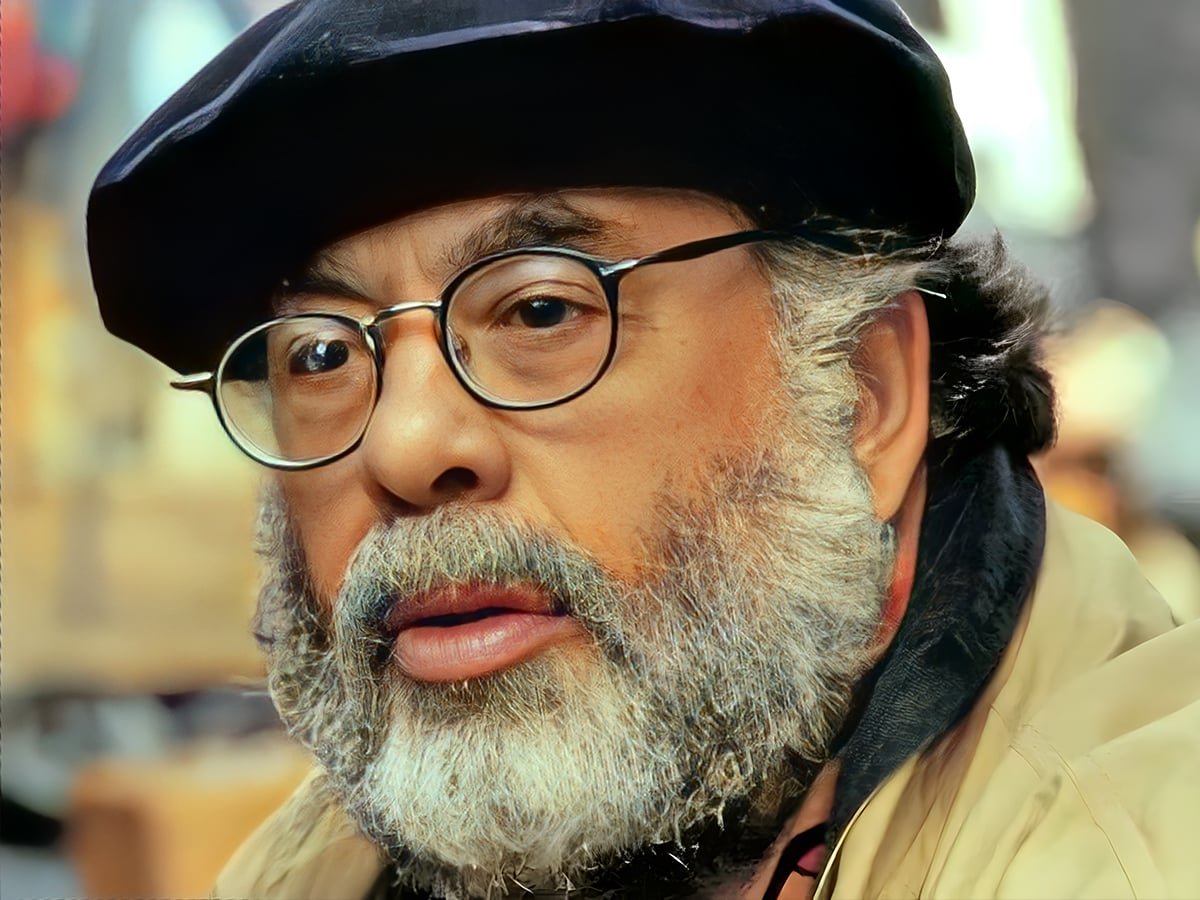
In 2015, at the annual Marrakech International Film Festival, Francis Ford Coppola, president of the jury that year, offered a group of journalists an eerily accurate prognosis for the future of cinema.
His predictions on who will own the industry, the content output, and the changes in the way audiences consume films offer an interesting perspective on the current state of the industry here in the UK and the US. However, the reality is more nuanced, with external and unpredictable factors like the pandemic, AI, and cuts driving the real change.
Speaking to journalists, Coppola predicted that the industry “will have new ownership in three or four years” and instead of businessmen, it will be owned by those “desperate for real content because they have lots of money”. Coppola believed these “people” to be the internet companies, pointing to Facebook as an example of a business model based on advertising, and with people less engaged with the social aspect of Facebook, it would turn to the movie business for revenue.
While Facebook hasn’t exactly made the transition to film in a traditional sense, its acquisition of Instagram and focus on AI, news, and short-form video content aligns with the wider prioritisation of short-form algorithmic social media content by companies like X, YouTube, and Instagram, which are drastically changing the way audiences consume media.
In March this year, the Hollywood Reporter cited a study by Deloitte that concluded that younger audiences are shifting toward short-form and creator-led content. 56% of Gen Z and 43% of millennials find social content more “relevant” than traditional films or TV. With younger people feeling the pinch of streaming services, they are increasingly opting for free social media content over big-budget entertainment, to the point where many feel a stronger connection to creators than actors.
The director also predicted a “changing of the guard” in terms of who runs the film industry, with traditional big-budget entertainment production studios like Sony and Universal being frozen out for new owners. While he didn’t specify who these owners might be, Coppola suggested the “old studio executives” format would change.
While the “big five”, Sony, Disney, Warner Bros, Paramount, and Universal, continue to dominate the film industry, collectively holding around 80% of the box office share, other companies like A24, Amazon, MGM and Lionsgate have also moved in, producing a hybrid mix of box office hits and smaller indie productions.
The big five continue to rake in huge box office revenue, but their transition towards streaming platforms has ultimately ensured their survival throughout the pandemic, which drastically shifted audience viewing habits. Research by Wifi Talents found that in 2023, 87% of movies released in 2022 were available via streaming within a month of theatrical release, and 70% of theatrical films in 2023 were released simultaneously in theatres and on streaming platforms.
Another result of this move to streaming platforms is that the lines between streaming and production companies have blurred, with many operating a quasi-hybrid model, such as Disney and Paramount. They have moved into the streaming space and now make films directly for their platforms, and Netflix and Amazon, who traditionally operated as streaming companies but have since grown their own production houses. One downside of the streaming market is that small independent projects are suffering due to this shift and the dominance of mainstream and streaming content.
The result is that streaming and home entertainment are booming. By 2022, 59% of UK adults watched a movie via streaming in the past year, surpassing cinema (41%) and broadcast TV (51%), according to a UK Government committee report. In the US, streaming dominates film consumption, with streaming accounting for approximately 83% of all US movie viewership in 2023.
In this sense, Coppola couldn’t have been more accurate when he said, “I believe the way movies are distributed [will change] – this idea that movies are separate. The movie that you see in the theatre, which will still be a wonderful option, you’ll be able to see at home.” The director continued, “The public will have what they want. And this work will be available anywhere. I mean, you can see it in your hotel room, you can see it in a movie theatre, you can see it in a community centre. For lack of a better word, the media will be available anywhere.”
But despite the boom in streaming services making it easier than ever to watch films on demand, the traditional cinema space is experiencing a resurgence, after a slow recovery following the pandemic shutdown. In the US, the cinema market is expected to reach $23.5billion in revenue in 2025, with audiences increasingly picking premium formats like IMAX and luxury experiences.
So, while Coppola didn’t get everything right, his musings on the future of cinema foreshadow many of the issues the industry faces today. The increasing popularity of cinemas once again offers hope for the space’s future as a sacred place where you can still sit in a huge dark room at 11am with an overpriced box of popcorn, and no one can judge you, not even Francis Ford Coppola himself.
