


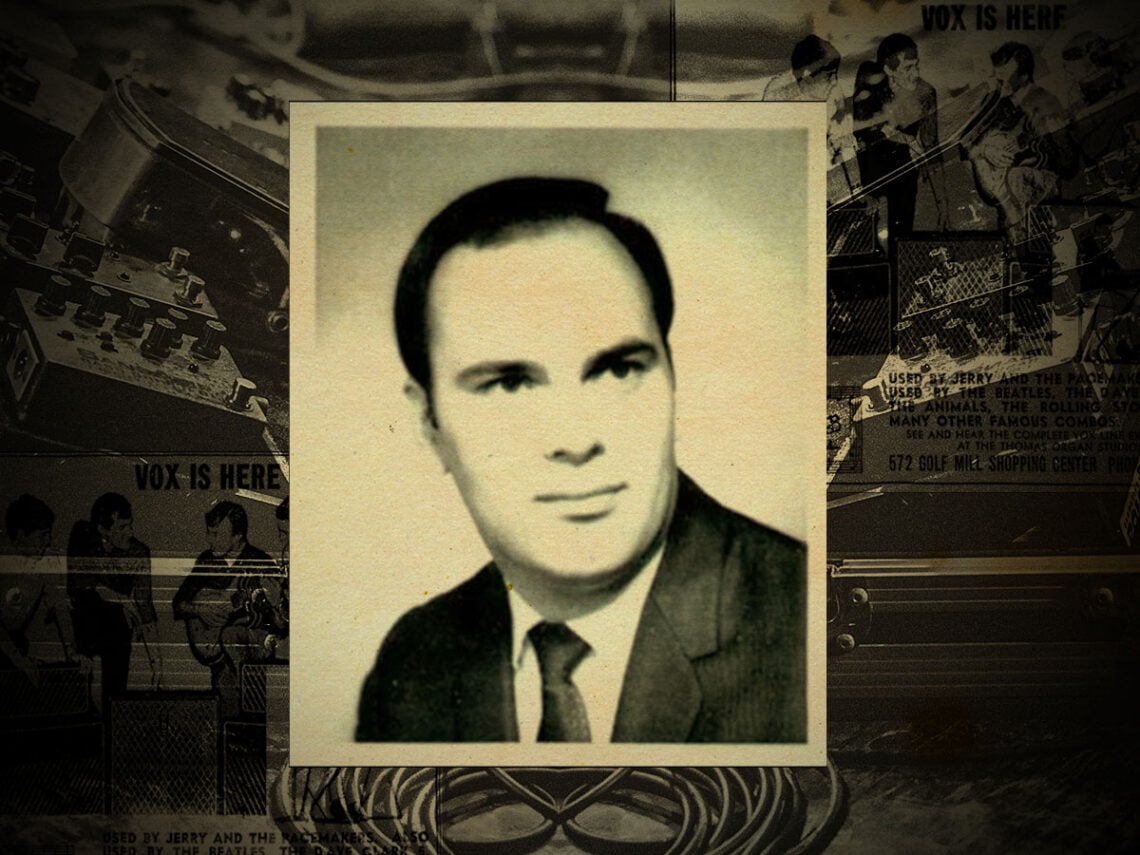
Brad Plunkett: How a forgotten man changed rock ‘n’ roll forever in 1966

Jimi Hendrix, Slash, and David Gilmour, all musical legends in their own right, but all owe a debt to one man.
There is a very common misconception in music that all of the developments made and the evolution of sound as a whole are thanks to the artists and the artists alone, but that’s not the case. Of course, they’re a massive part of it, but there are other people in the industry, those who work behind the scenes, and who are equally responsible for the major moments in the movement of music.
Hendrix is certainly a musician who can attest to this, one of the greatest guitarists and performers of all time to ever take to the stage, apart from being an incredibly underrated lyricist, but there was a moment in his career when it felt as though he was somewhat stagnating.
Everyone who saw Hendrix perform knew that he was a musician unlike anyone who had come before, but he wasn’t getting signed by anyone simply because, while the guy could play, there was no guarantee he could sell records. He was a better guitarist than anyone else holding a six-string, and that made him a great live performer, but the real money was in record sales.
Plenty of managers went to watch Hendrix play, but none of them decided to take him under their wing, and one of those who rejected him was Andrew Loog Oldham, more famously known as The Rolling Stones’ manager. He went to watch Hendrix perform in New York, but didn’t think there was anything he could do with the guitarist, and it wasn’t until Chas Chandler from The Animals came along, who agreed to manage Hendrix and told him to move to the UK, that things started rolling for the maestro.
Hendrix followed orders, and his exposure to a new music scene, with the help of Chandler, allowed him to become the phenomenal musician that we know and love today. Hendrix was always an amazing guitarist, but without the help of people behind the scenes, he might not have been recognised, and the same goes for people who made different effects pedals within music.

While a lot of guitarists might have already been excellent musicians, different effects that can be used when performing help to elevate their sound, making it alien and exciting to all those who are listening. It’s these inventors who are often overlooked in the world of music, and they have indirectly contributed to the creation of some of the most iconic riffs, licks and solos ever laid on wax.
Sticking with Hendrix as our example, one of the most iconic intros that he ever wrote was that of ‘Voodoo Child’, which starts with no notes, just a pick dragged rhythmically over muted strings, before the actual riff kicks into play. It’s iconic, but what makes it so, alongside the notes being played, is that famous wah sound, courtesy of the wah-wah pedal. This was created by Brad Plunkett, another one of those behind-the-scenes names that rock music owes a great deal of its evolution to.
He was working at Warwick Electronics when he accidentally made the wah. It was originally supposed to be a volume pedal for Vox, and wound up becoming the strange effect that millions of guitar legends have used ever since. Plunkett was testing the pedal in the hope that it would alter the volume of instruments, but instead produced a sound effect that people hadn’t really come across before.
While the first pedal might have been made by accident, Plunkett continued to work on it so that it could be used with electric guitars. He did this by altering harmonic qualities and ensuring the sound rang through simpler. Vox didn’t intend to sell an effect pedal like this, as Plunkett was originally instructed to make a volume pedal. As such, his prototype was sent to Del Casher for performances. It took time for the effect to take off, but once it did, it became an intrinsic part of rock history.
The introduction to ‘Voodoo Child’, the solo on ‘Sweet Child O’ Mine’, the guitar run on Rage Against the Machine’s ‘Bulls On Parade’, and Chicago’s ‘25 or 6 to 4’ were all elevated to the next level because of the wah pedal. In 1966, one unknown name came up with a new effect, a behind-the-scenes voice, who shouted so loudly that all of rock listened, and all of rock got better as a result.
