


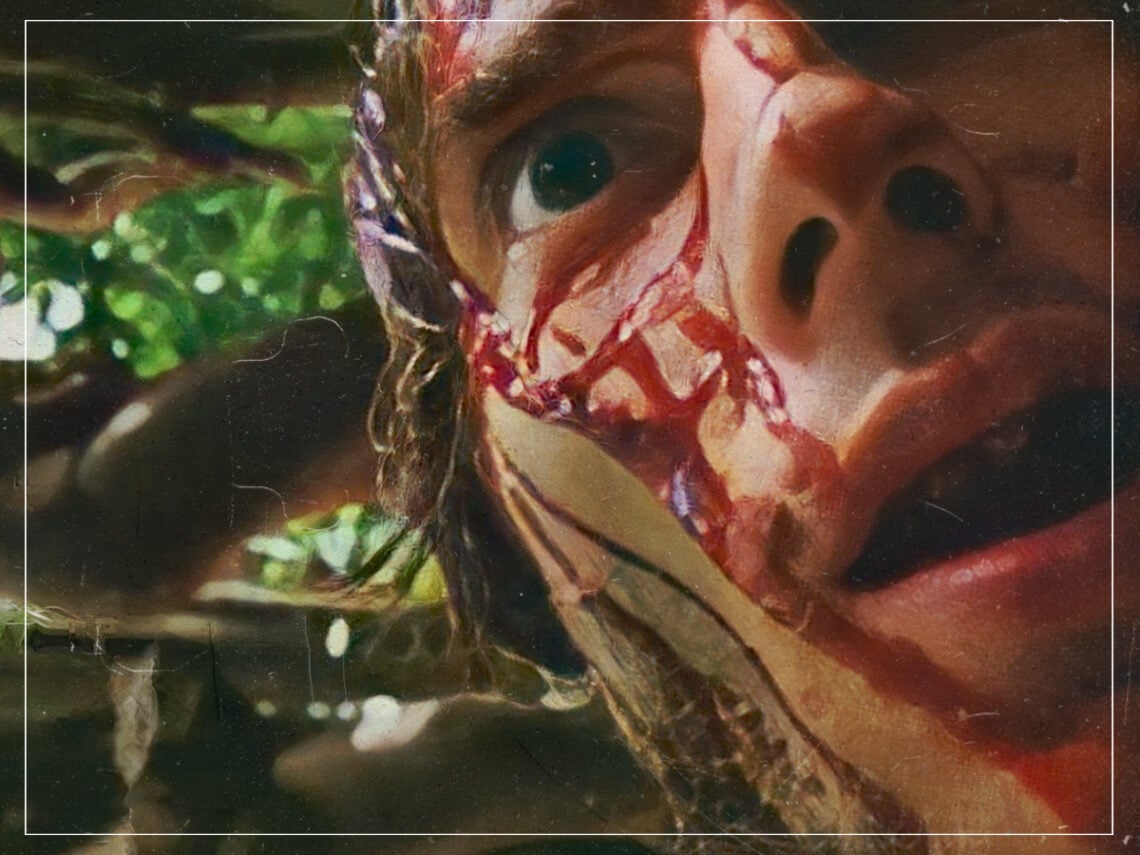
‘Cannibal Holocaust’: The authentic horror movie whose director was charged with murder

A nice thing you can repeat to yourself over and over again if a horror film is getting a little too under your skin is, “It’s only a movie, it’s only a movie”. Yet, while this can work for the terror of something like Texas Chainsaw Massacre or John Carpenter’s Halloween, there are other genre hits that tip the scales of realism a little out of balance, creating something a little too authentic in the process.
Such was the case for Ruggero Deodato’s 1980 film Cannibal Holocaust, a movie considered a classic by horror lovers and a provocative mess by anyone else not fond of a little cinematic terror. Made to appear as if it were a real documentary, the film told the story of a camera crew who venture into the Amazon rainforest to make a movie about the tribes of cannibals who still exist.
The resulting film was quite revolutionary for the world of horror, with Deodato’s film being one of the very first found-footage movies of all time, with the second part of the controversial feature following a TV station that finds the tapes and airs them to the public. Just like the marketing strategy of the iconic found footage horror The Blair Witch Project decades later, Deodato saw it best to advertise Cannibal Holocaust as an authentic documentary.
To maintain this authenticity, the director had the actors sign a contract to say that they would not engage with the media until at least one year after the release of the film itself in an effort to try and convince the public that their deaths on-screen were real. Fatefully, ten days after the film’s premiere in Italy, Cannibal Holocaust was banned, and its director was arrested.
Such was escalated when the film was later released in France, with critics and audience members questioning whether the actors had, indeed, died, especially as they were nowhere to be found in public. With conspiracies against the film heightening, Deodato was charged with murder in Italy for the ‘deaths’ of the lead cast members, despite each one being safe and sound.
After the director tracked each of the actors down to prove that they weren’t dead and provided an abundance of behind-the-scenes information, Deodato was cleared of all his charges. Despite this, the film remains banned in several countries thanks to its depiction of animal abuse being entirely real.
Although the violent film is treated as one of horror cinema’s most brutal films, it was integral in the formation of modern horror cinema, with such filmmakers as Eli Roth and such movies as Rec likely not existing without its influence.
