


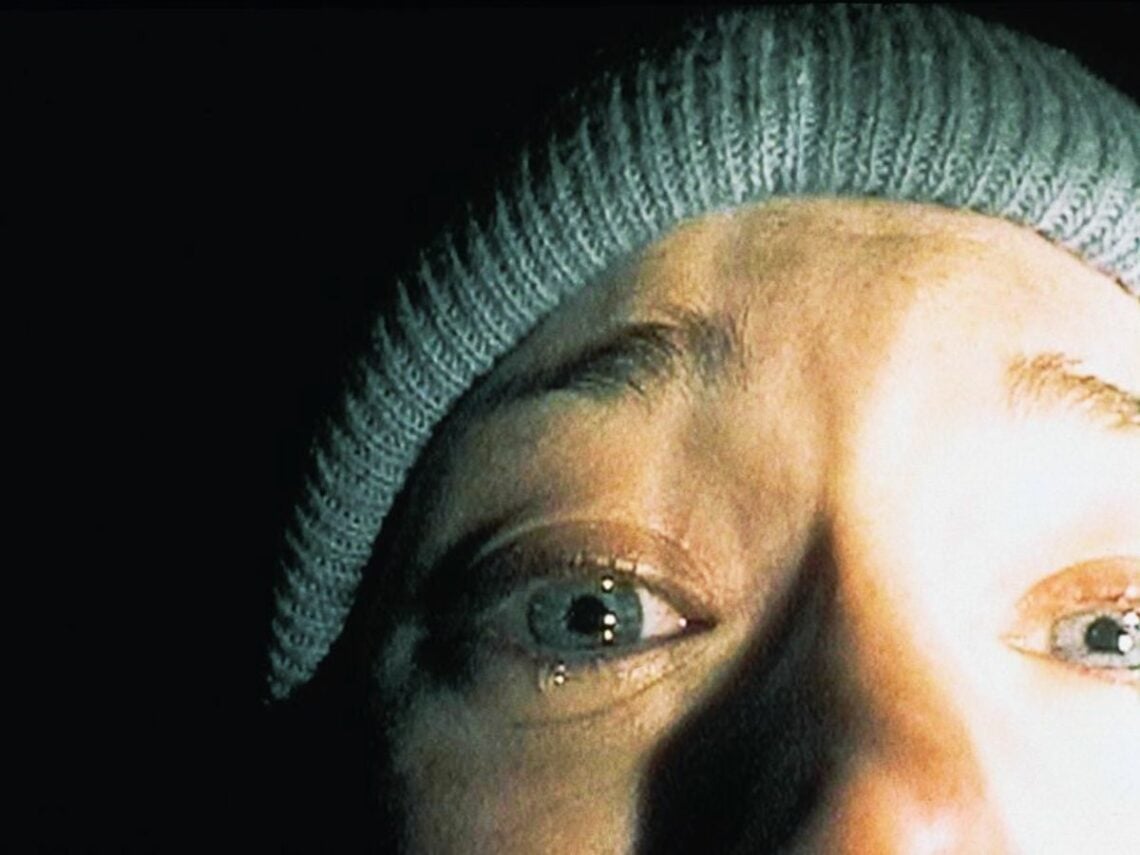
How ‘The Blair Witch’ changed independent horror cinema forever

The history of horror movies has twisted and writhed in moments of cinematic terror, and there are a handful of films that have undoubtedly revolutionised the genre. Going back to George A. Romero’s Night of the Living Dead and Tobe Hooper’s The Texas Chainsaw Massacre, horror has always had its roots in independent cinema, and at the turn of the new millennium, indie horror made yet another leap with Daniel Myrick and Eduardo Sanchez’s The Blair Witch Project.
A genuine work of cultish fervour that wove itself into popular culture’s very fabric, the 1999 film remains a pivotal moment in the history of spooky cinema, subverting both audience expectations and the production techniques of the film medium itself. By employing a minimalist style and handheld cameras with a ‘found footage’ style, The Blair Witch Project managed to blend the distinctions between fact and fiction.
Narratively, the film tells of a group of three student filmmakers, played by Heather Donahue, Michael C. Williams and Joshua Leonard, who hike into the Black Hills in Maryland to make a documentary about the locally mythical Blair Witch. Eventually, the trio disappear, and the film the real-life audience watches is the found footage.
Such a technique was utterly groundbreaking at the time and would be repeated countless times in the horror movies that followed in the following years, particularly in the likes of Paranormal Activity, REC, Host and Creep. Throw into the mix a low-budget production that recalled the authenticity of the great horror movies of the 1970s, and both audiences and critics alike were instantly terrified and utterly captivated.
Rather than stick to the generally accepted convention of character development and narrative build-up, Myrick and Sanchez instead opted to throw their viewers straight into the action, where its protagonists arrive fully formed. Improvised naturalistic performances immersed the audience in the film, ramping up the sense of dread and fear and creating an unsettlingly real atmosphere.
Another important facet of The Blair Witch’s impact on independent cinema was its marketing strategy, and Myrick and Sanchez again eschewed what was expected of them in generating buzz around the film, exploiting word-of-mouth virality and releasing a stream of obscure cryptic videos on the internet to generate widespread anticipation for their very strange and unique film.
The result was that fellow filmmakers no longer feared not being part of the Hollywood system, proving that commercial and critical success could be achieved on a small budget with innovative marketing and creative decisions of artistic ingenuity. Naturally, countless imitators soon arrived and while most lacked the originality of The Blair Witch, a handful of others honoured its legacy.
Horror itself was suddenly the flavour of the month, and the proceeding decade saw a resurgence of the genre. By making innovative narrative choices that did not require a large budget, rejecting the constraints of Hollywood studios, and opting for a marketing approach that created a level of fear outside the film’s actual runtime, The Blair Witch, with its minimalist found footage style, pushed the boundaries of independent cinema and remains one of the most significant works of horror of all time; an essential piece of film history.
