


Why is Hollywood obsessed with the English language remake?

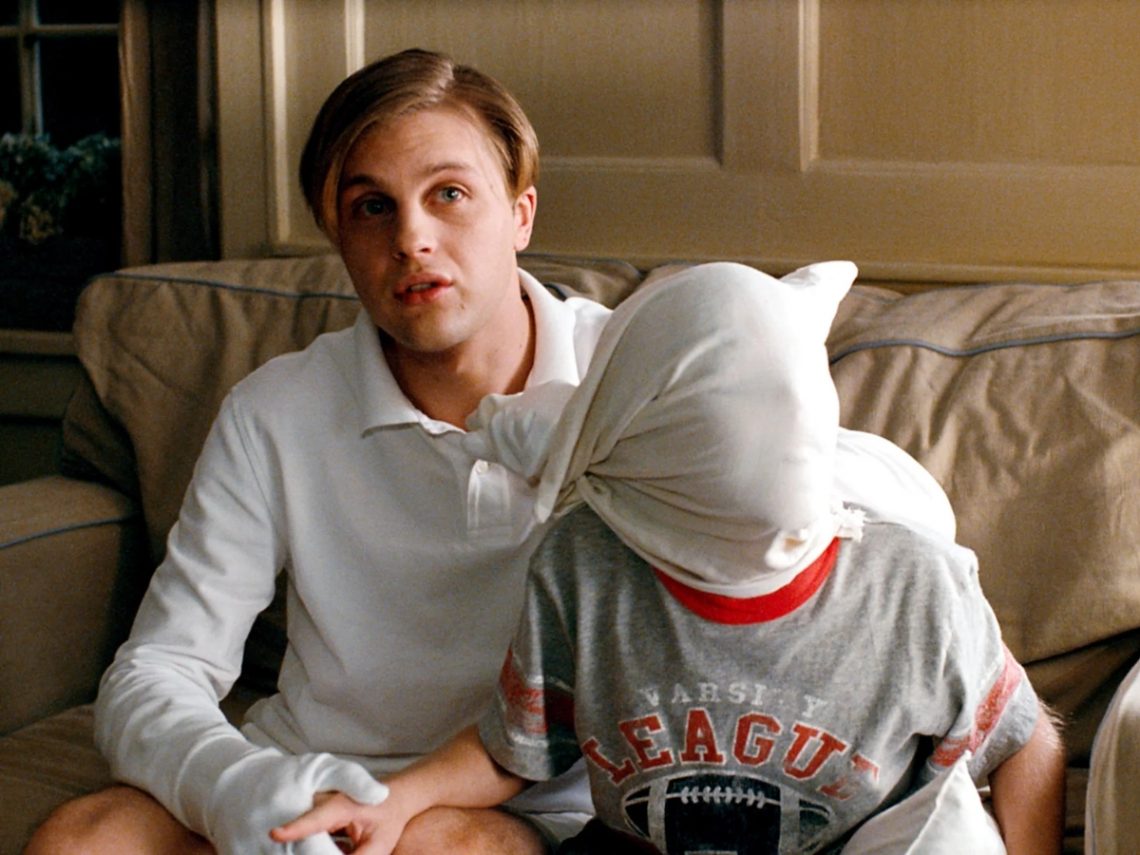
In 2007, filmmaker Michael Haneke released an English-language remake of his own film. Funny Games, starring Tim Roth, Naomi Watts and Michael Pitt, was released ten years after the original Austrian Funny Games, starring Ulrich Mühe, Susanne Lothar and Arno Frisch. Since Haneke released his debut feature, The Seventh Continent, in 1989, he has continued to make films that are anything but palatable to Hollywood audiences. Tales of extreme violence and social isolation make up his filmography – so why would he decide to create a shot-for-shot American remake of one of his most graphic and confrontational movies?
During an interview with The Sydney Morning Herald, the director revealed his decision to remake Funny Games: “The first film didn’t reach the public I think really ought to see this film. So I decided to make it again.” He explained that American audiences seem to have an aversion to reading subtitles when they go to the movies, and “the original was in German.” Detailing further, he continued: “When I first envisioned Funny Games in the mid-1990s, it was my intention to have an American audience watch the movie. It is a reaction to a certain American cinema, its violence, its naivety, the way American cinema toys with human beings.”
In Funny Games, a perfect-looking family find their holiday interrupted by two young men who appear at their door, initially friendly and non-threatening. Trusting in Roland Barthes’ idea of social myth, where universal truths (which aren’t necessarily true) become widely accepted as common knowledge, the family welcome the strangers into their house. The men appear well-dressed, act politely, and seem to know the neighbours; they couldn’t possibly be criminals…but Haneke’s film is concerned with subversion. Soon, the men begin their torture and murder spree, frequently breaking the fourth wall and involving the helpless audience in their world. At one point, one of the torturers picks up a television remote and literally rewinds the film to undo an act that could’ve ended the terror.
By involving the audience and making us acutely aware of the family’s torture being played out for our amusement, the film attacks Hollywood’s vapid use of violence that serves no purpose other than entertainment. In a world where violence appears on the news daily, Haneke questions whether the normalisation of violence as entertainment in cinema perpetuates complacent responses to real-life brutality. He continued: “In many American films, violence is made consumable. But because I made Funny Games in German with actors not familiar to US audiences, it didn’t get through to the people who most needed to see it.”
Thus, Haneke recruited famous actors and created an almost identical film accessible to American movie-goers unfamiliar with foreign, arthouse cinema. The fact that Haneke felt it necessary to remake his film in English speaks volumes for Hollywood’s incessant need to recreate foreign-language movies in a palatable, American format. It’s a phenomenon that has existed for decades. Jim McBride remade Jean-Luc Godard’s seminal 1960 French New Wave film Breathless in 1983, replacing Jean-Paul Belmondo with Richard Gere and Jean Seberg with Valérie Kaprisky (ironically, a French actor). The remake was completely unnecessary, considering that Breathless is already a fine film whose brilliance primarily comes from the low-budget conditions under which it was made.
One of the worst English-language remakes has to be Spike Lee’s Oldboy, which takes Park Chan-wook’s 2003 original masterpiece and completely butchers it. The whole endeavour proved to be pointless, removing key scenes and watering down others. However, following the release of Park’s latest film, Decision to Leave, a recent interview with Indiewire revealed that the director would welcome an English remake of the movie. He shared: “If the original film is already pretty well received and well known in the other country, you might say that the remake is not necessary. But I do think when you remake a film, and it’s made with the particular culture and perspective of the local country, it might help the local audience appreciate it better.”
Here, Park provides a compelling argument. When a film’s location and language are central to its plot, as they are in Decision to Leave, some aspects of the film might get lost in translation when presented to a foreign audience. In Park’s film, the characters often communicate through a translation device. “When an American audience is watching it through subtitles, they have to take the time to imagine the situation that is going on on the screen. They are unable to instantaneously react to it or understand the situation because both the Korean and Chinese language are subtitles on the screen for them.” In this respect, an American-language remake of Decision to Leave has the potential to work well.
Unfortunately, Hollywood has given us plenty of terrible and unnecessary remakes of foreign films, instilling a sense of scepticism into the phrase ‘English-language remake’. In the circumstance that Park has described, and as demonstrated by Haneke, not all English-language remakes are a bad thing. They can communicate ideas more sufficiently to audiences that wouldn’t otherwise watch foreign films, thus giving their stories a wider reach.
But the crux of the issue is that too many people aren’t willing to give subtitled films a go. Admittedly, it can sometimes feel more taxing to read subtitles whilst simultaneously watching the events on screen. But once you get used to doing both, it is much easier to engage yourself in the world of the film completely.
The main reasons for Hollywood remakes seem to be the American audience’s aversion to subtitles and their fear of cultural disconnect from the story. However, as Parasite director Bong Joon Ho said during his Golden Globe speech: “Once you overcome the one-inch-tall barrier of subtitles, you will be introduced to so many more amazing films.” Although there is a case to be made for certain English-language remakes, as demonstrated above, Hollywood needs to learn to appreciate the joys of watching films made in other locations and languages, which can offer completely new insights into the diverse human experience.
