


‘Decision to Leave’ Review: Park Chan-wook blurs the lines between guilt and innocence

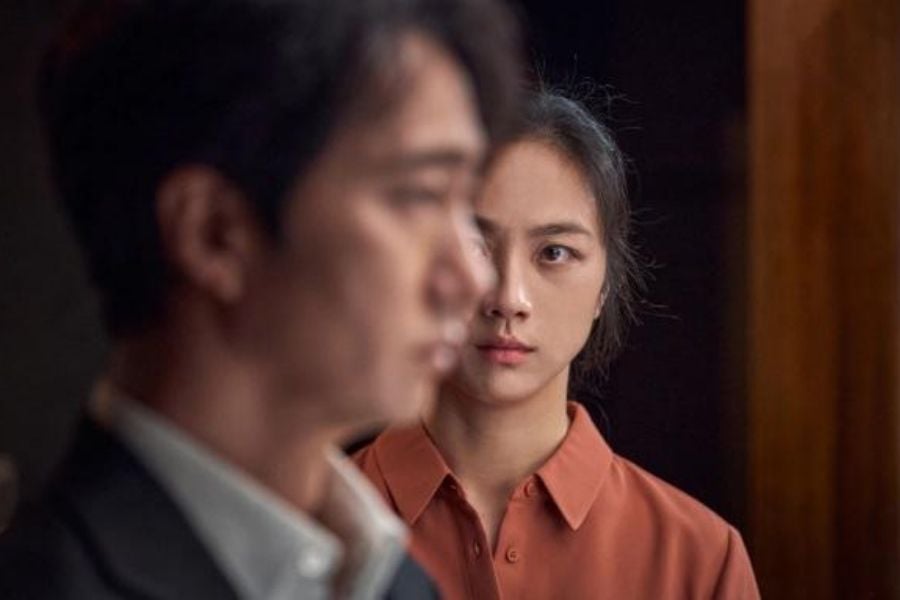
Park Chan-wook channels Alfred Hitchcock in his latest feature, Decision to Leave, a gripping neo-noir mystery/romance. The film follows Hae-jun (Park Hae-il), an insomniac caught between his duties as a husband and detective, and his ever-increasing desire for Seo-rae (Tang Wei), whose husband has been found dead at the bottom of a mountain. With Hae-jun in charge of investigating the potential murder, it doesn’t take him long to suspect the mysterious Seo-rae of playing a part in his demise – or for him to fall hopelessly in love with her.
Over 138 minutes, the film moves between action-packed, high-octane moments (such as a rooftop fight scene where Hae-jun puts on a chainmail glove to hold down a man before repeatedly punching him) and gorgeously romantic tension-filled scenes that echo Wong Kar-wai’s In The Mood for Love. Park’s film is a magnificent blend of genres, yet it never feels forced or unnatural. Instead, Decision To Leave is a fast-paced whirlwind of energy, constantly leaving audiences on the edge of their seats, with plenty of twists and unexpectedly funny moments.
Although some scenes feel a little too fast, rushing to squeeze in enough action that might not have been strictly necessary, the film redeems itself through the extended scenes between Hae-jun and Seo-rae that allow them ample time to talk, their chemistry slowly igniting. Park gives his characters plenty of emotional complexity — they are both impenetrable and mysterious but also hugely compelling and likeable.
Park leaves us to ponder whether Seo-rae is a murderer whilst also depicting her as a kind-hearted carer for the elderly who believes that “living old people come before dead husbands.” Similarly, we find ourselves rooting for a doomed romance between Seo-rae and Hae-jun. The relationship between guilt and innocence is blurred for both the characters and the audience, which involves us more tightly in the plot.
Park doesn’t shy away from motifs, such as the song ‘Mist’ by Jung Hoon Hee, which plays multiple times throughout the film (although not on the same scale as ‘California Dreamin” in Chungking Express). At times, other motifs, such as references to the ocean, feel a little more on the nose – so obviously gearing us up for a later scene, making it slightly tedious.
The director also heavily relies on technology throughout the film, filming the text conversations between characters as the messages pop up on their phones. Whilst native audiences will find these moments easy to decipher, a scene where Hae-jun types, deletes and re-types a message makes the gravity of his conversation much more difficult to understand when relying on subtitles. Yet, the lack of subtitles used when Seo-rae speaks in Chinese to the Korean Hae-jun is a fantastic technique on Park’s part for conveying themes of miscommunication.
Overall, Decision to Leave is a solid mystery drama burning with tension and uncertainty. Audiences are faced with many questions and rarely given concrete answers, yet Park ensures that the film never bores. Enigmatic performances and innovative techniques, such as editing an inquisitive Hae-jun into the background of a version of Seo-rae’s husband’s death as he attempts to figure out what happened, keep the audience on their toes.
Decision to Leave will be available to watch in UK cinemas from October 21st.
