


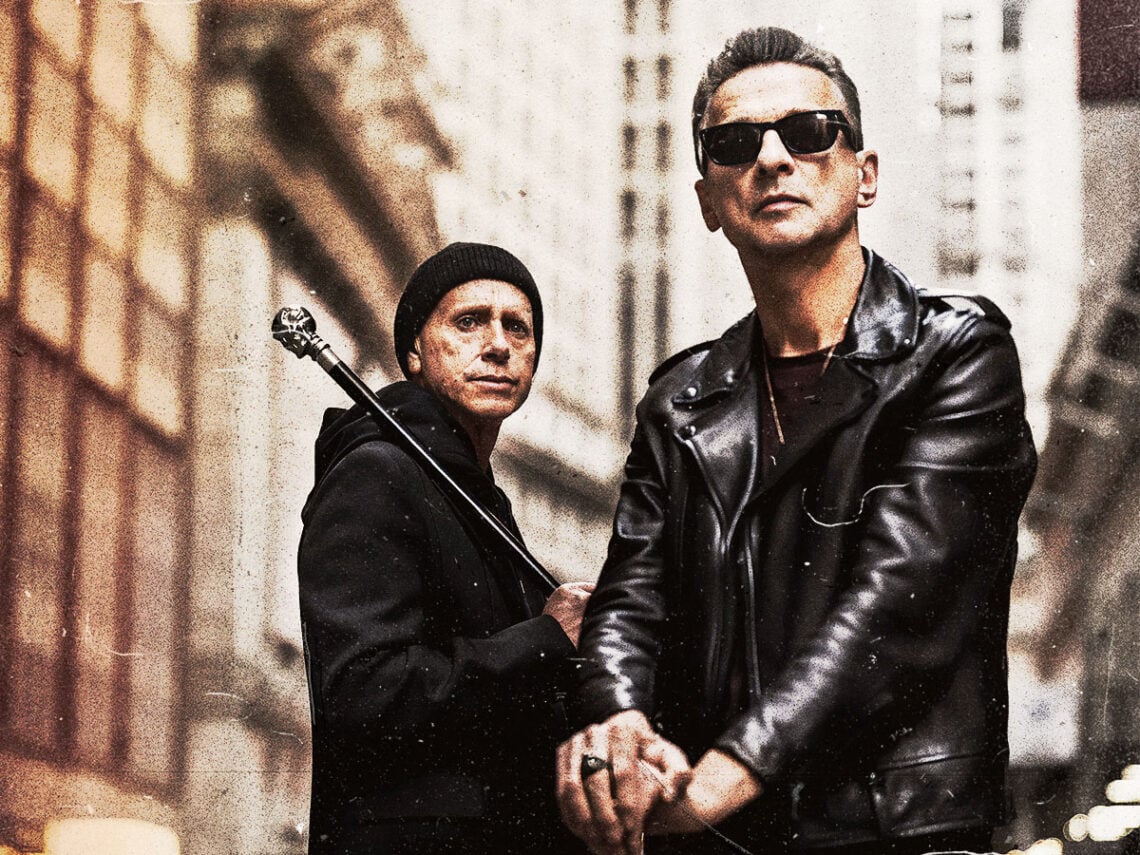
A punch, a club, and a realisation: The heroin deal in 1993 that almost ended Depeche Mode

As ever in the rock and roll business, superstardom and all the cash that comes with it opens a dark to the ugly side of hedonism that Depeche Mode knew only too well.
The early 1990s came as a surprise even to longtime fans. Across the previous decade, Depeche Mode had soldiered through as the original synthpop survivors, saved from the kind of creative crises and future retro circuit deadends that had befallen their polyphonic peers by their intrepid venture into new industrial sounds and bluesy electronics scoring Martin Gore’s increasingly brooding and sophisticated songcraft. They truly conquered America with 1987’s Music for the Masses, then follow-up Violator thrust the band to superstardom three years later.
‘Just Can’t Get Enough’ felt like ancient history in the ensuing years, however. Frontman Dave Gahan moved to Los Angeles in 1991, right in the thick of America’s alternative rock explosion and soaking up the grunge and Lollapalooza surge that pulled the Billboard to the music underground. Before long, the likes of Alice in Chains, Jane’s Addiction, and Screaming Trees didn’t just provide Gahan with a new social circle but set a whole new wardrobe, Gahan sporting long hair and tattoos and arriving at the Songs of Faith and Devotion pre-production meeting in Madrid eager to push the band in a fervently rock direction.
Gahan also embraced LA’s free flow of drugs. It wasn’t the first time he’d tasted heroin, snorting what he thought was speed on a night out in London and reportedly throwing up over himself and passing out at 17, but smack had trickled into his life by the late 1980s, sinking its opiate fangs in earnest once he immersed himself deeper into the 1990s rock scene. In a few short years, Gahan was a skinny and pale junky, becoming a regular of LA’s seamy underbelly in that perennial chase for a fix.
Gahan was forced to finally acknowledge his habit, at least privately. Everybody knew something was up when Gahan arrived in Madrid in his emaciated state, associates allegedly sent to score anything from alcohol to cocaine in a fruitless quest to meet his addiction, but heroin’s firm grip was revealed in explosive fashion when on the hunt in an underground club. Gahan spotted two men who he thought were the ‘type’ to at least point him in the right direction to a dealer, instead receiving an outraged beating outside that pulled in Gore, who tried to intervene and met a fist to the face in the process. The next morning, he had to tell the Depeche Mode team his secret.
“It was awful,” Gahan reflected to Mojo in 2013. “It took years to earn back Martin’s trust… It’s such a selfish addiction. Even if you’d said my mother had died, I wouldn’t have cared less… Addiction is a sad, boring existence. Years go by, you’re still sitting on the couch, seeing the same dealer, talking the same bullshit.”
Something had to change. The whole band was teetering on self-destruction, Gore developing a severe drink problem, Andy Fletcher sinking into a depression that would tumble into a breakdown, and Alan Wilder so stressed and disillusioned by the Depeche Mode behemoth that he called it quits in 1995. All colliding in dramatic fashion on the exhaustive 1993-1994 Devotional Tour, Madrid’s violent wake-up call wouldn’t hit Gahan hard enough to stay away from the needle.


Heroin would remain a key feature of Gahan’s grubby lifestyle for another three years, constructing a secret room in his LA home to shoot up and spending as much as three weeks holed up inside, then, on the morning of May 29th, 1996, an overdose from a smack and cocaine speedball in Hollywood clinically killed the Depeche Mode singer for two minutes. Having brushed with death so many times before, the city’s paramedics nicknamed him “the Cat”.
“My cats’ lives are out,” Gahan told the local news crew outside a West Hollywood jail. “I just wanna say sorry to all the fans and stuff. I’m glad to be alive.. and sorry to me mum as well. I just want them to know that it’s not cool. It’s not a cool thing to be an addict. You’re a slave to it, and it’s taken everything away from me that I love, and so I’ve got to rebuild my life.” During the sessions for 1997’s Ultra, Gore set an ultimatum: either quit the drugs or quit the band. Gahan opted for the latter, going clean from then on and pulling Depeche Mode and himself from the brink of oblivion.
