


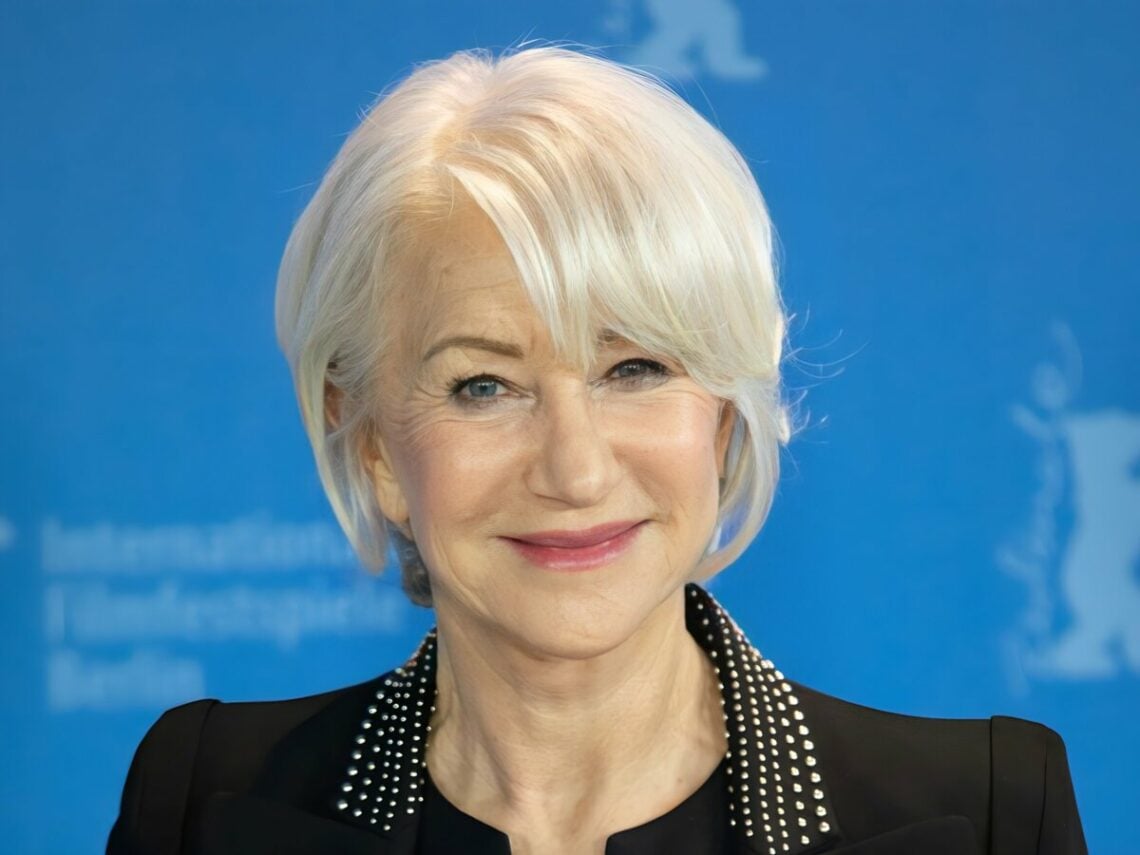
Helen Mirren names the greatest movie of the French New Wave: “I love French film”

It would be a challenge to find anyone in the film industry who isn’t in awe of actress Helen Mirren, who could be reasonably ranked among the greatest of all time.
Although she began acting in the late 1960s, when she earned her first film credits, she continues to be actively working in the present day, and is seemingly open to new opportunities.
Mirren’s stature within the industry means that she was able to witness some of the most important shifts and movements in cinema history while they were occurring, such as the French New Wave of the 1960s, which saw a group of young directors reject the status quo by making personal, stylised, and briskly entertaining films.
Although pioneers of the movement like Jean-Luc Godard and Francois Truffaut were initially dismissed by the industry for their sacrilegious tactics, they would eventually be renowned as some of the greatest directors in history, with the former’s Breathless and the latter’s The 400 Blows often cited as being among the most influential films of the French New Wave.
Being a diverse movement that included a number of great filmmakers, there were some who naturally slipped under the radar; hence, given Mirren’s encyclopedic knowledge of the era, she offered up a list of recommendations that were slightly outside of the mainstream.
While acknowledging the greatness of Jean Renoir, in terms of the best French film ever made, she named Jean Vigo’s 1934 masterpiece L’Atalante, which tells the story of a young woman from a humble background who falls in love with a boisterous boat captain, sparking an impromptu marriage and life on his barge. Released in 1934, over two decades before the French New Wave began in earnest, L’Atalante was highly influential on Godard, Truffaut, and other French filmmakers who saw it when they were younger, for it also examined the cultural confluence that occurred in France in the early 20th century before the destruction of World War II led to the loss of significant pieces of art.
In that vein, Mirren mentioned that the significance of this era was also touched upon in the 2011 film Midnight in Paris, noting, “I think those are all tied up with what Woody Allen targeted in his film. It’s the Belle Époque. That’s that whole fantasy dream of the Belle Époque in France, [Henri de] Toulouse-Lautrec, and [Pierre-Auguste] Renoir, and that whole world I somehow find very romantic and very moving to me.”
Allen’s period fantasy drama was about a contemporary American writer, played by Owen Wilson, who is able to travel back to Paris in the ‘20s and interact with legendary authors and artists such as F Scott Fitzgerald, Ernest Hemingway, Salvador Dalí, Gertrude Stein, and Pablo Picasso, and while the director is a controversial figure, the popularity of Midnight in Paris did suggest a growing interest in this era of French culture.
More recently, Richard Linklater also paid tribute to the French New Wave with his biographical dramedy Nouvelle Vague, which explored the making of Breathless from the perspective of Godard.
