


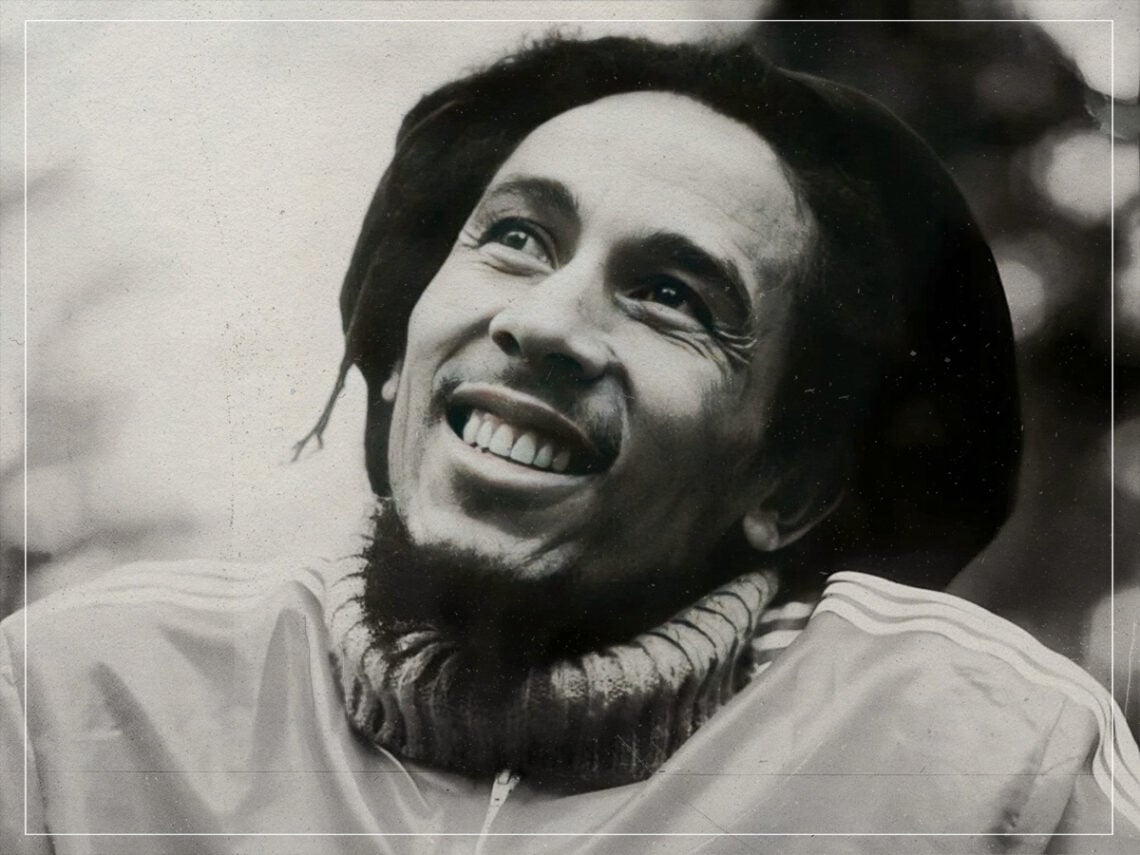
‘Survival’: Why the world needs Bob Marley’s militant activism now more than ever

Muddied by misrepresentation and exploitation, the legacy of Bob Marley has been repeatedly bastardised in the four decades since his tragic passing; reduced to dreadlocks and ganja, or horrendous T-shirts to be sold to tourists at Camden Market. In reality, though, the reggae pioneer left behind a legacy as one of the most important, consistent voices for activism and resistance.
Although the image of protest music is often irreversibly linked to the image of counterculture folk, and the acoustic guitar-strumming that made people like Bob Dylan the voice of the 1960s, reggae music has always been rooted in resistance. When the island nation of Jamaica finally won its independence from British rule in 1962, for instance, it was ska and rocksteady which soundtracked that era of liberation.
Throughout the lineage of ska and its morphing into reggae, that sense of liberation never really strayed. On records like ‘The Harder They Come’, for instance, Jimmy Cliff was detailing the plight of the working class and a deep-rooted desire to break free. It is no surprise, then, that the person whose career was first launched by Cliff elevated that sense of activism, liberation, and defiance even further.
It was Cliff who, albeit indirectly, scored Marley a record deal with Island during the 1970s, thereby establishing the bold new voice of reggae music on a global scale, rather than the regional fame of The Wailers. Throughout his discography, on virtually every track the songwriter ever saw fit to record, he never wasted a lyric. Every word uttered by Bob Marley seemed to carry a weight of importance unparalleled by any other artist in the world.
With that, the reggae hero often lent his output to the prevailing political struggles of the day, whether it was the omnipresence of the global class struggle, the racism that he witnessed on his travels to the United Kingdom and the USA, or even the political instability of his homeland in Jamaica. From ‘Get Up, Stand Up’ to some of his most obscure B-sides, these topics were never far from Marley’s discography, and 1979’s Survival represented the pinnacle of that activism.
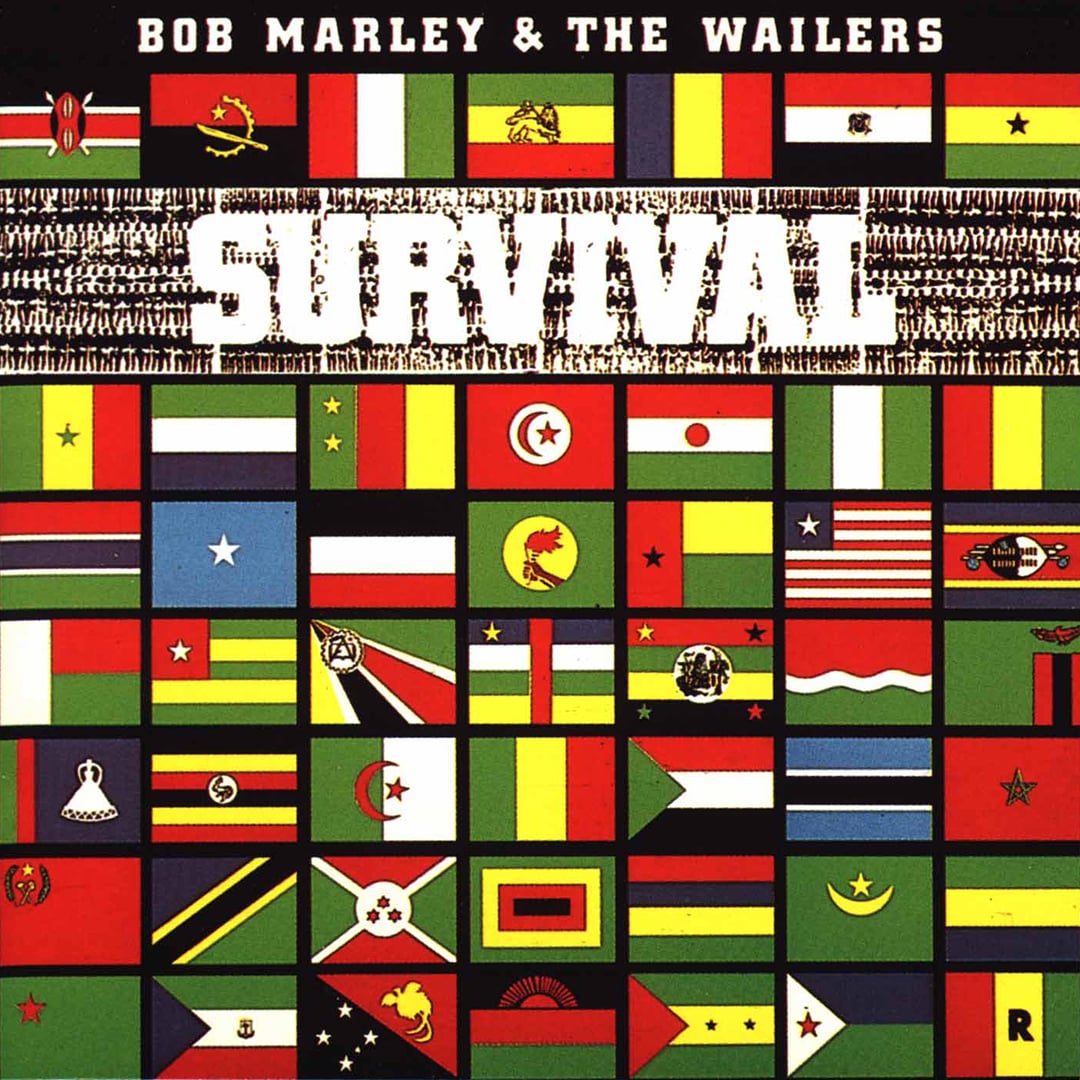
Rooted in a sense of Pan-African solidarity, with the album’s iconic cover bedecked in the flags of African nations, the message of the album is perhaps best summarised by the original title Marley proposed for the project: Black Survival. On songs like ‘Zimbabwe’, Marley lamented the white domination of then-Rhodesia, calling for militant resistance against the white colonial oppression which had loomed over the entire continent of Africa for multiple centuries.
If you were to compile a list of Marley’s most political anthems, virtually all of them would feature on this particular album; it was far more militant, alert, and immediate than anything he had recorded before, and its message of defiance stretched far beyond the African continent. As Brice Bottin of the Moroccan-French group Bab L’Bluz told me last year, “It’s like an anthem of unity, African unity, and resistance, but it’s for all over the world.”
Not only was the album Marley’s most militant, but it was also perhaps his most impactful. In South Africa, the record came under fire from the Apartheid regime; meanwhile, ‘Zimbabwe’ was played in defiant pride when that nation won its independence only a year later. Survival might not have liberated the nation in a physical sense, but it certainly soundtracked its period of liberation.
Today, the continent of Africa looks exceedingly different from it did back in 1979, yet the need for the kind of Pan-African unity preached on Survival is arguably more culturally relevant than ever, as the after-effects of colonialism still sow the seeds of corruption, genocide, and war across the continent.
Meanwhile, thousands of miles away from Africa, people are being snatched up off the streets of the United States at will, for no other reason than their skin colour or the fact that they dared to resist the fascist militia doing the dirty work of the wannabe dictator in the White House.
Globally, riots are not the rare occurrence they once were, and the fissure between rich and poor has grown to an untraversable chasm – the time for strumming acoustic guitars and wearing flowers in your hair ended long ago.
In that sense, Bob Marley’s departure from the laid-back peace anthems of his earlier career to the militant resistance of Survival is something that the world needs now more than ever before.
