


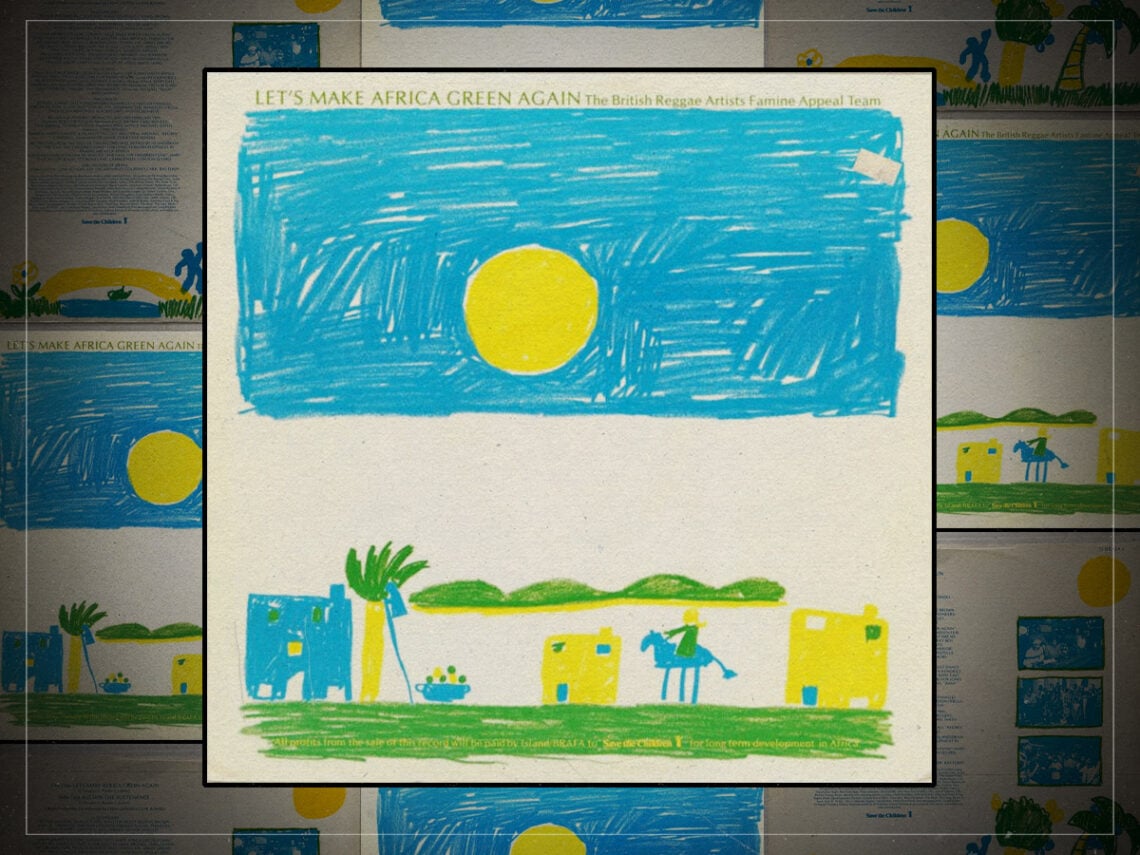
‘Let’s Make Africa Green Again’: the story of Black Britain’s star-studded charity single

Band Aid’s Christmas hit put the Ethiopian famine on the world stage, raising funds for an urgent humanitarian cause with a valiant idea. What struck many viewers, however, was how few representatives of Britain’s Black and African communities were invited to partake – so they took matters into their own hands.
London’s music scene was enormously influenced by its Black artists, who had brought reggae to the island. Ethiopia is seen by many Rastafarians as a spiritual home, so involvement in the cause scarcely seemed an option. “We were always singing about Africa, so we thought: let’s put our money where our mouth is,” said Leon Leiffer, lead vocalist for The Blackstones reggae harmony group and Black activist. He brought together a group of fellow artists under the name BRAFA, for British Reggae Artists Famine Appeal, uniting influential artists like Dennis Brown and Janet Kay – artists who had been enjoying commercial success and who could have easily enlarged the scope of Band Aid’s reach.
The group initially sought to stage a fund-raising concert, but having encountered difficulties with venue sponsorship, they instead went on to make a charity single. The grassroots activist ensemble found further financial hurdles in finding a studio space that would lend itself to a cause, and with no budgetary support, it was a chance encounter with Guyanese singer Eddy Grant that saved the day. Grant lent his own East London studio to the cause, which ended up hosting over 200 singers, musicians, and any willing local residents.
“Any artist was welcome, all they had to do was come to the studio and take part. And there were people singing who had never sung on a record before,” Leiffer told The Guardian earlier this year, as the record celebrated its 40th anniversary. “People walked by, like at carnival time, and we’d say come in, we want you to sing on the chorus. It was an open house, a special thing.”
Schoolchildren and high-profile reggae names alike squeezed into Hive Studio in Stoke Newington to record the 1985 charity song that became ‘Let’s Make Africa Green Again’. Artists the likes of Courtney Carr, Raymond Dangarembizi, Jah Bunny, and Ken Kendricks had been called in by the oldest marketing trick in the game, friends telling other friends in popular community centres across London, and all their musical ploys were combined to produce the upbeat harmony no one’s ever heard of.
Despite the song being met with excitement in outlets that celebrated Black culture, mainstream media snubbed the story. Denied any publicity, the single sank to the untold bottom of history, while its contemporary ‘Do They Know It’s Christmas?’ became a record chart topper. “They didn’t call us for Live Aid, and they didn’t call us for the recording. We had gifted, talented people and we had something to offer, and I think they should have reached out to us,” Leiffer still recalls with some bitterness. The absence of any Black voice on such a momentous record is still shocking and hypocritical, but worse still was the absence of any commemoration for BRAFA’s efforts.
That is, until Hackney Council named a public square after the group. “I’m proud that Hackney has taken it upon themselves to recognise that this name is worthy of making history,” said Leiffer in 2021, when the ceremony etched the activist’s endeavours into the fabric of London’s past. The square is in Shoreditch Park, where BRAFA held a fundraising concert on Bank Holiday Monday, May 26th, 1986.
Over 10,000 people flooded the small park to watch top reggae and soul artists of the time, raising £8,000 for Save the Children Ethiopia. Even though its importance was recognised, it still failed to raise much media attention, although one headline called it “Live Aid reggae style”.
