


‘Do They Know It’s Christmas’: Was the charity anthem a help or a hindrance for Africa?

I’m not sure what role celebrity backslapping has in modern culture; in years gone by, awards shows felt like a window into an exclusive world that ultimately added to the allure of the art being celebrated, but now, in a world of curated culture, every media appearance feels calculated, self-interested and at times, tone deaf.
In certain contexts, we can swallow this, but when charity is involved, and the subsequent PR opportunity of said engagement feels overtly like the priority for whoever involved, then that is when eyebrows begin to raise. There’s a subtle level of obnoxiousness that exists within the celebrity charity pledge, this idea that the beaming smiles of whatever A-list entertainer will be somewhat of a tonic for geo-political woes.
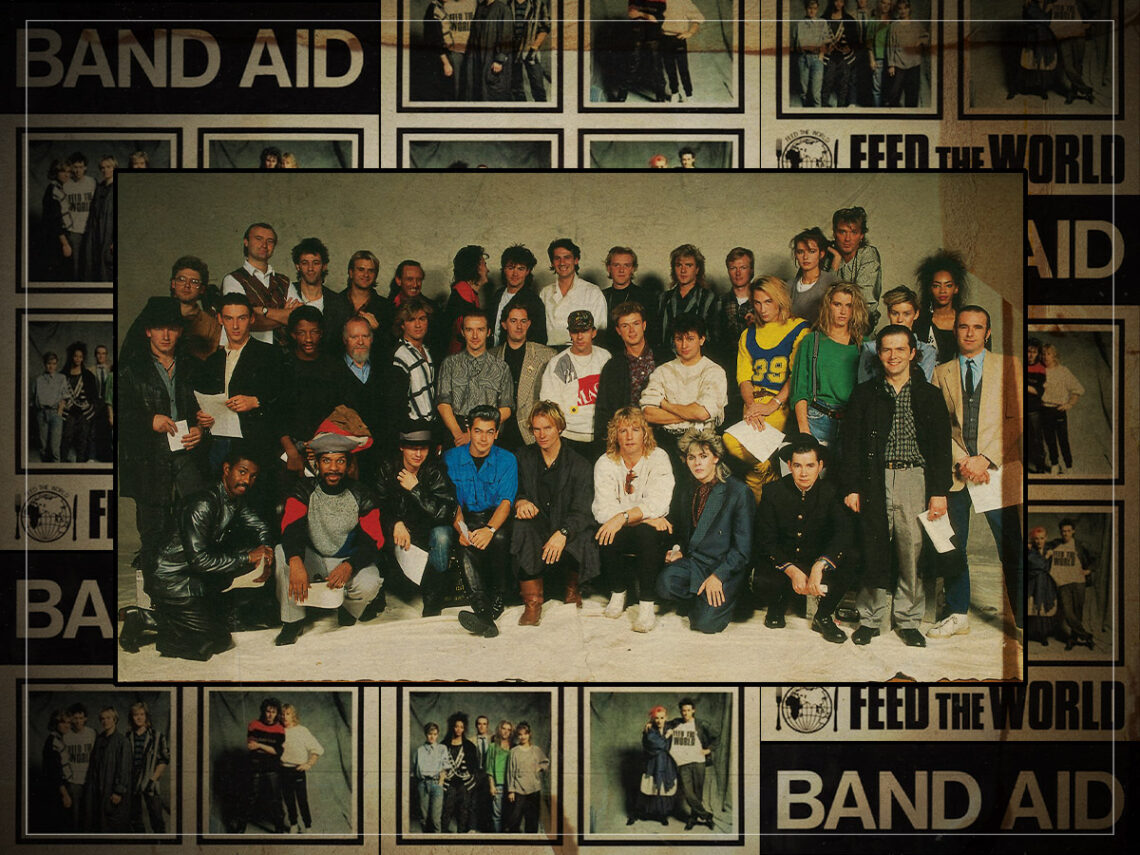
Let’s take Band Aid and all three of its incarnations, for example: be in 1984, 2004, or 2014, it’s been a platform through which the who’s who of musical entertainment have joined arms in a studio to baselessly sing a melody that all of them can acknowledge is a truly awful song, under the false pretence of philanthropy. While all proceeds go to charity, each and every one of those artists is paid on the currency of exposure, which will be sky high at Christmas time when their name is at the top of the charts, and their smiles burned into the hearts of misled Westerners.
But then there comes the misfire that none of them quite seem to grasp. As they band together, in the comfort of a West London studio, they seem to forget how harmful this idea of false philanthropy is. After centuries of wrestling for control over Africa with other European nations, it feels undeniably warped for Britain to look over at the continent from atop their morally skewed throne and pen a track in their honour, particularly when doing so continues to perpetuate that imbalanced discourse.
Because, no matter how much we want it to be true, the fact is, Africa doesn’t need our pity through the medium of music, an art form we actually have them to thank for; it needs a genuine international relationship devoid of the sort of pity we are incessant on harvesting.
Fuse ODG explained it best when a 2024 reincarnation of the charity single, ‘Do They Know It’s Christmas’ was once again mooted, saying, “While they may generate sympathy and donations, they perpetuate damaging stereotypes that stifle Africa’s economic growth, tourism and investment, ultimately costing the continent trillions and destroying its dignity, pride and identity. By showcasing dehumanising imagery, these initiatives fuel pity rather than partnership, discouraging meaningful engagement.”
It’s even more sobering when you consider the fact, every ten years on from the track’s very first release in 1984, the conversation about who should participate in yet another one of those overlooks the reality that Fuse is discussing. This perception of Africa that inspired the 1984 track is ultimately dated, and 40 years on from the very first one, even more so.
In fact, the numerical timelines become slightly more concerning when you consider how notable a year 1984 was in the history of Africa’s relationship with Europe. It was exactly a century on from the Berlin Conference, during which European countries squabbled over the distribution of power over the continent, laying the foundations for a century of imbalanced societal outlooks in the following years. But the nuance of discussing our own complicity in this geo-political dynamic that seemingly inspires us to pay tribute gets lost in the drunken chorus of “Feed the world!”.
Ultimately, these intentions weren’t at the forefront of our minds upon the creation and production of the track, and while the right sentiment was ultimately at the very heart, nearly half a century on from the very first incarnation, outlooks need to change.
Africa is at the core of a positive music culture globally, with Burna Boy, Tems, Fatoumata Diawara, Vieux Farka Touré are but a few who are selling out shows and topping festival bills all over the world, entertaining fans with one hand, spreading the popularity of African inspired music with another, and subtly informing a more conscious world of musical listeners in the process. The education of this changed dynamic still needs addressing with more nuance, but it comes through the understanding of the authentic and lived experiences that are being shared through the music, and not on top of the veneer of misinformed philanthropy.
