


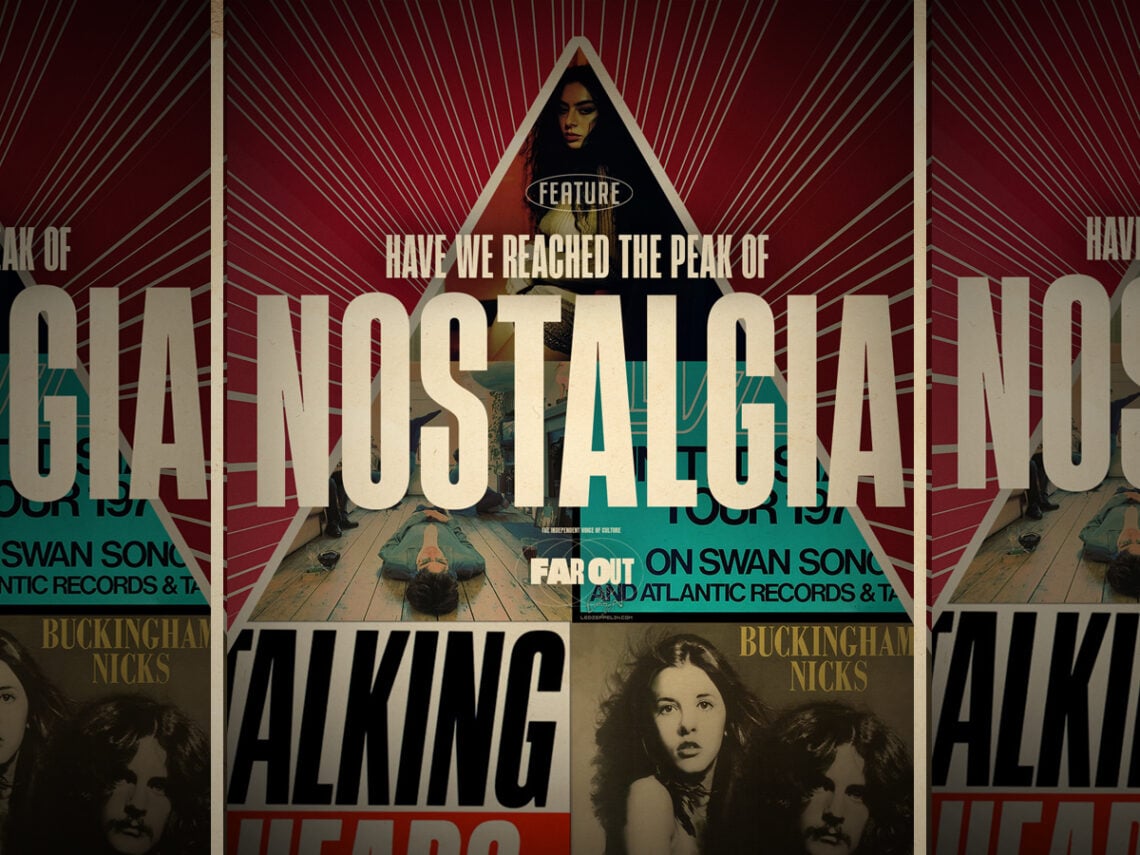
Have we passed the peak of nostalgia?

In music, there’s one word that crops up everywhere we look: eras. It makes sense in a world where reinvention is needed to keep people’s social media-addled attention spans hooked, but how do you move forward when it’s all about looking back?
The concept of the era, in today’s music industry, is all about changing the fundamental parts of a musician’s artistry – Taylor Swift being the prime example. She even crafted an entire tour around the idea, celebrating her art by looking back on all the times she’s gone for a different look, a different style. The Brat era is also one of the most defining, a concept so visually powerful you don’t even have to have listened to Charli XCX to feel you’re wrapped up in it against your will.
But where nostalgia comes into all of it is that quintessential recycling of times gone by. Ones wrapped up in the façade of giving the people what they want simply because of their inability to just let go. Often, if it isn’t old bands reuniting for some quick cash, it masquerades as innovation, as new “eras”, nostalgia-driven artistry that pulls you in because it’s familiar but which actually doesn’t have a whole lot to offer. Nothing that’s new, anyway.
However, that’s where it becomes clear that we, as general consumers, have ultimately passed the peak of nostalgia. Unless it’s wrapped up in a neat little bow and sold as something else entirely, the initial interest is waning, and it’s taking a whole lot more than simple comebacks and well-known formulas to grab and maintain our attention.
Recently, David Byrne poured cold water all over a potential Talking Heads reunion. Robert Plant also ruled out a possible Led Zeppelin reunion. “To do it for the sake of it was never what Zeppelin was about,” he said. And while a solid argument for the reunions being great fodder for our nostalgia-ridden minds is Oasis’ recent stint, leaning on the past just to spark some kind of cultural moment only works when the interest is actually still there. And even then, there’s something fickle about it, like we become engrossed in the headlines and then forget all about it five minutes later.

Granted, Oasis are anything but a fad at this point, but the point is that reunions (or throwbacks in any shape or form) are just not needed anymore, not when it starts to feel like an easy option, an obvious remedy to being stagnant as an artist and digging up old graves. Anyone would probably kick their feet in excitement at the news of a Talking Heads reunion, but when you actually stop to think about it, it would probably be the worst thing they could possibly do for their career and legacy. Some things are better left exactly where they are, without being tainted by new “eras” that dilute everything that made them great in the first place.
Nostalgia still sells, of course it does. But it no longer carries culture forward the way it did before, probably because we’ve seen it fail enough times to know that, by now, it’s basically nothing more than a means of trivialising or cheapening something that didn’t need tampering with. Ever thought about how much more respectable ABBA would be had there not been Voyage, or countless compilations, or the general oversaturation at every turn?
Or maybe how Pet Shop Boys could have become respectable in their gimmickry had they not kept on churning. We love Fleetwood Mac so much because while Stevie Nicks keeps the fire alive by constantly talking about it, she hasn’t tried to rehash it for no good reason, keeping the mystery and mystification alight by simply leaving it well enough alone. So yes, we’ve passed the peak of nostalgia, but only because we’ve started to learn the error of our ways.
Only because, while we still love familiarity, even in the depths of new “eras”, we love them even more when they feel completely new, even if they’re really not (see: Buckingham Nicks). We love nostalgia when it doesn’t outright feel like a carbon copy of something that is already a perfect version of what it is.
Nostalgia, paradoxically, only works when it also offers something fresh, building on what was there before, and not given the Gilmore Girls treatment of holding onto everything that, quite frankly, feels too good to even survive any sort of contemporary imitation.
