


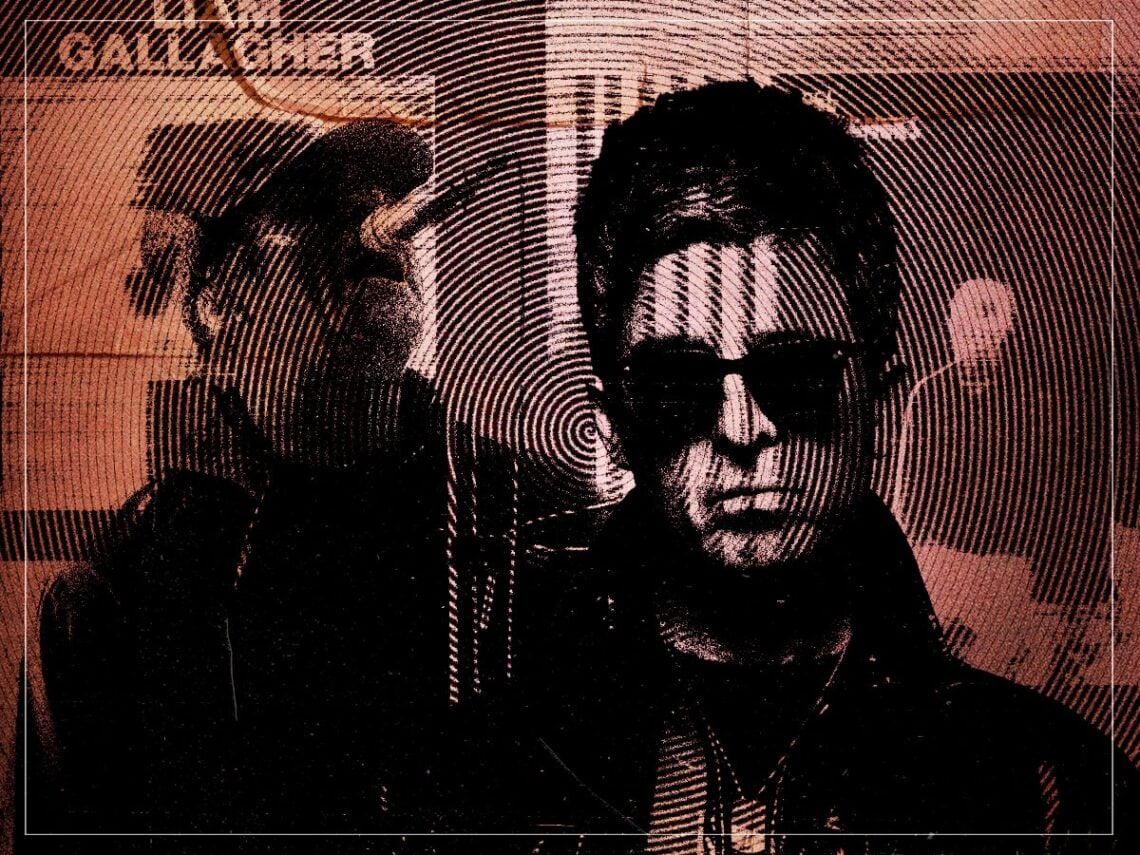
Has Oasis become Noel Gallagher’s worst nightmare?

Rock ‘n’ roll is a funny old thing. When Roger Daltrey sang, “I hope I die before I get old” in 1965, it wasn’t just a middle finger to the older generation; it captured the quiet panic of his own. Because no one, especially a rock band, wants to become irrelevant or inauthentic. The irony is cruel: a pension-age Daltrey still spits those words with the same fire he had as a defiant youth. But for one band carrying The Who’s baton into the modern day, those fears of inauthenticity may finally be catching up.
Oasis always felt like a ticking time bomb. The volatile dynamic between the Gallagher brothers was part of the appeal, and part of the reason it all fell apart. So when they finally split in 2009, it was never going to be a polite press release citing “creative differences”. No: just before their slot at Paris’ Rock en Seine Festival, Liam reportedly swung a guitar at Noel “like an axe”. Noel walked out before they could even take the stage, later saying, “I simply could not go on working with Liam a day longer”.
But there was more to the break-up than just another scrap between the feuding siblings. Noel later told Sky Arts that the backstage argument in Paris was simply “the straw that broke the camel’s back.”
Gallagher went on to say, “It’s not a decision I took lightly. And I’d written every meaningful song that was ever recorded by Oasis. And it was my life, I directed it and creatively it was my thing. With the benefit of hindsight it was the best thing for me and for the band. Because back in 2009, Oasis were not lauded as one of the greats of all time. There was a kind of undercurrent of, ‘well they should really call it a day’. That’s what I felt anyway.”
By that point, Oasis’ career felt like one of ever-diminishing returns. They arguably peaked, both commercially and critically, with 1995’s (What’s the Story) Morning Glory?, and although the odd single proved the magic hadn’t completely vanished (‘Gas Panic!’, ‘The Importance of Being Idle’, ‘The Shock of the Lightning’), they never quite hit the same heights again. Noel sensed that shift among the public: “I felt that people had stopped listening to the records and were coming to see us trot out the hits,” he said. “It’s a position I never wanted the band to be in.”
But time was kind to Oasis. Over the years, their music only grew in popularity, partly aided by the successful solo careers of Noel and Liam, as well as their continued public spats. “Now, of course, we’re seen as up there with all the greats,” Noel said. It meant that by the time of their shock reunion in 2024, they were arguably even bigger than their mid-90s heyday. More than ten million fans reportedly tried to buy tickets for the UK leg of their reunion tour. That’s considerably more than the 2.5 million who applied for tickets for their legendary Knebworth shows in 1996.
Now that they’re back together and heading out on tour again in 2025, have Oasis become Noel Gallagher’s worst nightmare? A band that people are simply coming to see, just to – in his words – “trot out the hits”? It’s a hard point to argue with. The band have already confirmed they won’t be making new music together, and the live setlist will mostly consist of songs recorded 30 years ago.
But maybe there’s nothing wrong with that. A lot of time has passed since Noel uttered those words, and a lot of water must have passed under the bridge for the two feuding siblings to finally patch up their differences. Millions of new fans have discovered Oasis since they broke up in 2009, so why shouldn’t they get the chance to see them live? Their reunion may be a trip down memory lane more than anything else, but at least they’re making the trip before they get old.
