


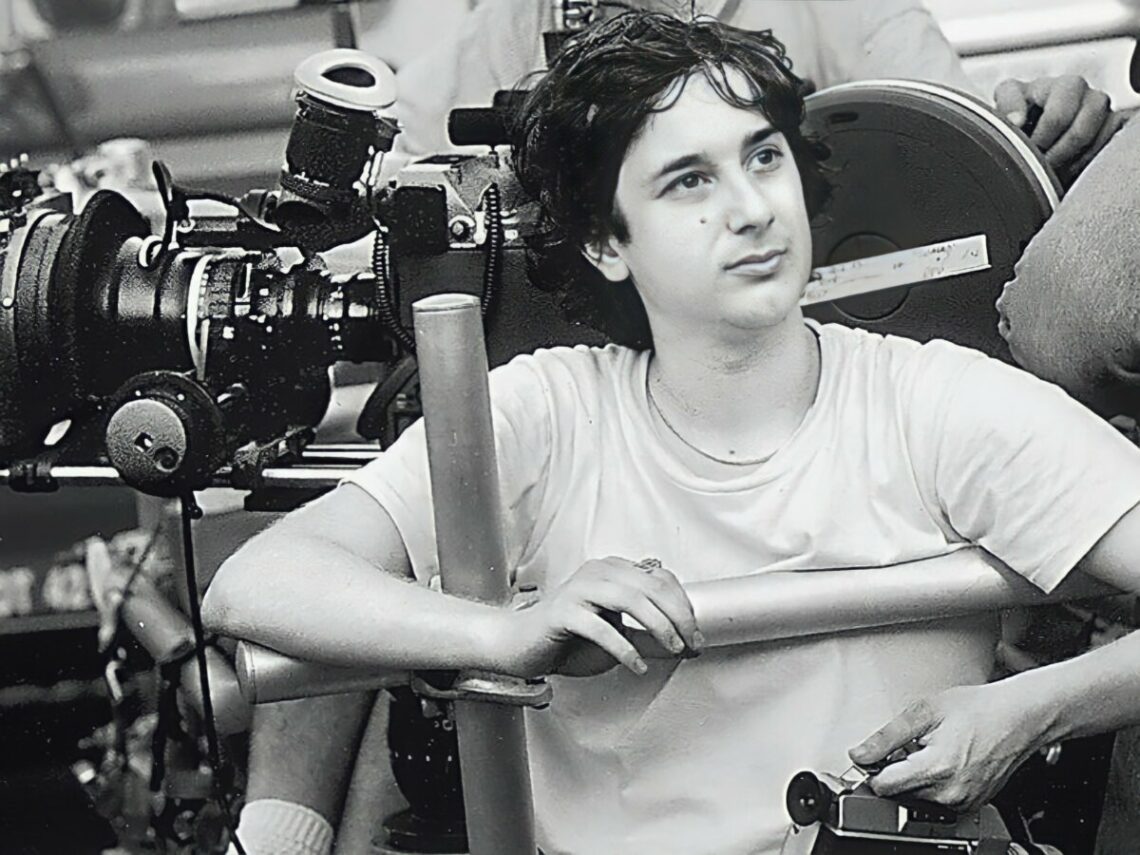
Harmony Korine names his favourite filmmaker: “There are shots in ‘Gummo’ that I took straight from his work”

There is simply no other filmmaker like Harmony Korine. Throughout his career, ever since the arrival of his screenwriting debut, Kids, in 1995, Korine has established himself as one of American cinema’s most daring auteurs with a series of films that challenged the conventions of the cinematic medium.
1997’s Gummo is a truly absurd and uncomfortable film that explores the dysfunction of small-town America, while the likes of Mister Lonely, Spring Breakers and The Beach Boy dived into the lives of some of the most erratic and eccentric characters that modern cinema has ever seen.
Like any filmmaker worth their salt, though, Korine has been undoubtedly influence by some of his favourite filmmakers. In the eyes of Korine, there have been few filmmakers who have captured his admiration and attention, quite like the legendary British director Alan Clarke.
“Alan Clarke is maybe my favourite filmmaker, the best of the British New Wave,” Korine once admitted. At the top of Clarke’s work for Korine are his 1987 TV drama Christine, which focuses on the everyday life of a heroin addict, his 1989 film The Firm, which details the football firm of West Ham United in the 1970s and 1980s, and the television play Made in Britain, which chronicles the likes of a 16-year-old racist skinhead.
Clarke had mostly provided work for television as opposed to cinema and often detailed the inner workings of the harsh realities of outsider life in Britain. Explaining what it is about Clarke’s films that he most admires, Korine said, “He approaches drama in a different way. There is never a beginning, middle, and end — the films just exist, the drama just seems to happen.”
Korine had first come across Clarke’s movies when they were screened en masse at the Museum of Modern Art in New York City. During his late teenage life, Korine spent most of his time watching movies and thought he had “already found all the masters” before he came across Clarke.
“I couldn’t believe that here was somebody who made movies in this way and I’d never heard of him,” the American director explained. “He was doing something dramatically that I’d never seen before.” There’s honesty and authenticity in Clarke’s movies, even just in the way the characters converse with one another, which Korine was certainly taken with.
In addition, Clarke never strayed from depicting violence in all its brutal honesty in his films, while Korine was also keen to stress that there’s a high production value to the British director’s work that left a keen impression on him. “There’s such an energy to his camera, such a fluidity to his movies,” he said. “The steadicam shots can last for five minutes at a time.”
Korine had actually taken shots “straight from [Clarke’s] work when it came to making his directorial debut Gummo. “The scene where the two girls are walking and talking right after they’ve watched the boy playing the tennis match,” he admitted. “The use of the steadicam shot there is pure Alan Clarke.”
At the core of Korine’s admiration for Clarke, though, is the fact that his films lack a presentation and that he does not allow politics to cloud the narrative as many British filmmakers are often susceptible to. “Clarke seemed to be more interested in telling stories than in solving problems,” he signed off.
