


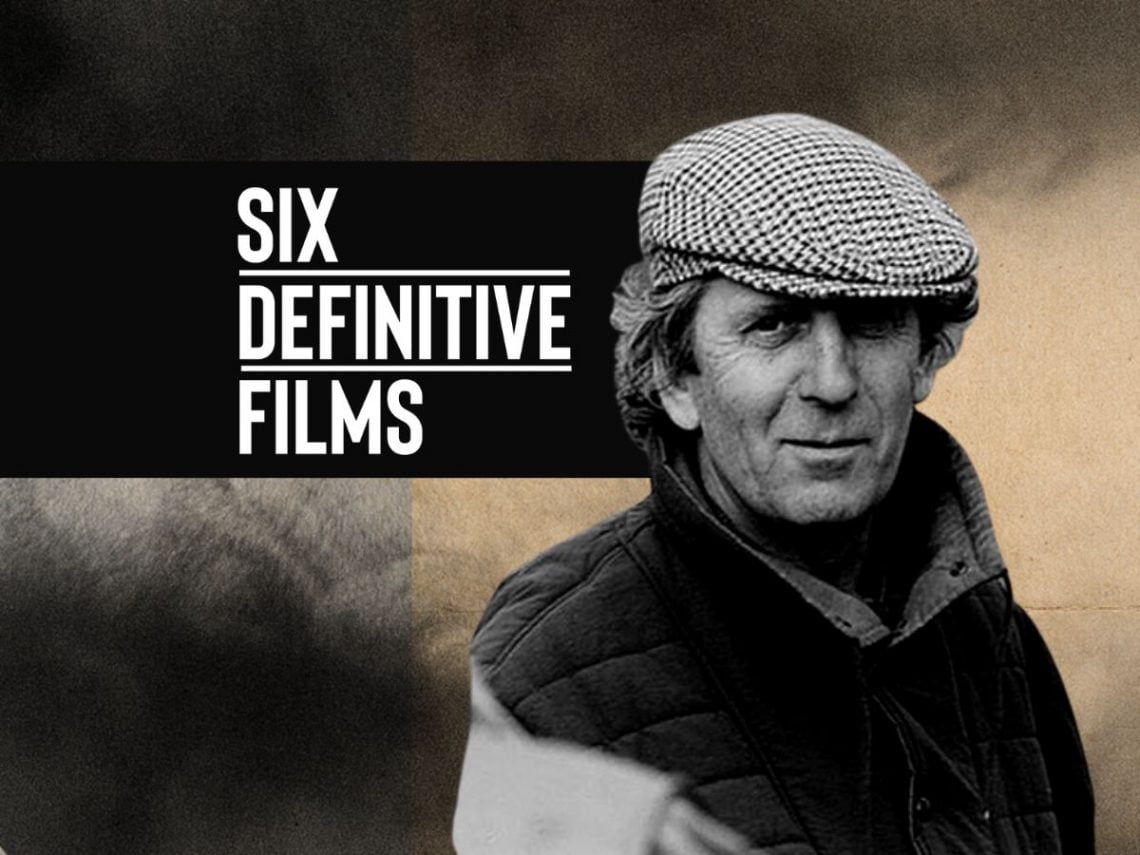
Six Definitive Films: The ultimate beginner’s guide to Alan Clarke

Alan Clarke was among the greatest English filmmakers of the last century, despite the fact that his creative output was mostly intended for television. Through his projects, Clarke conducted powerful examinations of contemporary sociopolitical conditions.
Born in Birkenhead, Cheshire, Clarke actually led a fascinating life before he began his filmmaking career in the UK. During the 1950s, he moved to Canada, where he worked as a gold miner and studied the history of radio, film and television.
Following his graduation, Clarke returned to the UK and started his television career in the late ’60s after working in theatre. Throughout his career, Clarke only made a handful of features which had theatrical releases, but his television output is remarkable.
Clarke’s bleak vision of the social realities that surrounded him has impacted audiences all over the world. He passed away at the age of 54 due to complications caused by lung cancer, but his cinematic legacy will survive for years to come. Check out a list of Alan Clarke’s best films below.
Alan Clarke’s six definitive films:
Penda’s Fen (1974)
A television play commissioned by the BBC, Penda’s Fen remains one of the standout additions to BBC’s beloved Play for Today anthology. Set in a small village, it explores the contradictory societal forces that Clarke observed in modern English society.
The film revolves around a vicar’s son who has mysterious encounters with angels and other entities while trying to discover truths about subjects such as religion, politics and human sexuality. Penda’s Fen is an early example of what Clarke was capable of producing: pure cinematic magic.
Scum (1979)
Probably the most well-known feature directed by Clarke, Scum is an unflinching examination of the repressive rehabilitation methods used by the government to deal with juvenile offenders. It remains powerful to this day because its horror is rooted in reality.
Scum uses the story of a young man named Carlin who arrives at a youth detention centre and learns that violence is the only way to survive in such an environment. Clarke brilliantly uncovers the violence inherent in the system as well, evident in the condemnable behaviour of the officers who are entrusted with the country’s misguided youth.
Made in Britain (1982)
Clarke’s portrayals of the British youth are simply unforgettable, and Made in Britain ranks among the best of those. It stars Tim Roth in one of the greatest roles of his career – Trevor, a teenage skinhead who has problems conforming to authority.
The film questions the vicious cycle of crime in modern society, especially due to the failure of indifferent government institutions. Made in Britain is also interesting because it shows the kind of environment required for the proliferation of fascist ideologies.
Road (1987)
A television adaptation of Jim Cartwright’s play, Road revolves around a working-class community in Lancashire during Margaret Thatcher’s reign. While conducting a surreal interpretation of social realist traditions, the film deals with pressing issues such as unemployment.
The play has been adapted several times, but Clarke’s version of Road is among the most memorable of them. The film is a manifestation of absolute social despair, threatening to consume the audience every step of the way.
Christine (1987)
Another bleak masterpiece by Clarke, Christine is a spectacular depiction of teenage drug addiction. Set in a West London suburb, it follows a young girl who goes from door to door while satiating the drug-related needs of other teenage addicts.
Through repetition and effective cinematography, Clarke weaves together a nightmarish vision of the decaying social fabric. While films such as Trainspotting are considered to be definitive explorations of addictions, Clarke’s Christine deserves to be mentioned in the same conversation as well.
Elephant (1989)
This 1989 short is the apotheosis of Clarke’s characteristic filmmaking style. One of the most powerful films made about the Troubles, Elephant is a simple yet profound meditation on the nature of violence and extreme political unrest.
The use of the Steadicam works brilliantly with the tracking shots in the film as we witness one cold-blooded murder after another. Clarke emphasises repetition again to force us to confront the senseless violence that we have fostered in our minds.
