


Harbin: The Russian history behind China’s northern city

In China‘s northeast sits Harbin, the capital of Heilongjiang province, and a city rich with Russian influence and history.
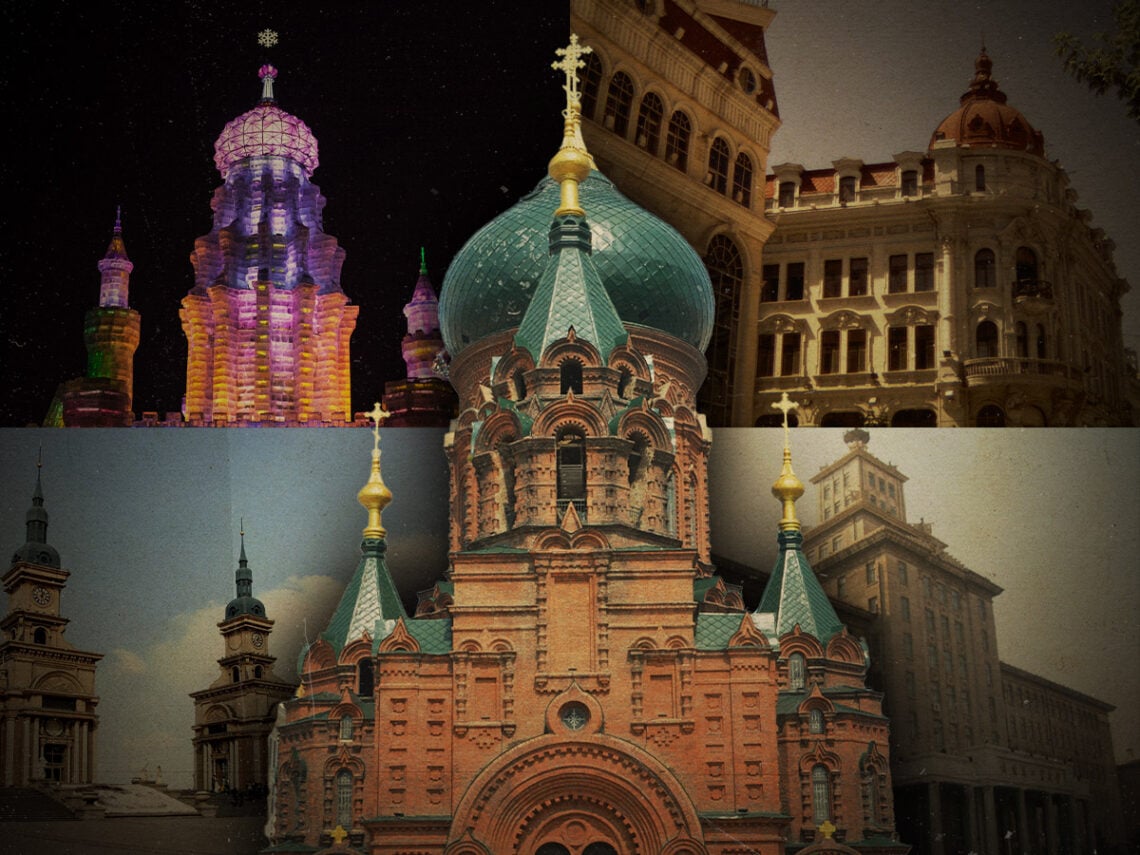
It’s the country’s eight most populous city, and the metropolitan area has a population of over ten million, while it has an important industrial role within the country. Once a small rural fishing village on the Songhua River, it’s now an important gateway for Sino-Russian trade and with its cold winters and famous ice sculpture festival, it’s earned the nickname ‘Ice City’. One of its other nicknames, ‘Oriental Moscow’, gives a nod to its history. There’s been a huge Russian influence in the city, something still visible today in the city’s skyline, their cuisine and on the streets themselves.
Not many cities in China have a history as unusual as Harbin, which is situated within a few hundred miles of the Russian border. In much the same way as Shanghai feels European in parts, due to the influence of the British, French and Dutch, so does Harbin, thanks to the Russians.
The story begins in 1898 when the Russian Empire began work on the Chinese Eastern Railway that would connect the Trans-Siberian Railway to the port city of Vladivostok, which sits on Russia’s far east, near both China and North Korea, and it was decided to cut across China.
In order to build the railway, the Russians needed to have a base to run the project, so they picked the small fishing settlement by the Songhua River. The city exploded with life, with thousands of engineers, labourers, merchants and the armed forces, moving into the region, with the city basically built from scratch by Russian planners. Its new layout and architecture followed what the planners knew from back in Europe, and Russians became the largest foreign community in Harbin overnight. A large community of Poles also arrived, as well as Jews, making it a fairly cosmopolitan city by the standards of the time.
By the 1920s, it looked more like a Russian city than a Chinese frontier town, and around a third of Harbin’s 300,000 population were Russian, with the 1917 revolution creating an additional influx of refugees. Russian schools opened, Russian language newspapers were sold, and it was heavily spoken on the streets. At one point, there were as many as 25 Russian Orthodox churches in the city, but that number has diminished, although Saint Sophia Cathedral is not only still standing, it’s also the city’s most famous landmark. Built in 1907, it has a huge green dome and red brick walls, and has all the signatures of Russian religious architecture.
There was cross-pollination in diets between the two cultures, with the immigrant community bringing their food from home to the region. Even today, you can buy Delieba bread, a rye loaf inspired by Russian khleb, while Harbin red sausage is an iconic cuisine in the city, and was based on the smoked sausages of Eastern Europe.

By the mid-20th century, the influence of Russia had waned; the Japanese occupation of Manchuria from 1931 to the end of the Second World War eroded any political control. The Communist revolution in 1949 also led to many Russians leaving the city, increasing when the 1960s cultural revolution saw many historic churches and Russian buildings attacked and destroyed.
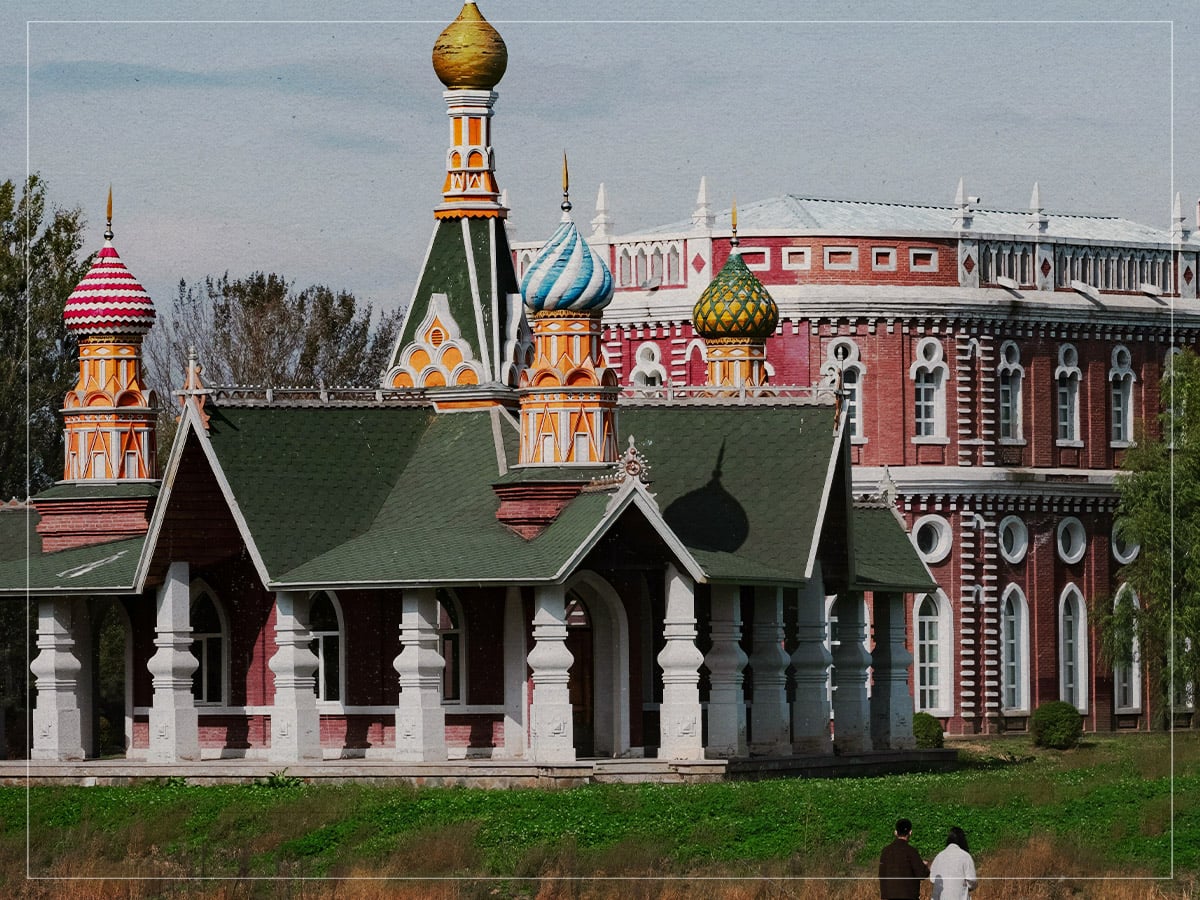
Today, the city still has a distinctly Russian flavour, with the cobblestone boulevard of Central Street, alongside Saint Sophia Cathedral, the most obvious European feature, although there are a number of other buildings still standing, including railway buildings, shops and entire formerly-Russian residential areas. Festivals and tourism campaigns still highlight the links between the countries and play on their European atmosphere, with Matryoshka dolls on sale, and even a theme park called Volga Manor that focuses on that history.
Harbin’s Russian heritage still shapes the city’s identity, with remnants littered across the landscape, and foods and cultural traditions still in the minds of the residents. What was once a sign of imperialism and Russia’s might as they looked to expand their empire now stands as a celebration of cultures. It’s a place in which its unusual history has allowed a distinctive blend of Chinese and European culture to grow and bloom.
