


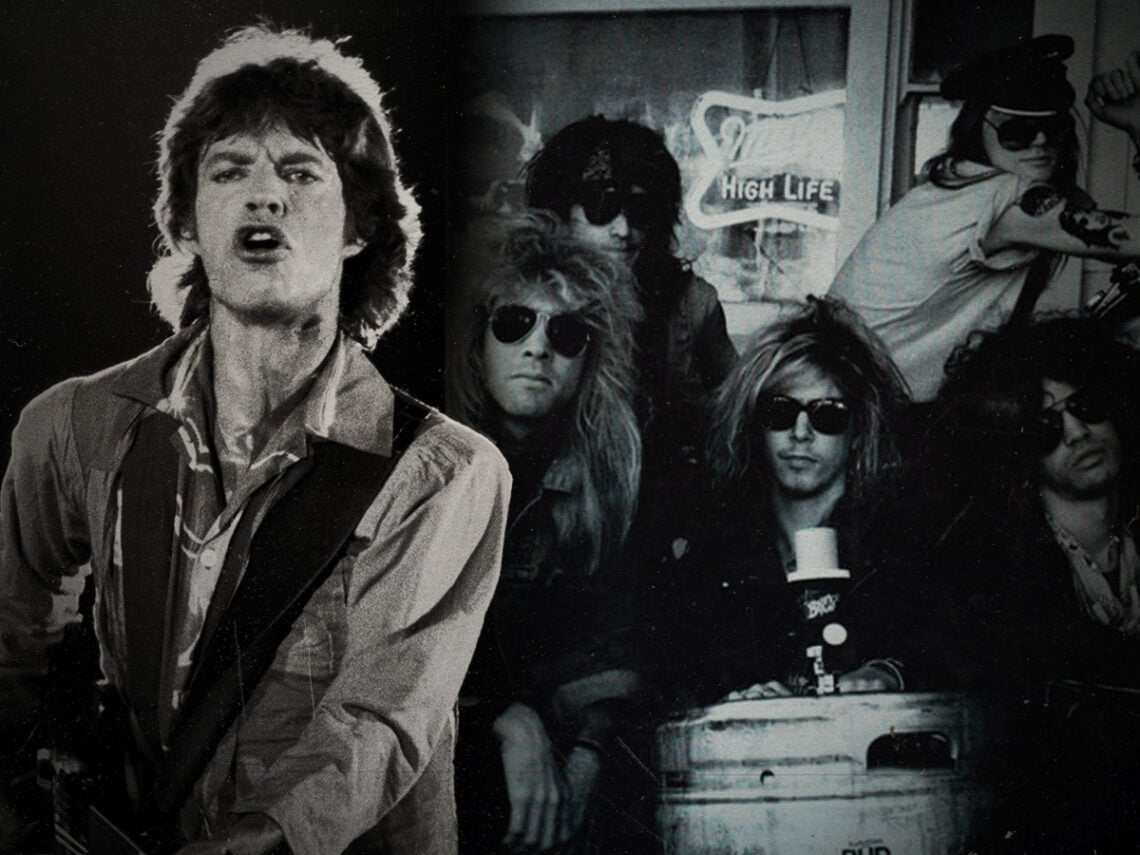
“The fee is a million dollars”: When Guns N’ Roses became big enough to extort The Rolling Stones

Stadium rock is often a term loosely thrown around to describe a subgenre of music, but how many great bands in history can actually fill a stadium’s capacity for a live show? The Beatles, Led Zeppelin, The Rolling Stones.
All three serve as surefire bets when it comes to filling the grandest stages of them all. In fact, The Stones have been doing so until very recently, rolling out legacy tours in some of the biggest sports stadiums, over half a century on from what many would consider their heyday.
Famously, in 1989, they embarked on a massive tour in support of their latest album, Steel Wheels. The tour of the very same name sought to redefine what stadium rock actually meant and laid a dominant path of The Stones’ live show destruction down onto the world. It was set to be ambitious and, more importantly, highly lucrative for the band and anyone else involved.
One such band they mooted as potential openers were Guns N’ Roses, who by ‘89, were verging on stadium territory themselves. Their commercial brand of hair-metal was almost custom-made to storm the charts and sell out mammoth shows, and so despite the call coming from one of their musical forefathers, the decision to join as understudies was considered carefully.
Their manager during that time, Alan Niven, said, “As far as I’m concerned, my boys are now the standard bearers of the excessive glories of rock and roll. Why should they open for a bunch of landed gentry and English financiers? So, conceptually, for me, it didn’t sit very well. The other aspect was I didn’t consider the band to be in any condition whatsoever to be able to take on a tour of that length and magnitude.”
While the proposed offer came with a juicy enough fee of half a million dollars for four nights at The LA Coliseum, Niven went back and leveraged a power-play driven by his instincts that The Stones were operating on the fear that, in their dwindling state, they couldn’t actually sell out four nights at The Coliseum.
Niven continued, “So I went back to the agent and said, ‘Yes, you can tell Mr Jagger that we’d be delighted to accept his offer. Let’s discuss the fee.’ And he said, ‘Well, we’ll look for a bonus here and a bonus there.'”


Concluding, “And I said, ‘No. Let’s do away with convoluted formulas. Please inform Mr Jagger that the fee is a million dollars.’ He just about choked on that. But guess what? Jagger came back and accepted, because he knew he needed Guns N’ Roses to get the four nights.”
While so many of these shows are rooted in legacy and a blind belief that bands of rock and roll’s heyday will simply sell out whatever show they played, the truth was, Guns N’ Roses were tapping into a contemporary zeitgeist. It might seem somewhat hard to believe for certain music fans, but they were a stadium rock band themselves in ‘89 and didn’t need the leg up.
