


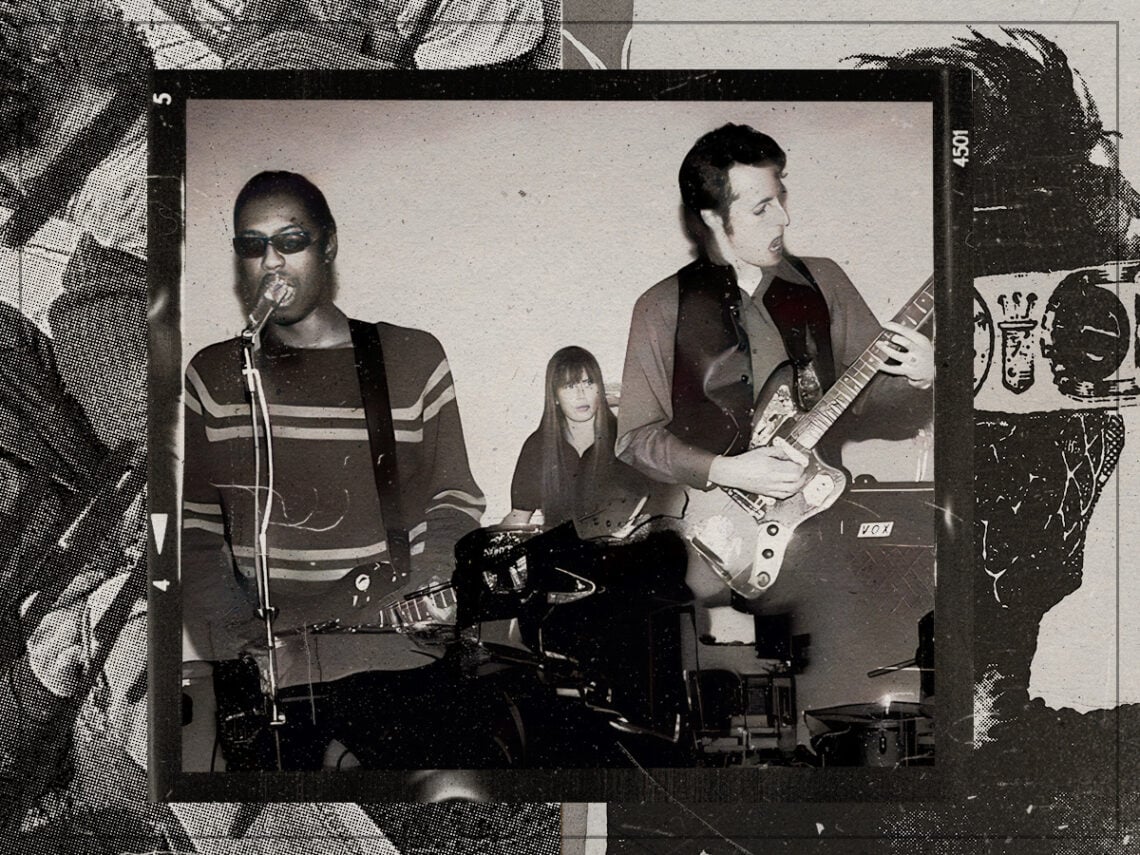
Gunk Punk: A very 1990s revolution

Contemporary music often relies on genres and movements, given that it offers an easy way to tie up history and divide significant moments into distinctive blocks. However, what this approach doesn’t account for is anything that exists outside of the mainstream view. It means that our perception of history and the timeline of music is often skewed in comparison to what actually transpired. Regarding modern rock, this tunnel-visioned perspective has led to movements like the cultish but influential gunk punk scene being unjustly overlooked.
The book We Never Learn: The Gunk Punk Undergut, 1988-2001 by Eric Davidson, the frontman of one the scene’s most important acts, New Bomb Turks, provides a comprehensive account of the era. It offers a firsthand narrative of how a healthy rock ‘n’ roll movement emerged across America, from the Rust Belt to the West Coast. From there, the sound spread across Europe and to Japan, existing on familiar indie labels such as Crypt Records, In the Red, Sympathy for the Record Industry, Sub Pop, Interscope, and Epitaph. Regarding Crypt Records, the label was home to the widely influential Country Teasers and Billy Childish’s consequential groups Thee Headcoats and Thee Mighty Caesars. It also was home to New Bomb Turks.
Gunk punk was also closely linked to two of the day’s most distinctly countercultural aspects, fanzine and DIY culture, meaning that the mainstream overlooks the intrinsically peripheral stories of these acts. One only has to look at the career of Billy Childish, a subversive hero in every way, existing outside of the typical idea of a professional musician, to get a feel for the nature of gunk punk and how its story played out.
Explaining how the term ‘gunk punk’ originated with Davidson, in the foreword to We Never Learn, critic Byron Coley characterises the movement by explaining that the New Bomb Turks leader “is attempting to name, codify, and delineate the history of a scene that existed nameless and in the shadows of various parallel movements within the general drool of underground punk rock during the latter half of the 1980s and the bulk of the 1990s….But what do you call it? It wasn’t grunge, wasn’t scum-rock, wasn’t paisley-revisionism, wasn’t post-core-thud…”
Further defining this loose collection of artists is Billy Childish himself, who states: “We were the antidote to New Romanticism and glam”. Following this, one of the Dwarves’ members notes how first-wave punk provided the basis of everything they did, “All the bands were different. Then punk became a blueprint.”
Outlining how distinctive each band in gunk punk was, alongside New Bomb Turks, Billy Childish’s outfits, and Dwarves, other main staples include the likes of Cheater Slicks, Cynics, Death of Samantha, Supercharger and countless others. That’s not forgetting the trailblazing outfit The Muffs, the group that introduced the late Kim Shattuck to the world, an artist who would briefly play bass with Pixies in 2013 before being fired for a bizarre reason.
Speaking to Please Kill Me in 2022, Davidson discussed some of the idiosyncrasies of gunk punk. Asked why he thinks the underbelly of bands in his book are disregarded in traditional rock histories, it was put to him that this was due to the variety on offer or that mainstream rock acts sucked “all the oxygen” from the room.
He replied: “The latter ‘oxygen suck’ is quite appropriate for what the grunge era did for high-energy punk. Despite the surviving mythology that grunge ‘erased silly ’80s hair metal’ and ‘brought punk to the mainstream’, or whatever, Winger and Poison were still in the top 40 when Nirvana, Soundgarden, Alice in Chains, et al, hit big — and there is a very thin line (sonically) between both kinds of bands.“
Considerately, adding: “Don’t get me wrong, I’ll take Nirvana. But I’d much rather take the Didjits, Muffs, or Devil Dogs, who at the time were making far more invigorating and fun music. Long-haired dudes wailing on solos and recycling Beatles or Black Sabbath riffs are of course going to sell more than a band playing Eddie Cochran or Sonics riffs five times faster than the original. Familiarity is comfortable.”
The frontman discussed his band’s frenetic but snarky music and how it was the opposite of the grunge music boom. Davidson said: “All four of us in New Bomb Turks liked some grunge bands, if before they were universally called grunge bands all the fucking time. The first Mudhoney EP is our idea of grunge; and I liked Nirvana when I saw them in a bar in Columbus early on. But like a month or two later, Smashing Pumpkins came through the same club, swinging their long hair around, ignoring the plebeians in the crowd, moaning about like space and time, man, or whatever — from then on I knew, I am not falling for this marketing pitch. I thought punk got rid of all that pomposity and poor-me narcissism.”
While it is hard to quantify gunk punk due to its inherently idiosyncratic sound, there were some aspects that the bands had in common. A love of first-wave punks such as the Ramones and a passion for niche mid-century rock ‘n’ roll, which includes rockabilly, scratchy 1960s garage rock, and the harmonies of early girl groups, tied those within gunk punk together.
Elsewhere, forgotten regional punk singles also had an influence through bootleg compilations, with their unabashed authenticity, comedy and, more often than not, bizarre nature, three things that gunk punk can also claim in large volumes. For instance, when the movement started to shape up in the late 1980s, niche outfits like The Lewd and The Users were all the rage. If you fused these aspects with the speed and fury of hardcore punk at its most fundamental, you’d get something resembling the loosely defined gunk punk sound.
It was also a philosophical ethos that the gunk punk bands had in common. It wasn’t a case of looking to old or new bands as people often do, just ones they deemed excellent, meaning that eras and the idea of emerging scenes were out the window. Music was not a conduit for traditionally trivial pursuits of musicians, such as paying bills, but for having fun. In a typically Generation X way, and perhaps due to the post-industrial landscapes many of the groups originated in, music was a means of realising youth and having fun. That was it. It was a pure reaction to the commercialisation of music.
In a reflection of how subversive the scene was, the acts knew that transcendence could be achieved playing in a basement to less than 20 people just as it could a large stadium gig, the typical dream of many aspiring musicians. In addition to this, being untrained musically or inexperienced was also welcomed, with the band used as the means of developing their craft. Capturing this deeply anti-traditional spirit, Davidson explained: ”Intuitively knowing that what sounds like noisy distorted ear-screech to the guitar shop guys is a large part of what you’re aiming for when you record.”
