


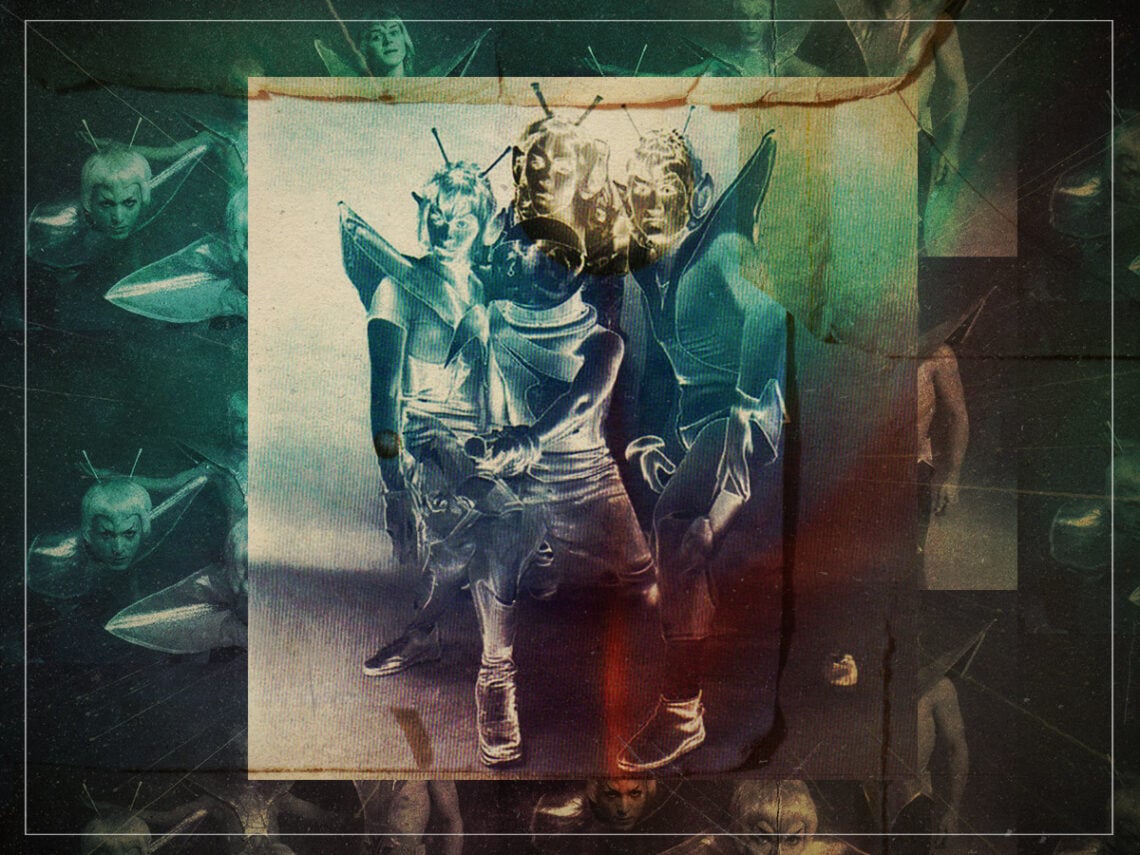
Zolar X: the greatest alien glam-rock band you’ve never heard

While there’s little debate about which side of the Atlantic boasts the greatest export of 1970s glam rock, it’s easy to forget how exciting it was Stateside.
Forging as much a proto-punk foundation as our own Alex Harvey or T Rex, New York Dolls were playing dress-up and flirting with androgynous glamour on their seminal self-titled debut. Kiss had ditched Wicked Lester for greasepaint and fire-breathing, and The Tubes were sending up the whole scene with their subversive theatrics and satirical concepts. Alice Cooper was executing himself every night, be it by gallows or guillotine, and the first openly gay star, Jobriath, was dazzling with his sophisticated, psychedelic baroque pop. Amid all this glitter, one band licked ’em all and could’ve been a contender for greatest of the entire American bunch.
While not the first band to sport space suits (Sweden’s The Spotnicks first wore their helmets in 1961), LA’s Zolar X took the sci-fi concept to a whole other level. While Ziggy was crafting his Martian mullet, Stephen Della Bosca and Billy Myers, two West Coast kids fed on a diet of Star Trek, The Jetsons, and Apollo missions, took aim at the over-serious double denim rock and singer-songwriters that had yet to be challenged by punk and reinvented themselves as extraterrestrial beings.
Adopting the aliases Ygarr Ygarrist and Zory Zenith, they cut their hair into singular, pointed bangs, wore flamboyant space outfits day and night, crafted a fictional history (visitors from planet Plutonia’s Zolaria City), and even invented their own ‘Zolarian’ language. Zolar X wasn’t just a band; it was a way of life.
Ygarrist, Zenith, and their ever-revolving door of space cadet bassists and drummers were everything at once: glam camp, punk ephemerality, and widescreen prog all married in glitzy perfection. While never releasing a studio album, there was a slew of recording sessions which contained brilliant cuts like ‘Space Age Love’ and ‘Timeless’, gloriously fizzy garage rock coated in studio effects and electronics that go at warp five, plus their more cosmic rock pieces like ‘Energize Me’ and the ten-minute odyssey ‘The Horizon Suite’ displays impressive virtuoso musicianship, equally as indebted to Mozart as much as The Beatles. Their 1970s material was finally collated on the ’82 compilation Timeless, which saw a limited release and only 1,000 copies.
For a band that faded to obscurity, there was incredible hype surrounding them. Virtually the in-house band at Rodney Bingenheimer’s English Disco, playing with New York Dolls, Jobriath, and Iggy Pop, being billed as the West Coast’s answer to Kiss, and even approached by NBC for a Monkees-style TV show, all that was missing was their own licensed breakfast cereal (Zolar Pops?) What happened?
Infighting, inept management, and sheer bad luck plagued Zolar X throughout their initial run. A combination of on-and-off hiatuses, the fleeting existence of their punk side project, The Spyz, and the lukewarm reception to Timeless ultimately signalled the band’s decline in the early 1980s. While frontman Zenith reinvented himself as the Elvis-inspired Billy Bo Day with his project The Howlers, Ygarrist spiralled into a period of disarray. Struggling with alcoholism and aimlessly jamming with unreliable musicians, he hit rock bottom, eventually calling on his mother to rescue him from what he feared was the brink of death. Seeking a fresh start, Ygarrist relocated to Nevada, embraced sobriety, and adopted a quieter life working in a casino, leaving his chaotic past behind.
Just as Zolar X were threatened with being a footnote in popular music, in came Alternative Tentacles like a distress signal from across the universe. Label owner and former Dead Kennedys frontman Jello Biafra had been a fan and wanted to reissue their Timeless comp, ushering the band to don their spacesuits and reform for a series of dates across the mid-2000s (minus Zenith, who was serving a ten-year sentence for assault, an incident Zenith has always claimed was self-defence).
Zolar X’s second coming, which followed a string of new releases and their authorised biography Out of this World, ultimately realised Ygarrist’s dream for recognition, with good fortune finally arriving via a wormhole from the 1970s. With the blurring of genres and erosion of neat sub-cultures in contemporary music, Zolar X’s eschewing of easy categorisation perhaps chimes better today than it ever could fifty years ago. Speaking on Heads on Sticks Chats podcast last year in anticipation of Zolar X’s upcoming Space Punk City series, Ygarrist declared: “I was never a punk, ever, maybe that’s a good thing or a bad thing.” Whatever he was, he wasn’t from this world.
