


Grateful Dead: the band who keep getting bigger even in death

60 years after they formed, the Grateful Dead are anything but.
In 1965, the San Francisco music scene was in full swing, with members of The Warlocks meant to play a show at one of Ken Kesey’s Acid Test parties when they decided to change their name to something that represented their sound better. The moniker chosen is one that music fans all over the world have heard a thousand times: Grateful Dead. Led by Jerry Garcia, the band, though only enjoying moderate worldwide success in the 1960s and 1970s, became a rock ‘n’ roll institution like few others.
Going by rock ‘n’ roll rules, their fate should have been sealed in 1995. Garcia, the frontman and spiritual leader of the group, tragically passed away in August of the year after years of struggling with addiction and a general decline in his health. His death, shocking but not completely surprising, and entirely anticlimactic, should have signalled the end of the Grateful Dead, and it was, undoubtedly, the end of an era. But against all odds, the band’s legacy and relevance have only gotten bigger with time.
Very few bands achieve this. One can think of The Beatles, but they were a four-headed monster with no defined frontman, and too much talent knocking about to last as a unit. In the case of The Rolling Stones, Mick Jagger is not only alive but still able to deliver outstanding, age-defying performances that even Little Richard would raise eyebrows at. So how, then, did the Grateful Dead manage to transcend generations and quietly grow with time after the death of their leader?
The path wasn’t exactly easy for the band, but perhaps what kept their legacy alive all these years is that, since Garcia’s passing, they never attempted to recreate the magic of the original Grateful Dead. After a three-year hiatus, the surviving members regrouped and toured as the newly minted The Other Ones. The performances were few and far between, with sufficient lineup changes along the way, but they played a hefty few concerts in the late 1990s and early 2000s.
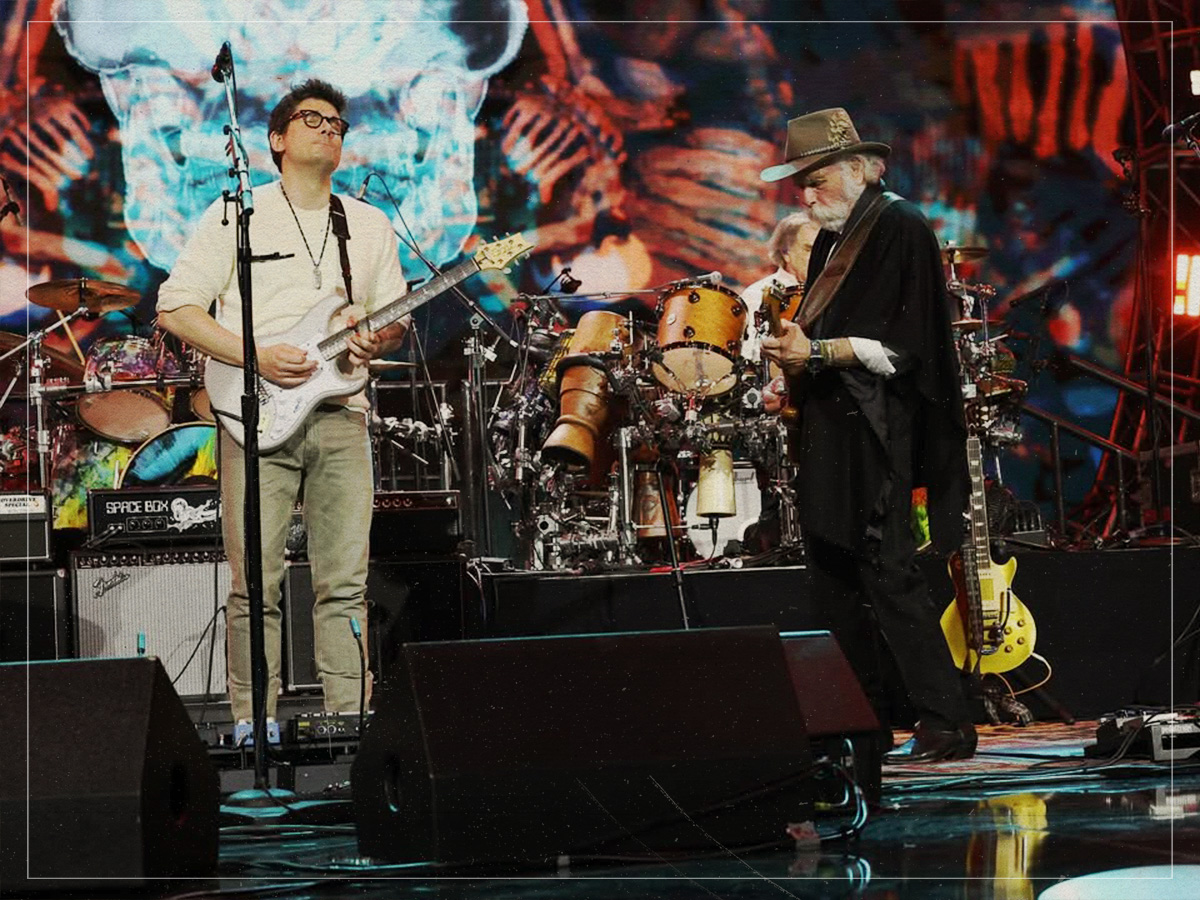
By 2003, they decided it was time to go back to their origins, and they toured with the name The Dead until 2009, when Phil Lesh and Bob Weir formed Furthur. In 2015, Bob Weir, Mickey Hart, and Bill Kreutzmann recruited John Mayer and Oteil Burbridge to form the present iteration: Dead & Company.
How Deadheads keep the myth alive
But while the band’s perseverance and musicianship undoubtedly deserve credit for keeping their original legacy alive, one cannot ignore the Deadheads’ crucial role. Deadheads are a type of fan completely different from what people understand as fandoms today. While it started as a group of people who followed the band for their music, it soon became much bigger. Starting in the 1960s, Deadheads would follow the band from city to city, soon forming a community that became integral to the decade’s counterculture. Deadheads are still very much around nowadays, and it’s their sense of companionship that still pulls the youth into their fold.
A particularly lovely tradition that these fans have kept going through the years is ‘Shakedown Street’. The day of a show, fans will set up camp outside the venue, and for a few hours, the street will turn into a flea market/gallery/home for many Deadheads for decades.
They not only sell and showcase their art but also do their best to ensure every fan, whether they’re a die-hard Deadhead or not, gets to experience a Dead & Co concert. Unlucky fans who didn’t manage to snag a ticket or couldn’t afford it have one last chance during Shakedown Street. If they show up holding one finger up, this means “I need a miracle”, AKA, “I need a ticket”.
A young fan shared online that she was able to attend Dead & Co’s final tour due to the community’s generosity, and was moved when she was told that a lot of older Deadheads would buy extra tickets to give away to young fans, as a way of paying it forward, as they had attended shows in the past thanks to other people sharing their “miracles”.
In 2025, Dead & Co made history yet again on August 1st, in San Francisco, where it all began, Mickey Hart, Bill Kreutzmann, and Bobby Weir, the only surviving members, came together to honour Jerry Garcia on his birthday with the concert GD60, celebrating the 60th anniversary of the band.
Very few outfits from the yonder days of rock have stood the test of time like the Grateful Dead have, and their dedicated fanbase, paired with the surviving members’ unstoppable drive, guarantees that the world will have Deadheads for decades to come.
