


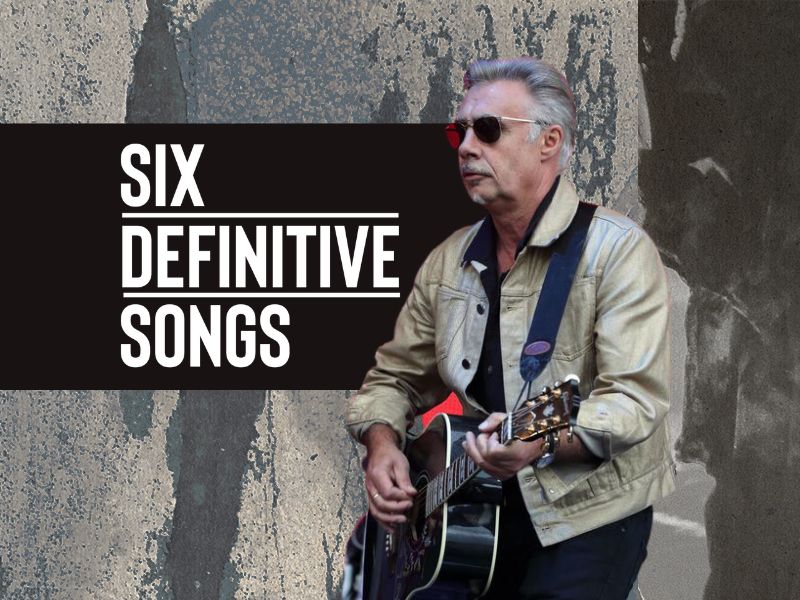
Six Definitive Songs: The ultimate beginner’s guide to Glen Matlock

Glen Matlock is a stellar musician, there is no alternative to this assertion. As the bassist and main songwriter of the British punk band Sex Pistols, Matlock contributed to one of the most iconic and influential albums ever released in the shape of 1977’s Never Mind the Bollocks, Here’s the Sex Pistols. Without him, the LP would never have come to fruition, such is his vital role in the great timeline of music.
Notably, Matlock only spent two years in Sex Pistols between 1975 and 1977, and to this day, the reasons for his departure are shrouded in mystery, with many different accounts existing. After he departed, the band’s manager Malcolm McLaren sent a telegraph to the NME claiming that he was “thrown out… because he went on too long about Paul McCartney….The Beatles was too much.”
On the other hand, Matlock claimed he left the Pistols via “mutual agreement” because he was “sick of all the bullshit”. Regardless, his exit would prove to be a fatal one for the band. He was replaced by the notorious Sid Vicious and the catastrophic ending of the story we’re all familiar with. If Matlock would have lasted, the band would have certainly enjoyed greater longevity, with the question of what their future would have brought one of the most captivating in music.
Matlock would have the last laugh, though. Bar Sex Pistols frontman John Lydon, who found great success with Public Image Ltd, he has enjoyed the most fruitful musical career out of his ex-Sex Pistols bandmates. It has been a varied one that’s seen him undertake a myriad of projects that include former Stooges man Iggy Pop’s most visceral album, 1980’s Solider, which was produced by David Bowie.
Matlock has also played with the Pistols at each of their reunions, including the iconic 1996 ‘Filthy Lucre’ tour. Other post-Pistols projects include The Damned’s 1994 album Not of This Earth as well as the supergroups Dead Men Walking and Slinky Vagabond, the latter boasting the likes of Clem Burke and Earl Slick. In 2010, he even lent his bass skills to the glitzy reunion of British rock legends, Faces, showing just how dextrous he is.
Today, we’re listing Glen Matlock’s six definitive songs,
Glen Matlock’s six definitive songs:
‘God Save the Queen’ – Sex Pistols
Arguably the ultimate Sex Pistols anthem, a sardonic pop at the monarchy and the inertia of British life in the 1970s, it makes a strong claim to be the finest from the first wave of British punk.
Regardless, Glen Matlock had a hand in writing the track but was out of the band by the time it was released. He claims that the bass part was inspired by 1960s band The Move’s track ‘Fire Brigade’, which is strange when you note the surreal nature of the 1968 cut and its rhythmic difference to ‘God Save The Queen’. It also reflects Matlock’s differing tastes from the rest of the band, which has long been noted as one of the main reasons he left.
Showing just how different their accounts of the band are, Sex Pistols guitarist Steve Jones has claimed that when Matlock first played him the song, it did not sound like the punk anthem we all know and love: “It was like ‘Love Me Do’ or something”, he recalled.
‘Mr. Dynamite’ – Iggy Pop
1980s Solider is a strange moment in Iggy Pop’s extensive back catalogue. It was initially meant to be produced by Stooges guitarist James Williamson and David Bowie, but the former walked out due to a conflict with the former over recording techniques.
The highlight of their collaboration has to be ‘Mr. Dynamite’, a sparse piece that trudges along whilst the guitar, piano, and brass weave in and out of the mix. Matlock’s chorus-drenched guitar is as post-punk as they can get, sounding like a mix of Siouxsie and the Banshees era John McGeoch and Bernard Sumner of Joy Division.
‘EMI’ – Sex Pistols
The final track on Never Mind the Bollocks, Here’s the Sex Pistols, ‘EMI’ was the perfect way to close the book on the record. It was written after their contract with record label EMI was terminated in January 1977 after a stint of just three months due to the outrage the band caused with their appearance on the Today programme in December 1976 when they swore on live TV and insulted the host Bill Grundy, a taboo thing for the time.
Regarded as a ‘diss track’, it ridicules the titular label for their unscrupulous desire to cash in on punk and sign the band and their decision to drop them when their antics, which were a key part of their brand, damaged their reputation.
The song was recorded at Gooseberry Studios, London, during Matlock’s last recording session with the Pistols before his departure. However, the version that appears on the album is a re-recording from two months later at Wessex Studios.
‘Anarchy in the U.K.’ – Sex Pistols
The song that started it all for the Sex Pistols, when they released it in October 1976 none of them realised just how consequential it would be. Whether it be Lydon’s lyrics or Jones’ guitar work, it remains one of their tracks that has stood the test of time the best. Both Matlock and Lydon had defining influences on its creation, with the former devising the main riff and Lydon delivering all the lyrics with ease.
“Around the summertime, we were rehearsing and once again I said, ‘Does anybody got any ideas?’ And I had a go at Steve, ’cause I felt I was pushing the band along a bit, but that time he had something, which wasn’t much.” Matlock told Rolling Stone in 2017. “He said, ‘Why don’t you come up with something?’ And I had half an idea for a big overture, and I just started playing that descending chord progression and everybody picked up on it and said, ‘Where’s it go next?’ And I sort of geared it as we went along.”
“John, it happened, had a bag of lyrics – just sheets of paper in a plastic bag – and he pulled something out and he said, ‘I’ve been waiting for you to come up with something because I’ve got this idea.’ Everybody had been talking about this guy, Jamie Reid, who did our artwork, and he was a bit of an agitprop kind of guy about anarchy. And John had written these lyrics,” Matlock concluded.
‘Never Could Believe’ – The Damned
In 1995, Glen Matlock appeared on Not of This Earth, the eighth album by punk heroes turned goth masters, The Damned. Performing on two songs, ‘Tailspin’ and ‘Never Could Believe’, the latter is the better of the two, with it sounding like a mesh between Boston and The Cult.
Featuring one of The Damned’s most underrated choruses, Matlock’s guitar playing is exquisite here, and the solo is one of his finest moments to date. If it had been released in the early 1970s, this would have been a global hit.
‘Pretty Vacant’ – Sex Pistols
Another staple of Sex Pistols’ back catalogue, Matlock has always claimed this one as his own, and his trademarks are stamped across it, including the hooky guitar and bouncing bassline. He once claimed that the iconic intro riff was inspired by ‘SOS’ by ABBA, and if true, it could not sound further from the subject material.
Appearing in Uncut in June 2022, Matlock explained the song’s provenance in greater detail. He said: “‘Pretty Vacant’, which is my song and my lyrics, I took inspiration from Richard Hell’s ‘Blank Generation’. But I kind of misunderstood what his song was all about. You gotta put the songs in the context of what was going on for a bloke like me in mid-70s London, with the three-day week and the IRA bombings and power cuts, against the fact I was a young man who met some interesting people who was trying to form a rock’n’roll band. ‘Pretty Vacant’ is a primal scream kind of thing: we don’t know what we’re gonna do, but we’re gonna do it anyway.”
