


Glastonbury: the literal Holy Grail of festivals?

Every year, thousands of devotees congregate in the rolling hills of Somerset, England, for a shared communal event. But these aren’t religious gatherings – at least not in the traditional sense. It’s for the Glastonbury Festival, a five-day open-air music and arts extravaganza that has played host to some of the most legendary live performances in the history of British music.
Glastonbury has become a mecca for music fans to enjoy what some consider to be the best outdoor festival in the world, but the religious comparisons are more apt than they appear. That’s because, close to the giant site of Worthy Farm, there’s a legend of mythical proportions – that the actual Holy Grail is buried somewhere in the nearby town.
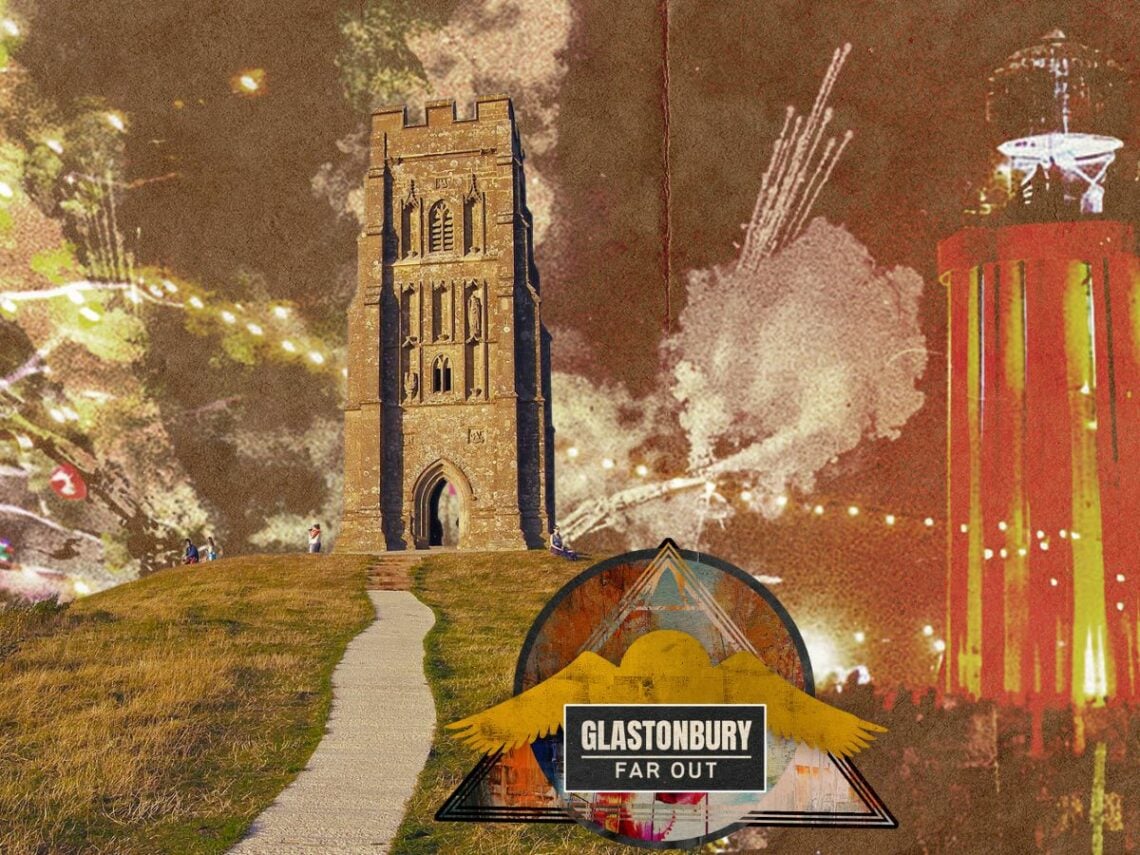
Just a few miles away from where live music reigns every year lies the Glastonbury Tor, a gigantic hill topped by the now-decrepit St Michael’s Tower. A short distance away lies a tree that isn’t native to England but rather to the Middle East. It has been said that Joseph of Arimathea struck his walking stick into the ground, with the piece of wood miraculously blossoming into the Glastonbury Thorn. Taking this as a sign, Joseph was said to have built the first Christian church in Glastonbury.
Joseph wasn’t just responsible for miraculous horticulture – he was also said to have been in possession of the Holy Grail. After catching Jesus’ blood during his crucifixion, the Grail was supposed to have healing powers that could extend all the way to immortality. The Tor is said to be the place where Joseph buried the Grail, and its prominence in Celtic myth also connects it to another legendary character in Christian tales: King Arthur.
In Arthur’s tale, the King seeks out Avalon after he is mortally wounded in battle. Avalon is most commonly described as an island, and though it is clearly landlocked in the modern day, the Glastonbury Tor was likely submerged and surrounded by water during Arthur’s time. In the 12th century, monks from Glastonbury Abbey were said to have dug up a grave threat purported to be the remains of King Arthur himself. Today, a marker at the Abbey purports to be the official gravesite of Arthur.
The idea that Glastonbury could be the home of the Holy Grail hasn’t been able to pass outside the realm of myth. No conclusive evidence puts Joseph of Arimathea, King Arthur, or the Holy Grail at or near Glastonbury.
Still, the myths are strong enough to inspire a number of new age movements around the town, including a popular belief that the Glastonbury Tor is the centre of an astrological zodiac called the Temple of the Stars. If you arrive at Glastonbury with the vague notion that you’re standing on holy ground, you might not be that far off.
